How it works › Finishing one
Completion
Every exercise has two goals. Reach both to finish it — or nail it, and you get them both at once.
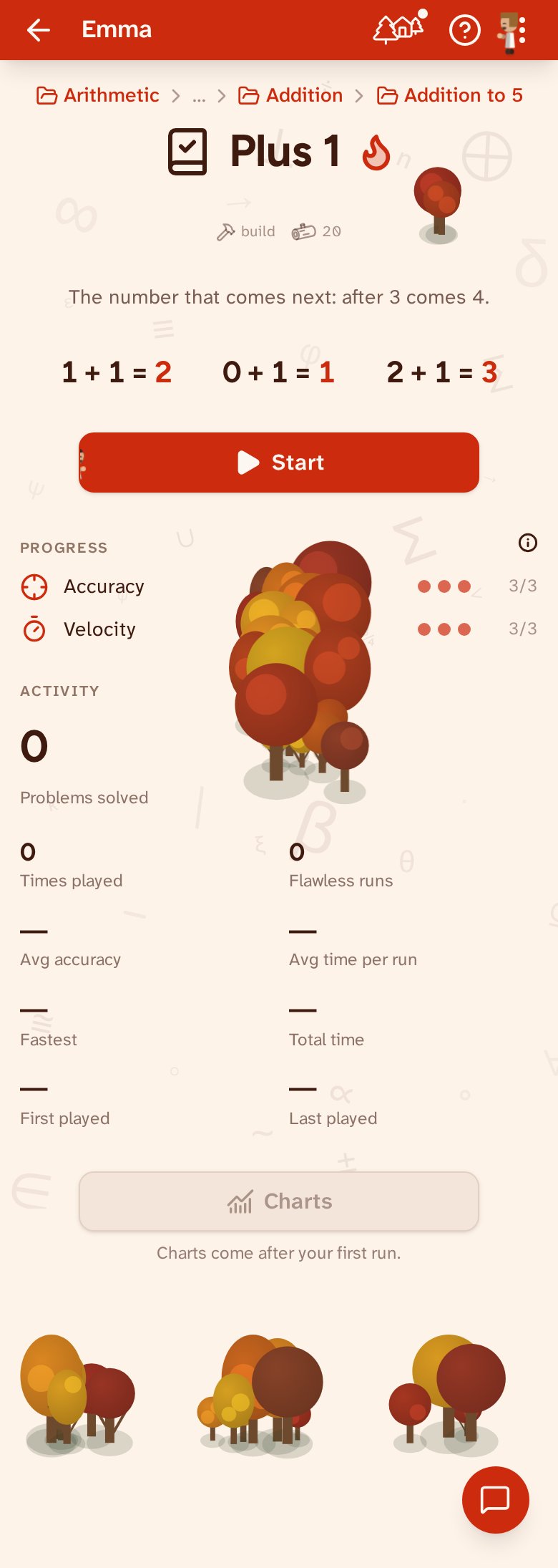
Accuracy
Three flawless runs — every answer right the first time. They add up across everything you play; they do not have to be one after another.
Where the percentage comes from
Accuracy is the answers that were right, divided by the answers you gave. Below it you can see where that came from: how many problems you did, how many you had right first time, and how many attempts it took. Right first time and attempts are two different numbers — six wrong answers may all have come from one stubborn problem, and then it says 9 of 10 right first time while the percentage comes out lower. Every problem is eventually answered correctly, because a wrong answer takes nothing away, it simply asks again; so the attempts are what tell you how smoothly it went. All of them right first time is a flawless run, which earns a dot for Accuracy. The same five figures appear later on the run chart, in the same order.
Velocity
Three runs at pace — inside one and a half times the time shown on the exercise. Mistakes are allowed: they cost time, so fast and sloppy usually misses it. On a speed round your average per problem counts instead. The mark is a fixed number you can know in advance; it does not depend on how fast you once went.
Progress bars
The two bars on each exercise card show your progress towards accuracy and velocity. As you practise, they fill up. When both are full, you've completed the exercise.
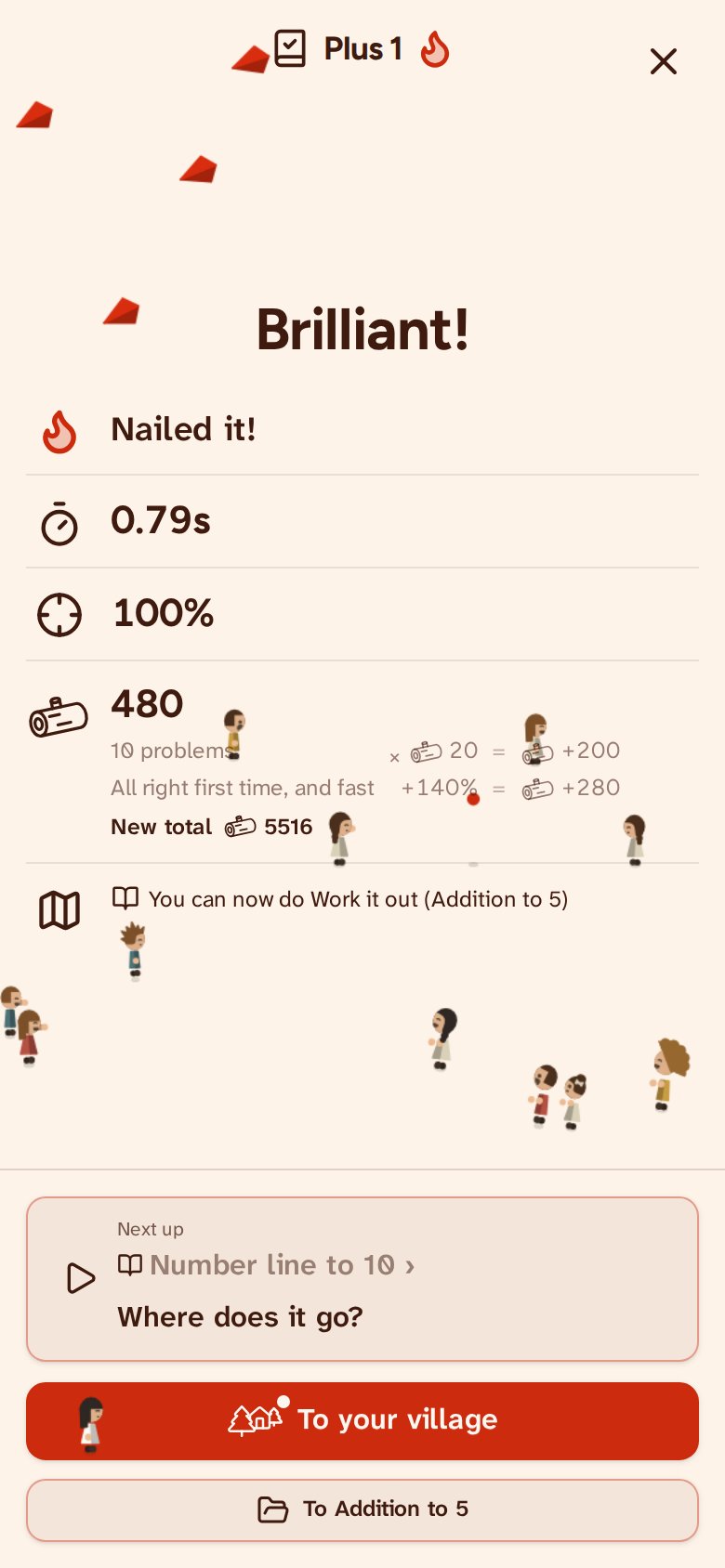
The end-of-run screen
When a run finishes you get a summary, headed by the name of the exercise you just played, with its book in front of it and, if you nailed it, the flame behind it. Under it is what this run came to, in sections: your time and how many you got right, what the bars did, what your village got out of it, and what opened up. Each section has a row of its own. Under what opened up, a single topic or exercise is named outright; when there are more, tap the row to see which.
What it built
If this card helps raise a cabin, this says which group's and whether you earned a course with it. Sometimes a whole new cabin is waiting to be placed. Cards without a hammer build nothing, and then the screen leaves this part out altogether.
And what comes next
One button at the foot is lit. Short of mastering the exercise that is 'Again'; once you have it, it becomes the next exercise, named — the same one your overview page would offer you. Below it is the way to your village, with a dot on it when something is waiting to be built there.
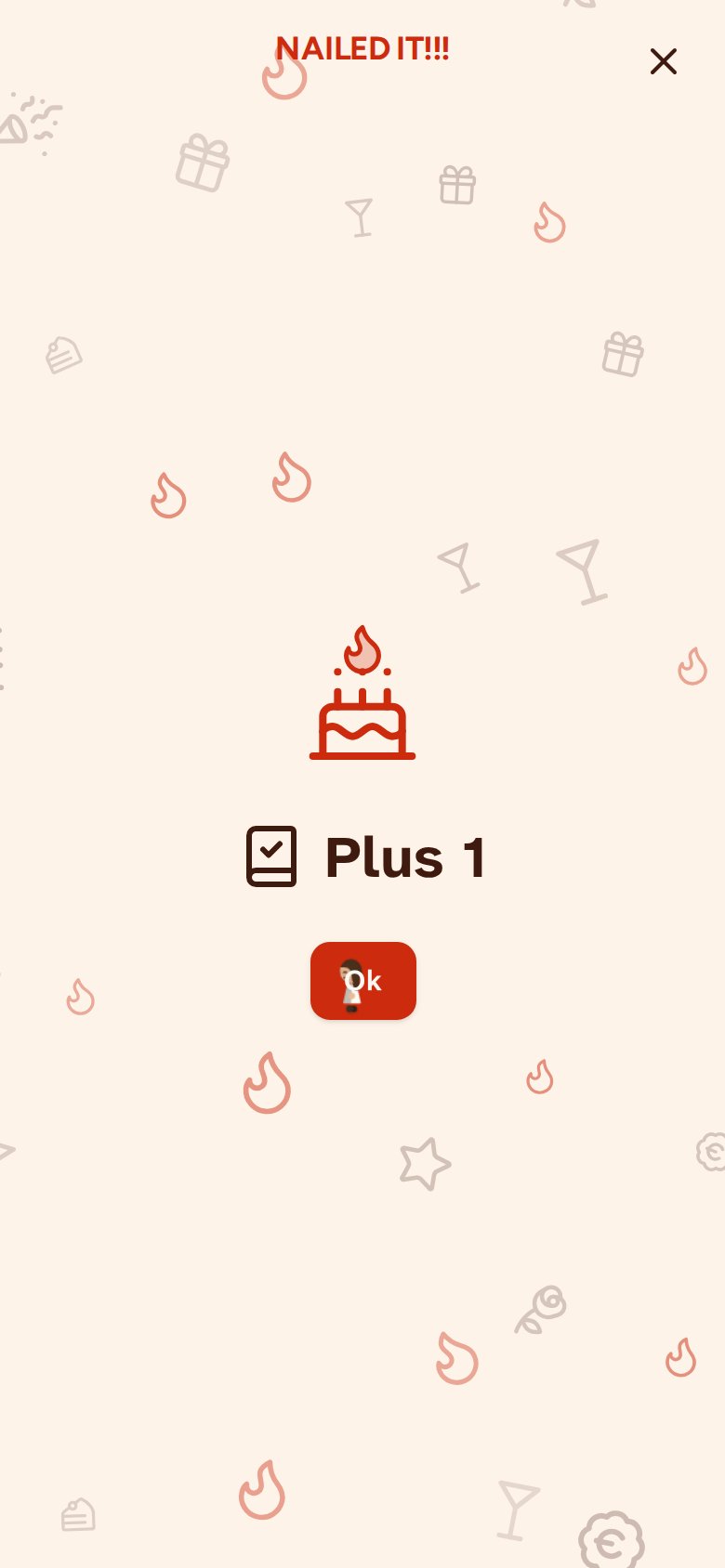
What counts as nailing it?
Every problem right on the first attempt, and every one inside the time shown on the exercise — usually three seconds, a little more for harder sums. The exercise is finished on the spot, and both goals are granted.
Everything underneath counts too
Anyone who does a hard exercise that way can do the easier ones beneath it. So those are marked done automatically — nobody should have to slog through work they can already do.
The cake catches fire
Finishing an exercise earns you cake. Nailing it sets that cake alight.
Tests
Every section has a test, and it opens as soon as the section does. Get it right in one go — every problem right first time, and in time — and the section's exercises count as done: no need to work through them first. If it does not work out, you can try again after an hour; a test has no dots to fill step by step, it is passed or not yet. Only the sums that mix two topics, like plus and minus together, are still yours to do afterwards: they belong to two sections at once. You'll find the tests on your overview under ‘Tests’, and as an exercise in the section itself.