How it works › Playing a sum
Exercise types
Problems come in different forms.
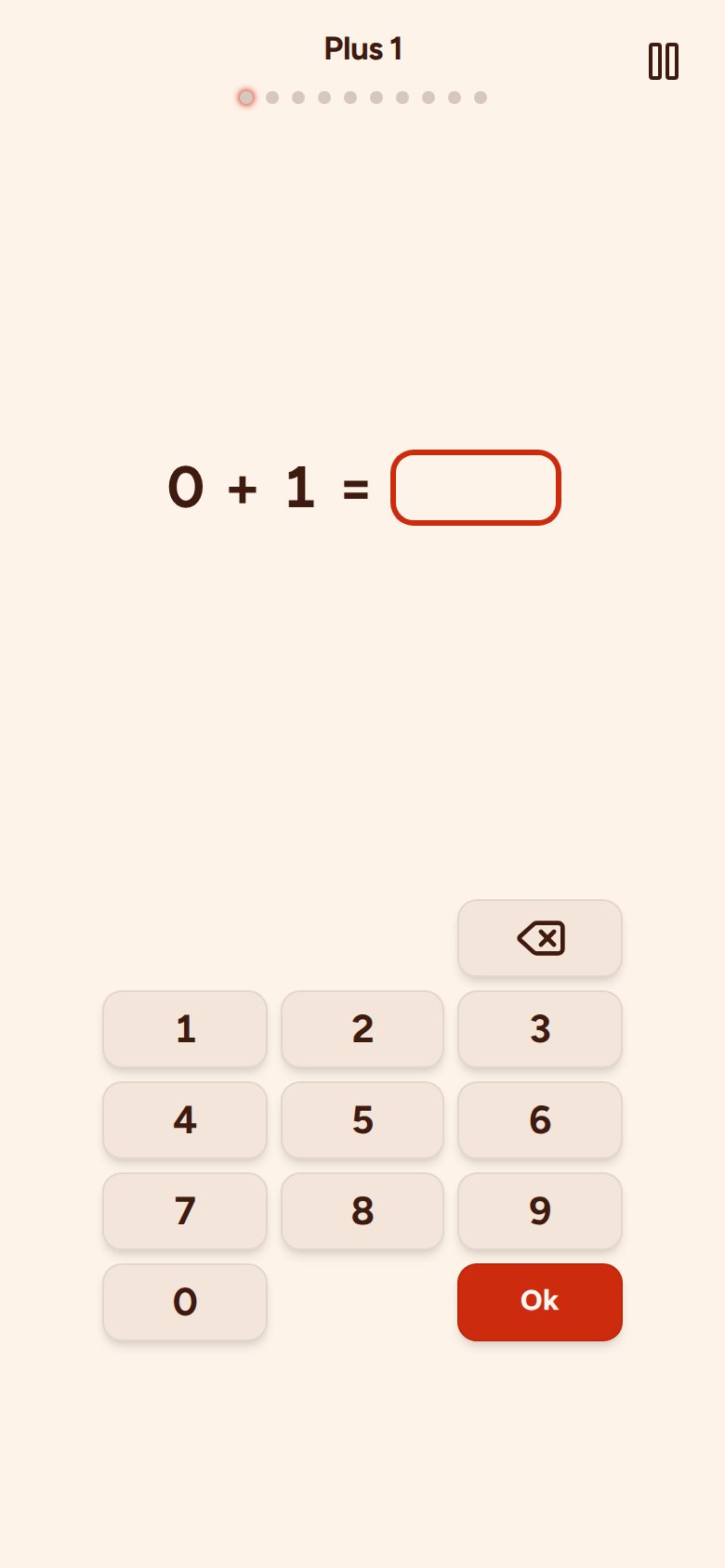
Sum
Work out the sum and type the answer.
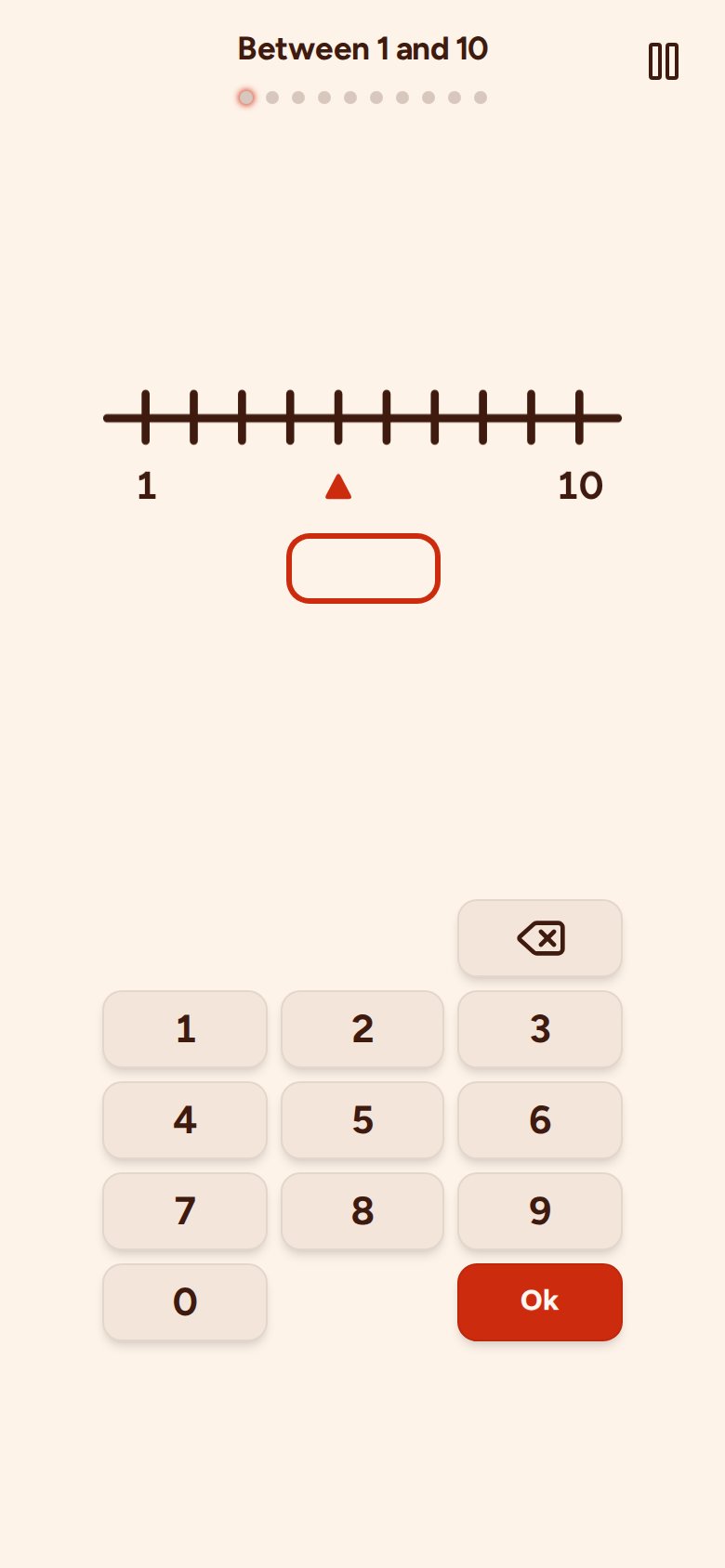
Number line
Read off where the arrow points on the number line and type that number. On the longer lines not every number is written: count along the ticks, which can go in ones, fives or tens.
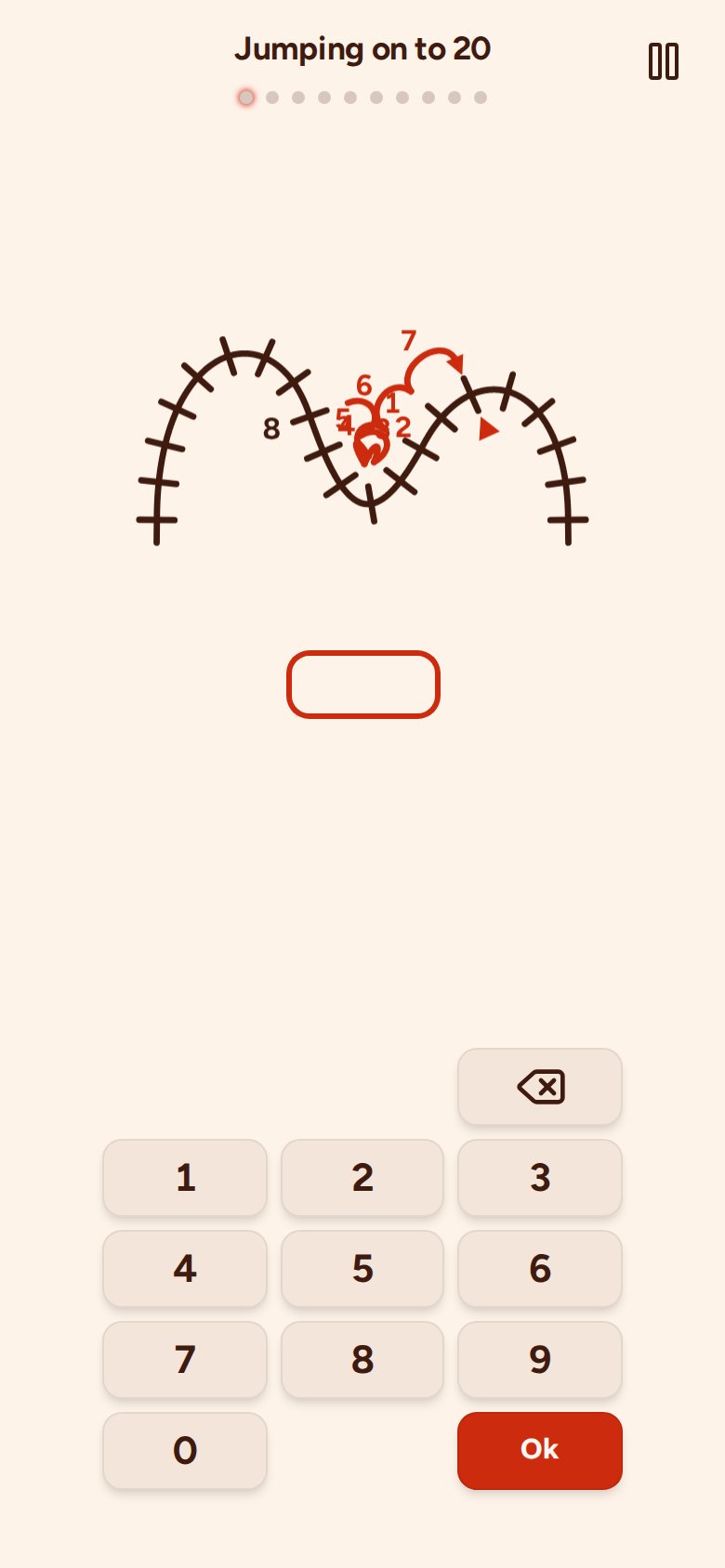
Jumping on the number line
Arcs show how far each jump goes, forward or back. Count the jumps and type the number the arrow lands on.
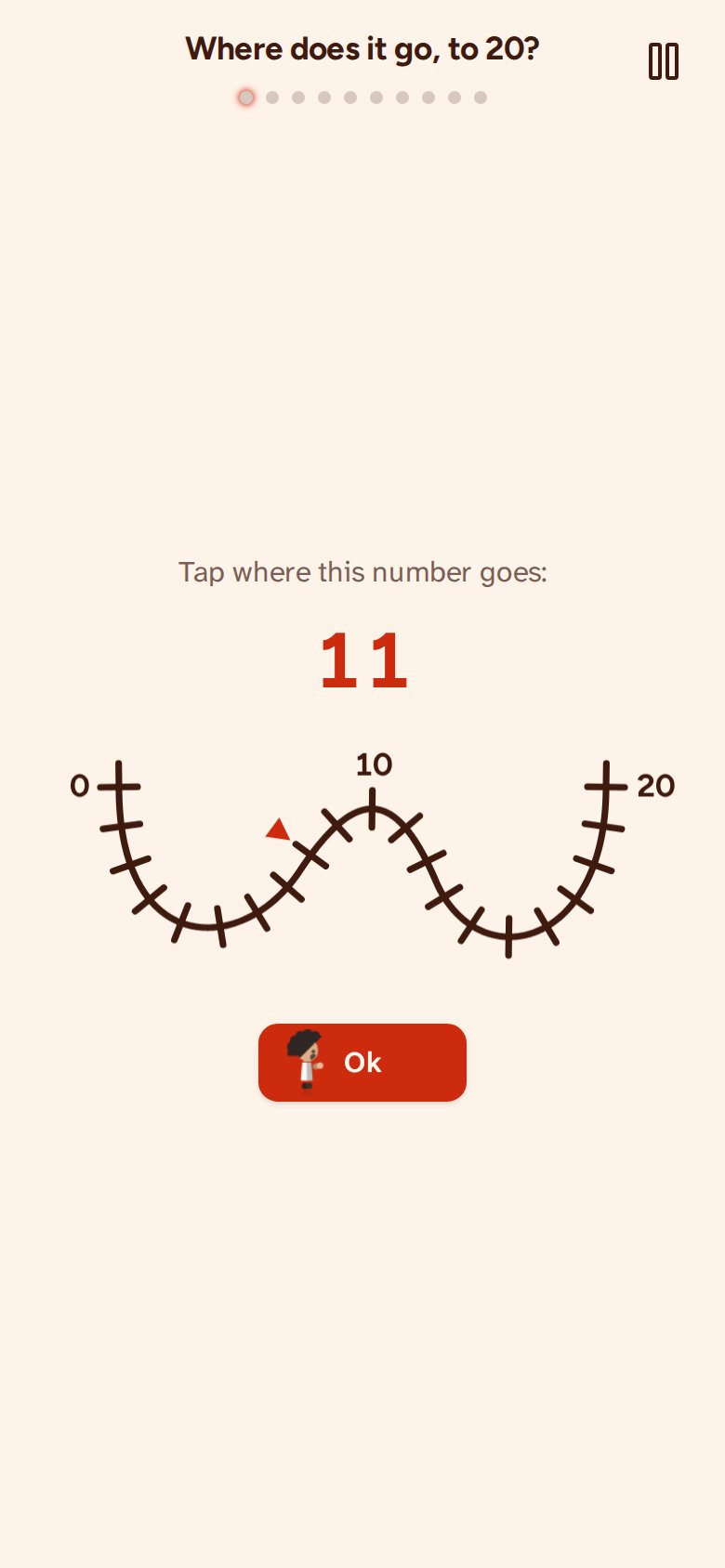
Placing a number
There is a number above the line. Tap where it belongs and press Ok.
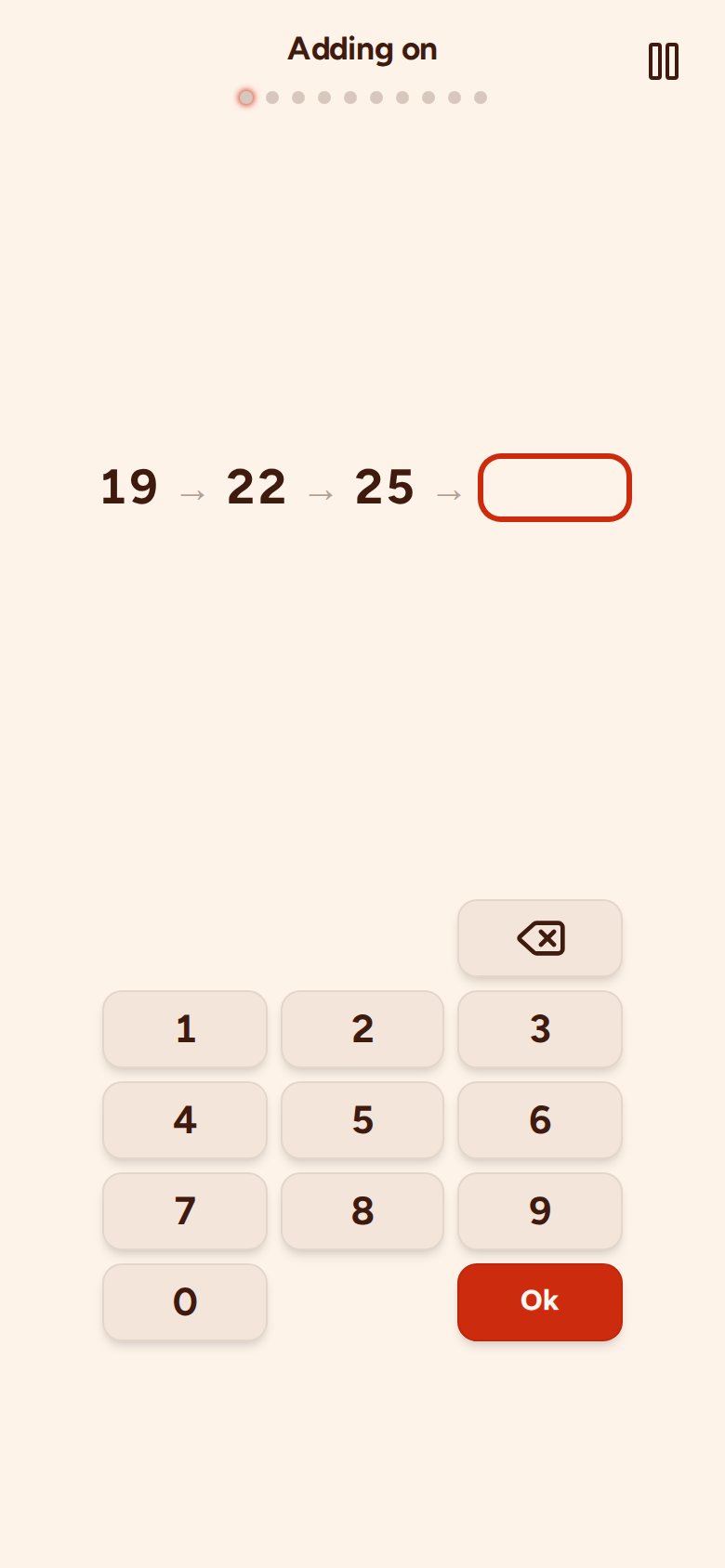
Number sequence
Work out which number comes next in the sequence and type it.
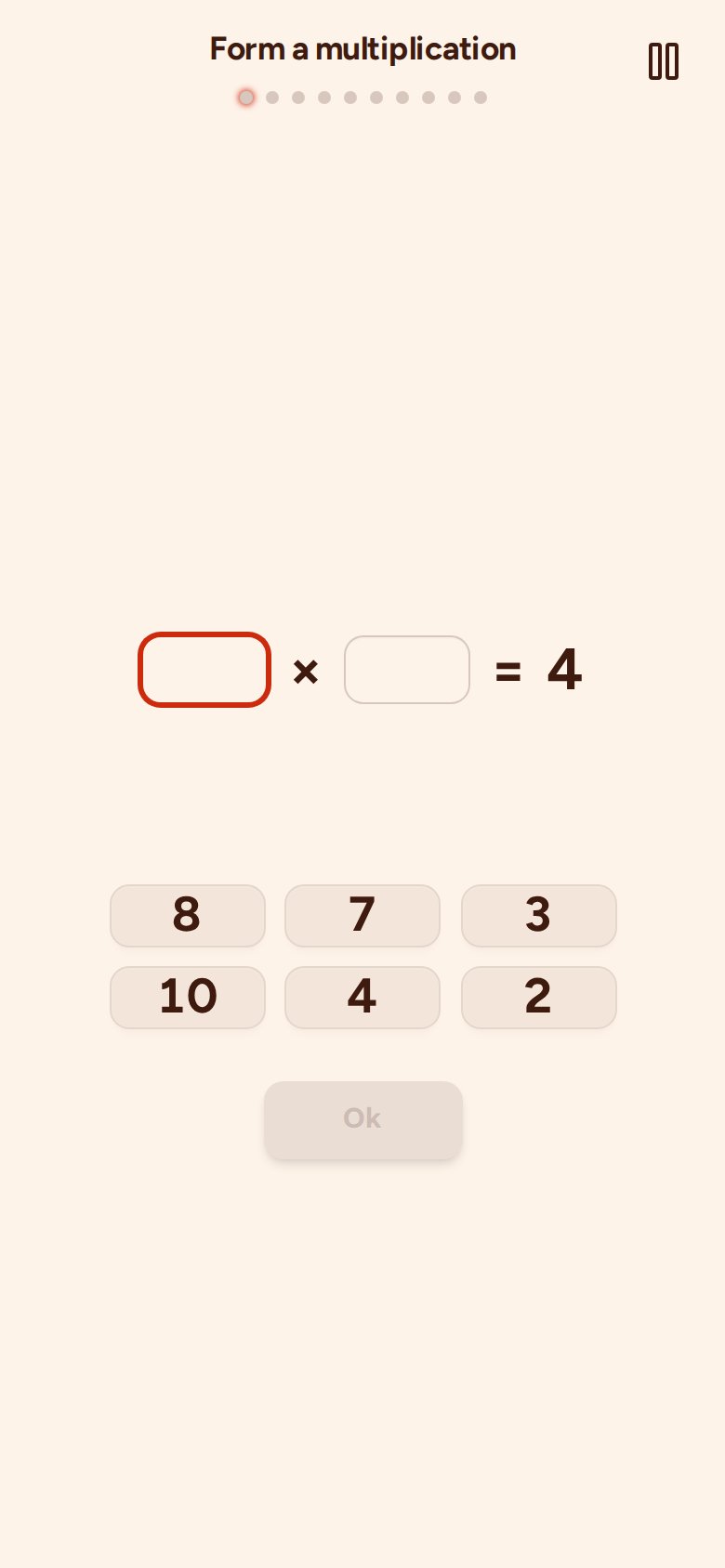
Find the numbers
The answer is given; the numbers that make it are not. Tap the two that do into the blanks — for a product any order will do, for a difference the larger comes first. You can't type here.
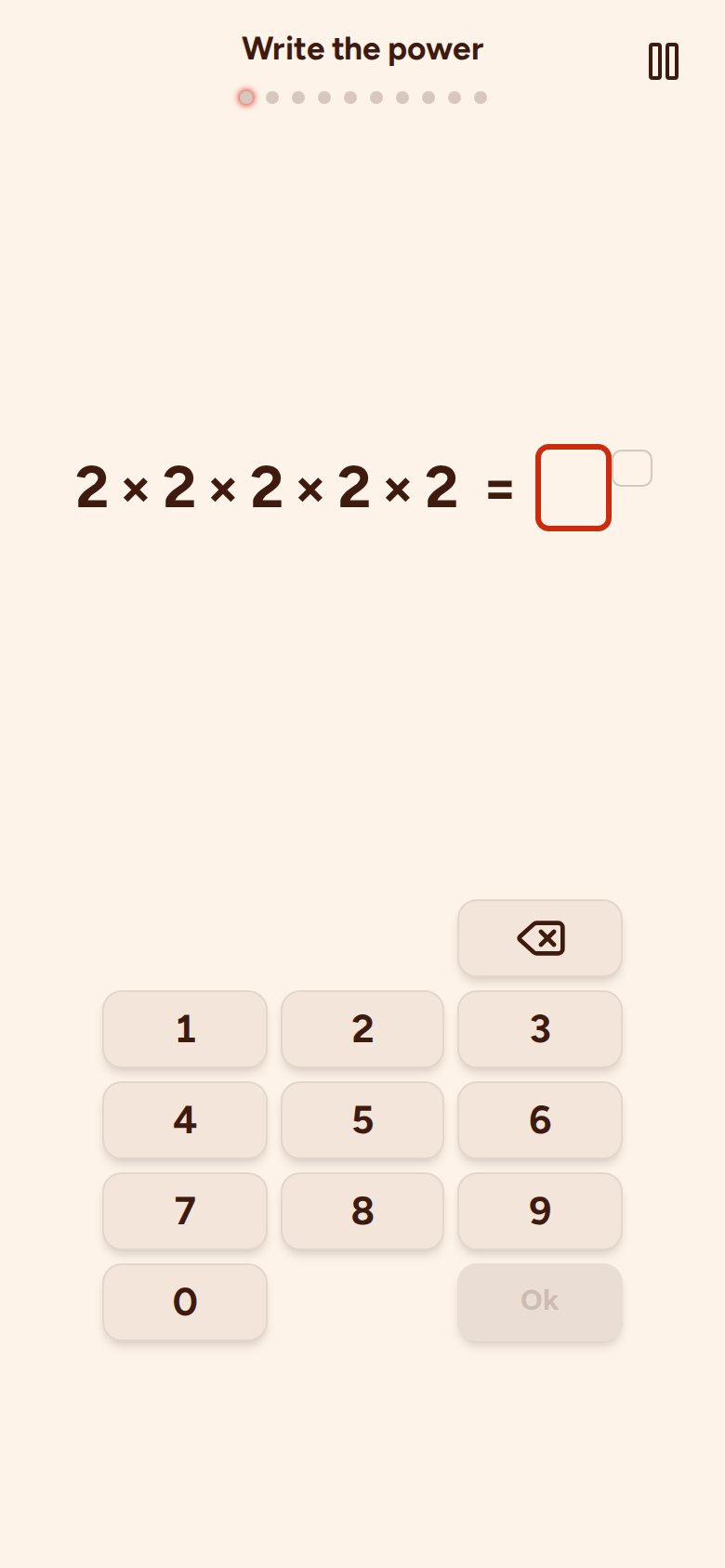
Write the power
A multiplication that repeats one number is a power. Type the number into the big blank and how many times into the small raised one.
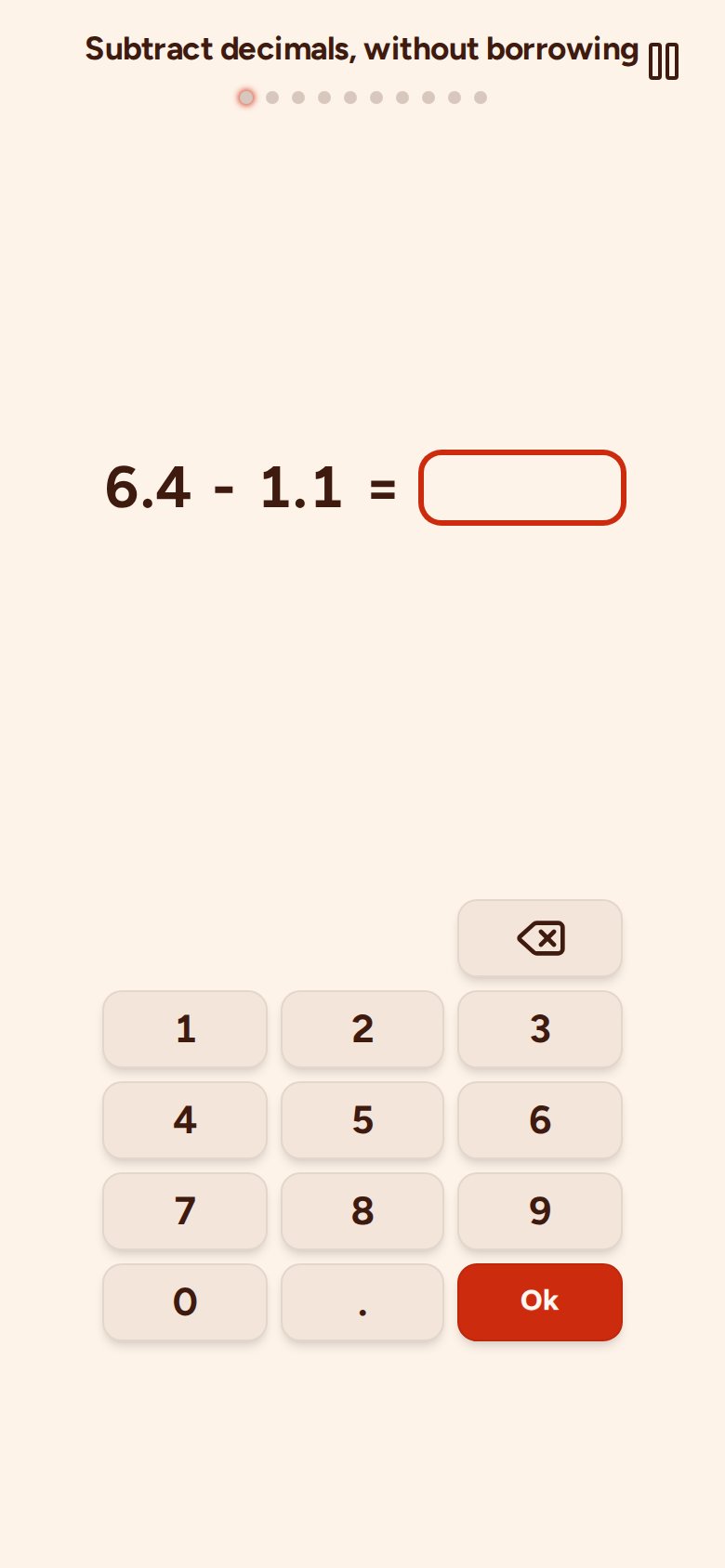
Decimals
A sum with a decimal point in it. It works like any other sum; the keypad grows a point key, and the point goes where the columns say it goes.
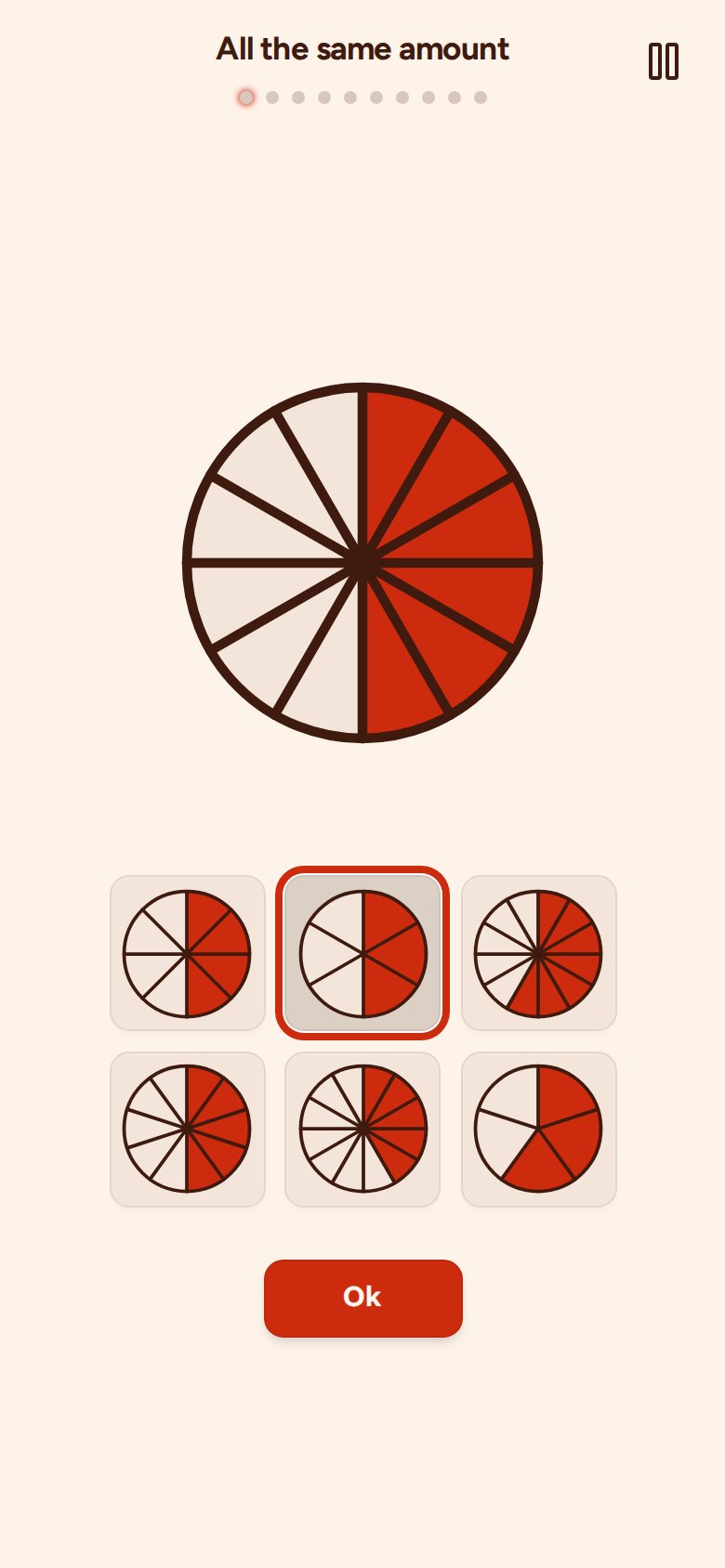
Find every match
One pie, and six more to choose from. Tap every pie that has just as much shaded, however it is cut — there are between one and three. Tap again to change your mind, then Ok.
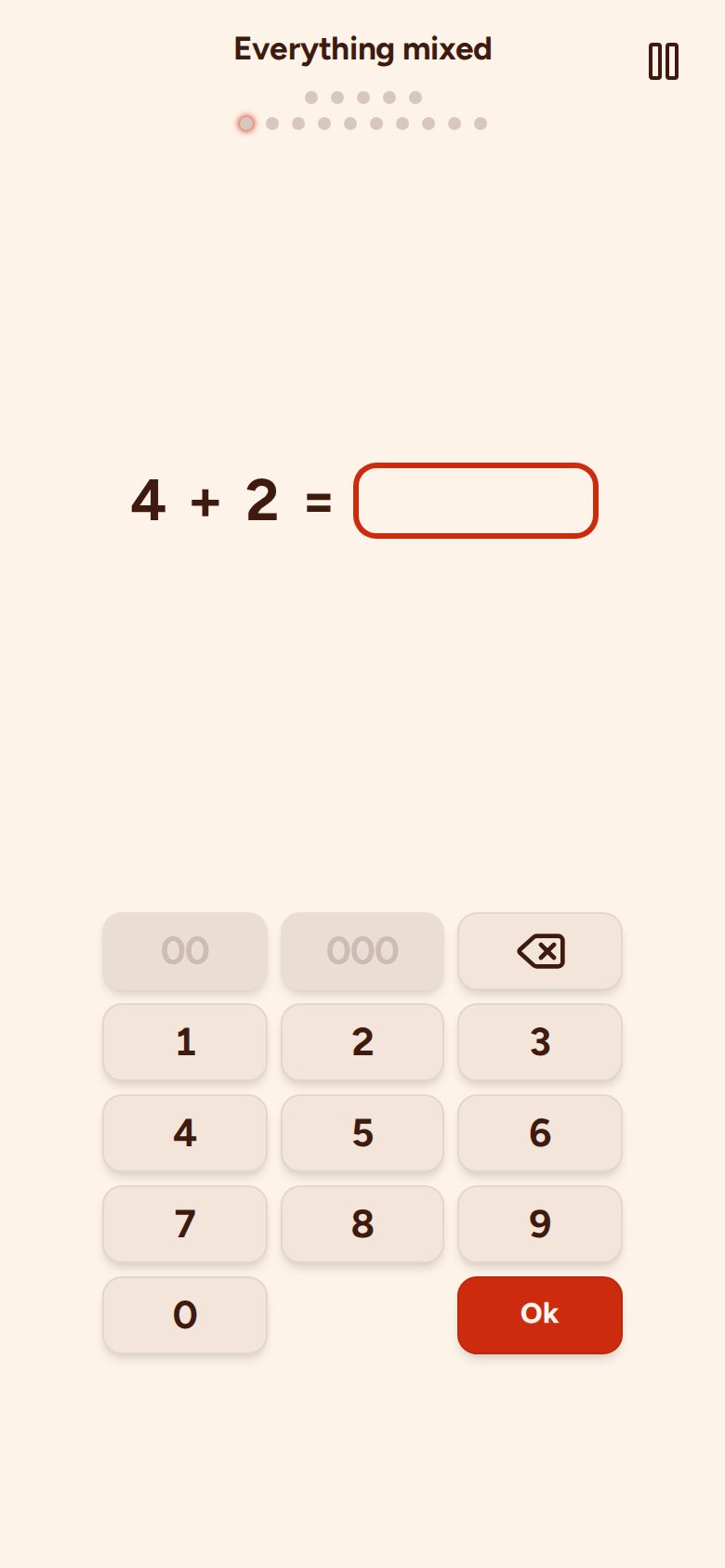
Longer round
The same exercise, with a good many more problems in it. Nothing else changes — the row of dots along the top is just longer, and finishing it is worth more wood.
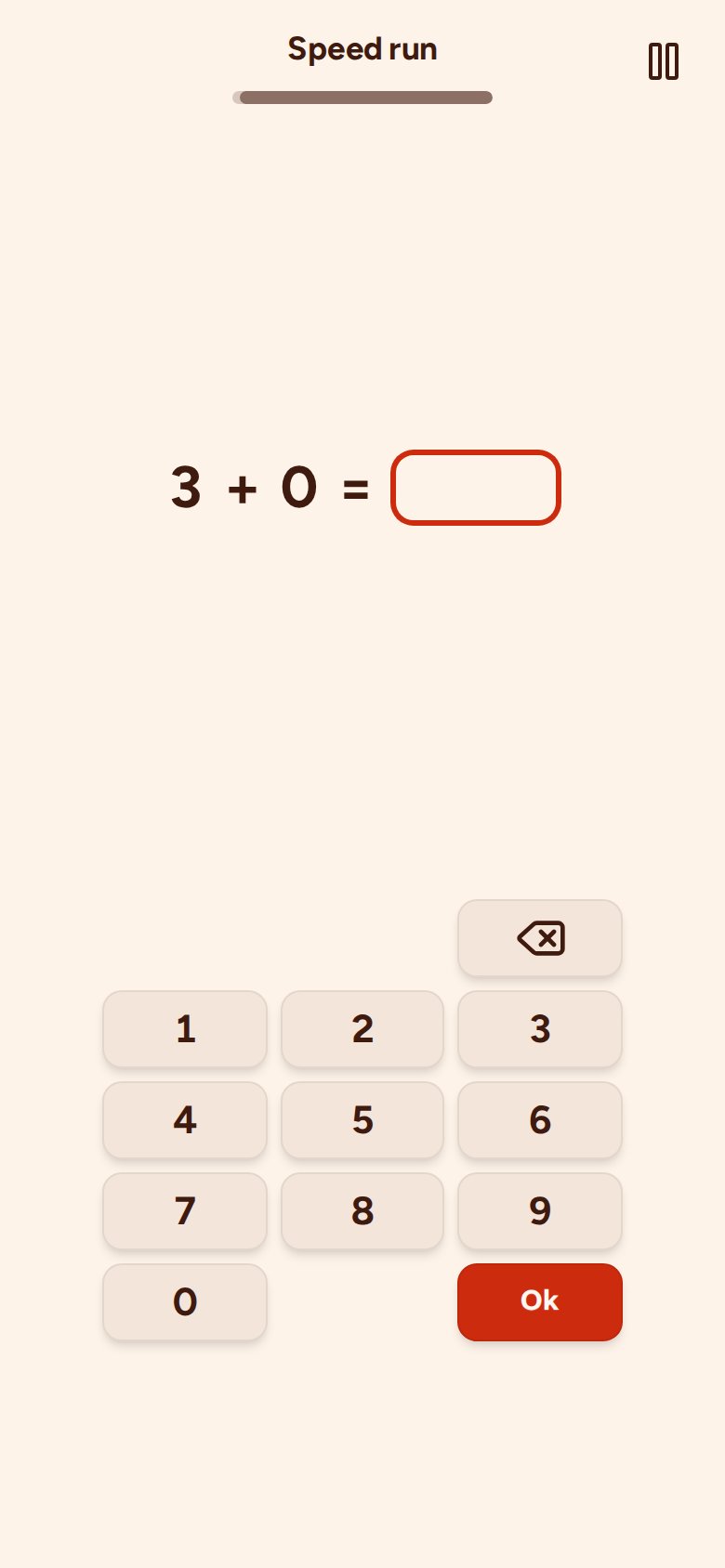
Against the clock
Sums you already know, as many as you can in a minute. The clock runs down along the top, and the run ends when it does — the point is to get faster.