How it works › Where the work goes
Your village
The village is where the sums turn into something. Every group of sums you master earns a building, and the buildings stay — it is a map of everything you have learnt, and you get to lay it out yourself. You do need a user of your own, linked to a grown-up's account, before anything can be built.
A house is a group
Each building stands for a group of sums, not for a single card. Inside that group, the cards marked with a hammer each add a course; the rest belong to it and do not build — but the fire waits on all of them. Tap a house on the map to see which group it is and what it still wants.
Wood is what you earn
Every problem answered pays wood, and land and buildings are bought with it. The amount is in the header on every page.
Seven courses
A house goes up in seven steps: choose the ground, then build five courses, and finally a fire in the window. The courses are bought with the cards that carry a hammer; the fire is earned by mastering the whole group without a mistake. You can only build the course you have earned.
Kinds of house
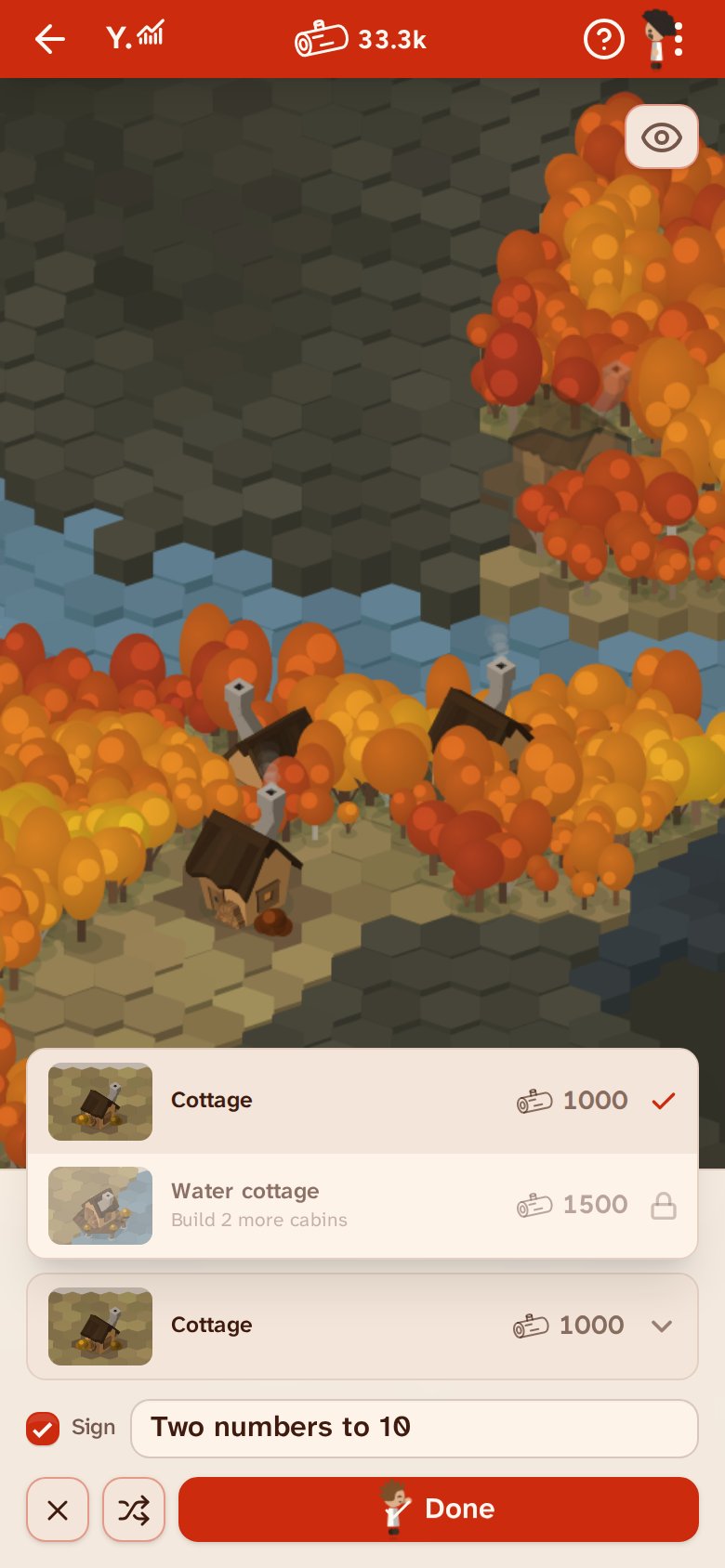
Every village starts with the cottage. Finish houses and the rest open up — a two-storey, a barn, a longhouse, a cottage on stilts over the water — and you choose which shape each new group takes, and which way it faces. The village says so as soon as a new one is yours.
The signposts
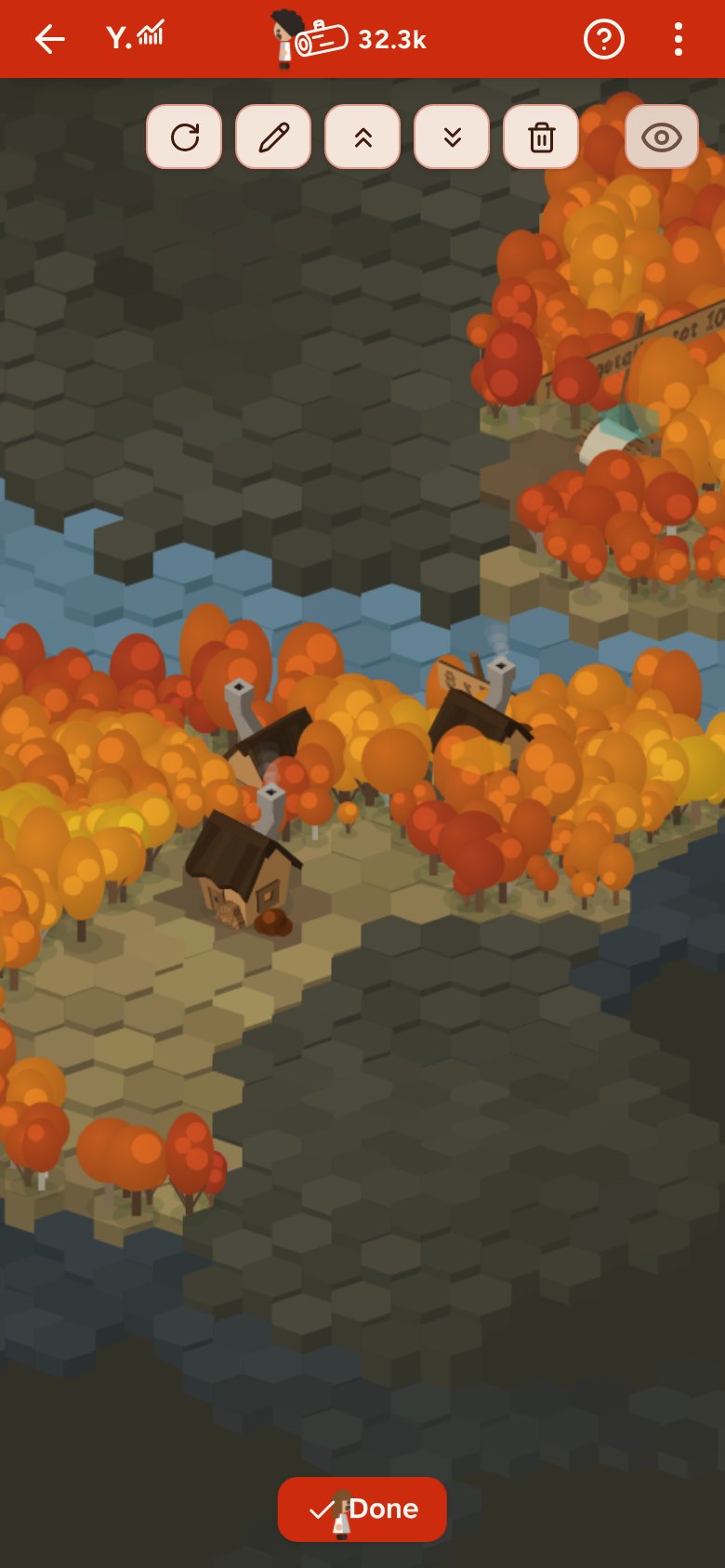
A house puts a board up outside itself when you place it, with the name of its group on it — so the map says which house is which. You choose what goes on it before the house is there, and afterwards you can move the board, turn it to face another way, write something else on it, raise or lower the post, or take it away. Your own boards can go anywhere on your land.
The ground it stands on
A new village opens on a choice of three patches, and the first one you buy gives the place its name. Land costs 30 wood a tile after that, and each new patch costs more than the last. What you own you may reshape — cut the river, raise and lower the hills, lay paths, plant and clear the trees — and any house can be picked up and set down somewhere else. Shaping it costs wood — the prices are below.
The time of year
The valley knows what day it is. Wind the year forward or back to see your village under snow or in full summer, and one press brings it back to today.
Looking at it
The eye fits the whole valley on screen, hides or thins out the trees and the houses, turns the signs and the children on or off, chooses how much of the village moves, and hands you the valley alone with everything else out of the way.
The mills
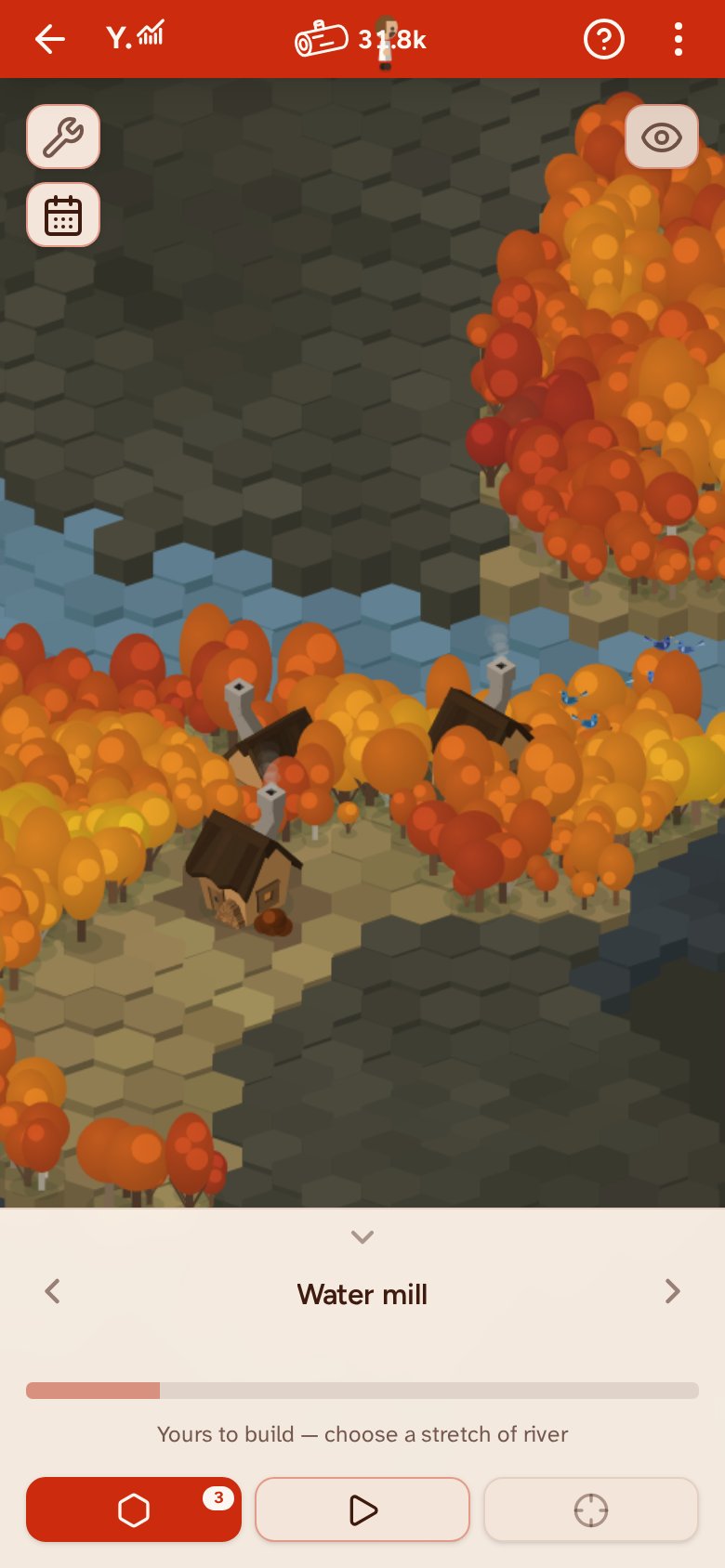
A windmill and a water mill are earned rather than bought. Speed runs rig the windmill's sails, and every board of sail pays more on top of your velocity bonus; runs of 30 or more problems board the water wheel, and every blade pays more on top of your accuracy bonus. Both start with a little extra and climb a point with every board or blade, and both only pay while they are turning.
Shaping the land costs wood, and clearing trees pays some back. Beside the Ok button you can always see what the whole visit comes to — and until you press it, nothing has been paid.
- Felling a tree
- Pays 30 wood. A tree also comes down when you turn its tile into water or a path, so you get it back there too.
- Planting a tree
- Costs 30 wood — exactly what felling one pays. A tree is worth the same as a tile of ground.
- A path
- Laying one or lifting it costs 20 wood.
- Water
- Digging a tile out or filling it back costs 100 wood. It is the dearest thing you can do to a tile.
- Ground up or down
- Every step, either way, costs 50 wood.
- Buying ground
- 30 wood a tile, and each new patch costs a little more than the last.