2 × 2 × 2 × 2 is 2 to which power?
Powers
Powers practice, from 6² = 6 × 6 to 3⁵ = 243: reading and writing a power first, then the powers of 2 to 9, the small ones before the large ones.
Your child can only do the exercises here once they know the times tables from 1 to 10. Each power is the one before times the base, 3⁴ = 81 so 3⁵ = 81 × 3, and a child who still has to work out 7 × 7 or 9 × 9 gets lost before the numbers even get big.
Usually taught in Year 5–6 in England and Wales, around ages 9 to 11. Every child goes at their own pace; this is a guide, not a requirement.
The first of 13 exercises in this topic. See them all
What it looks like for your child
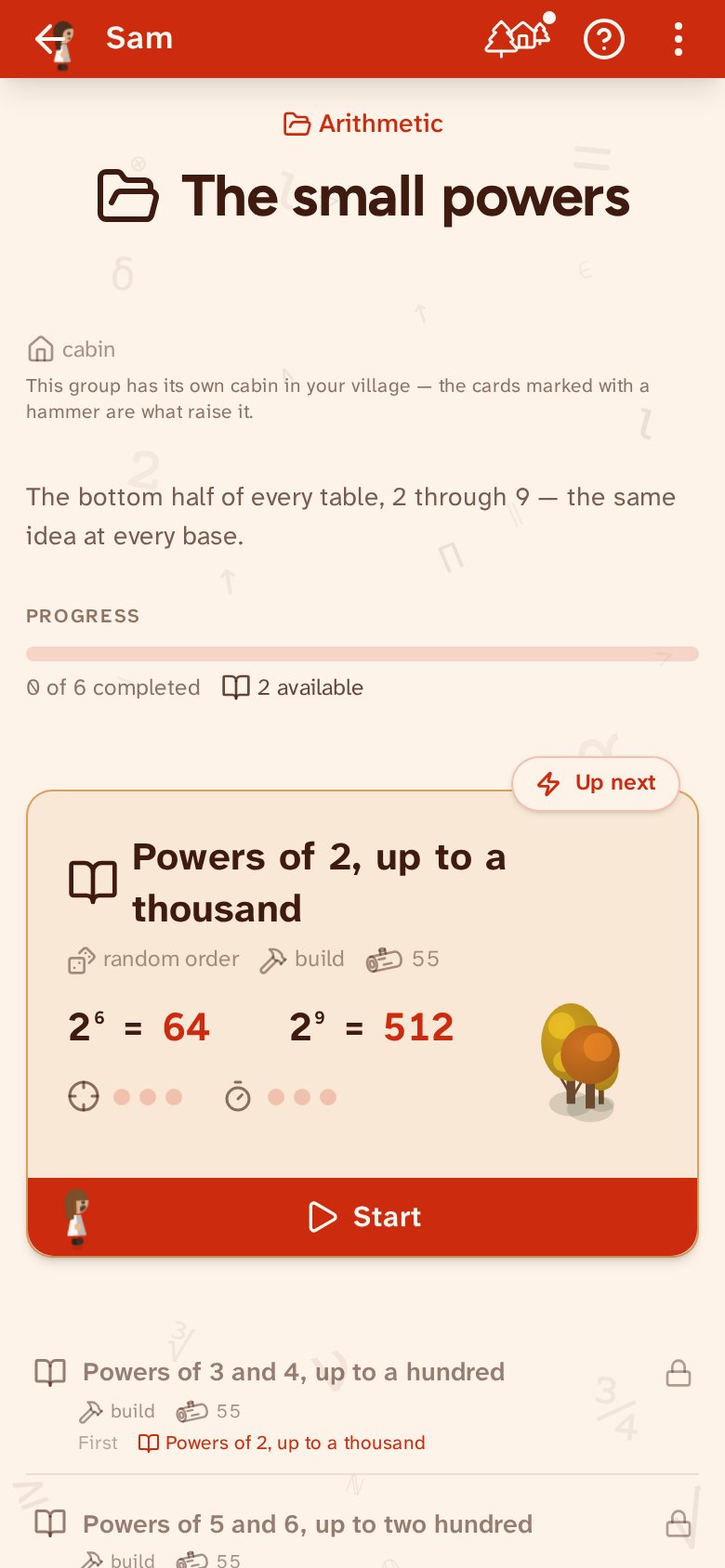
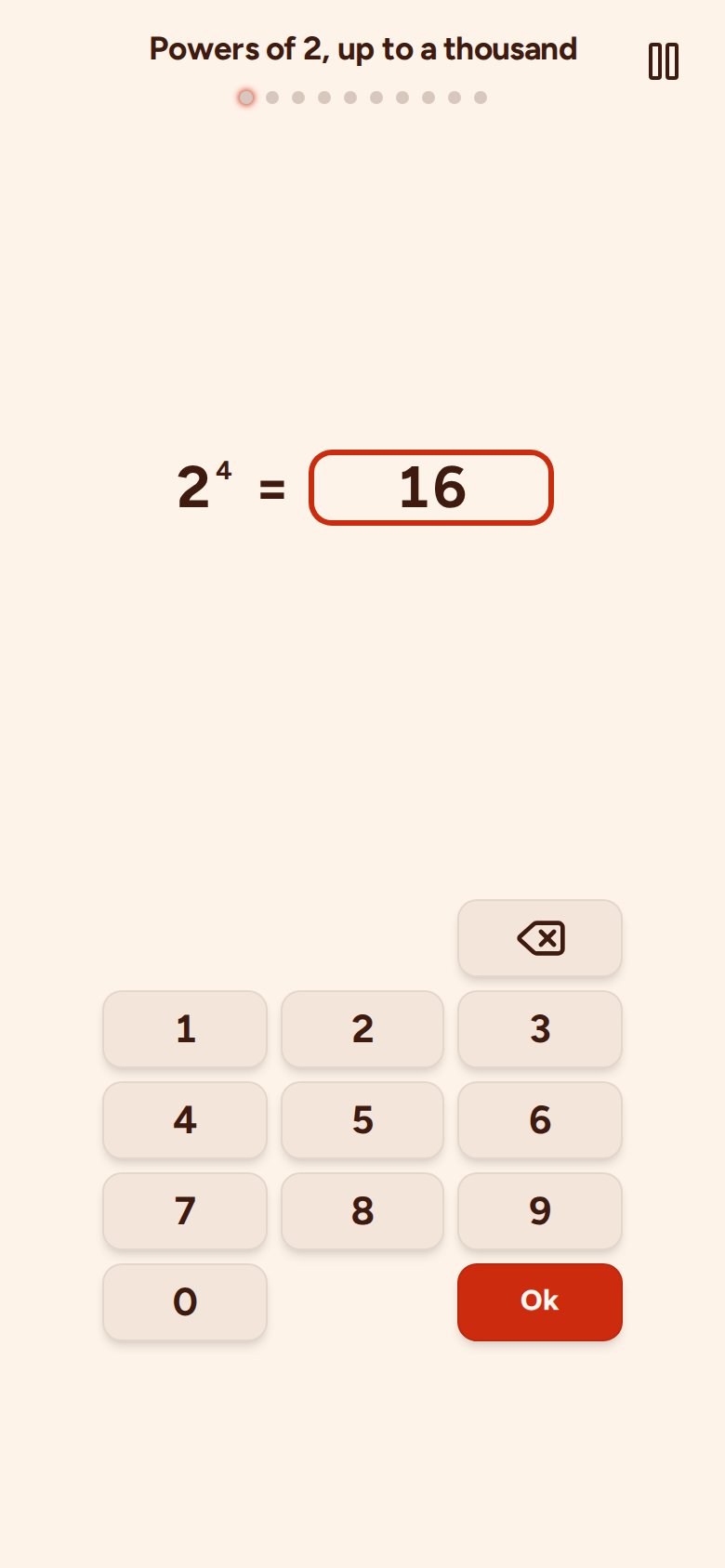
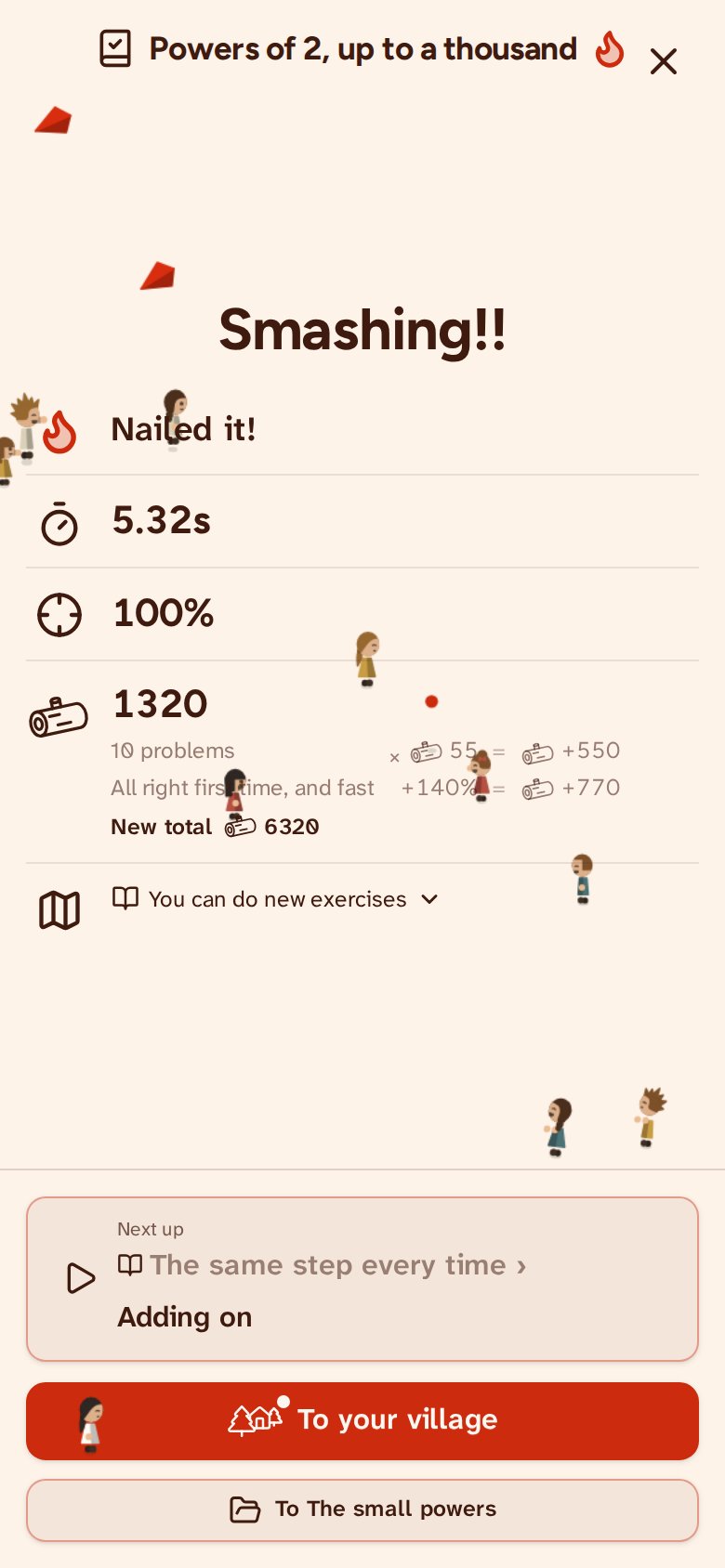
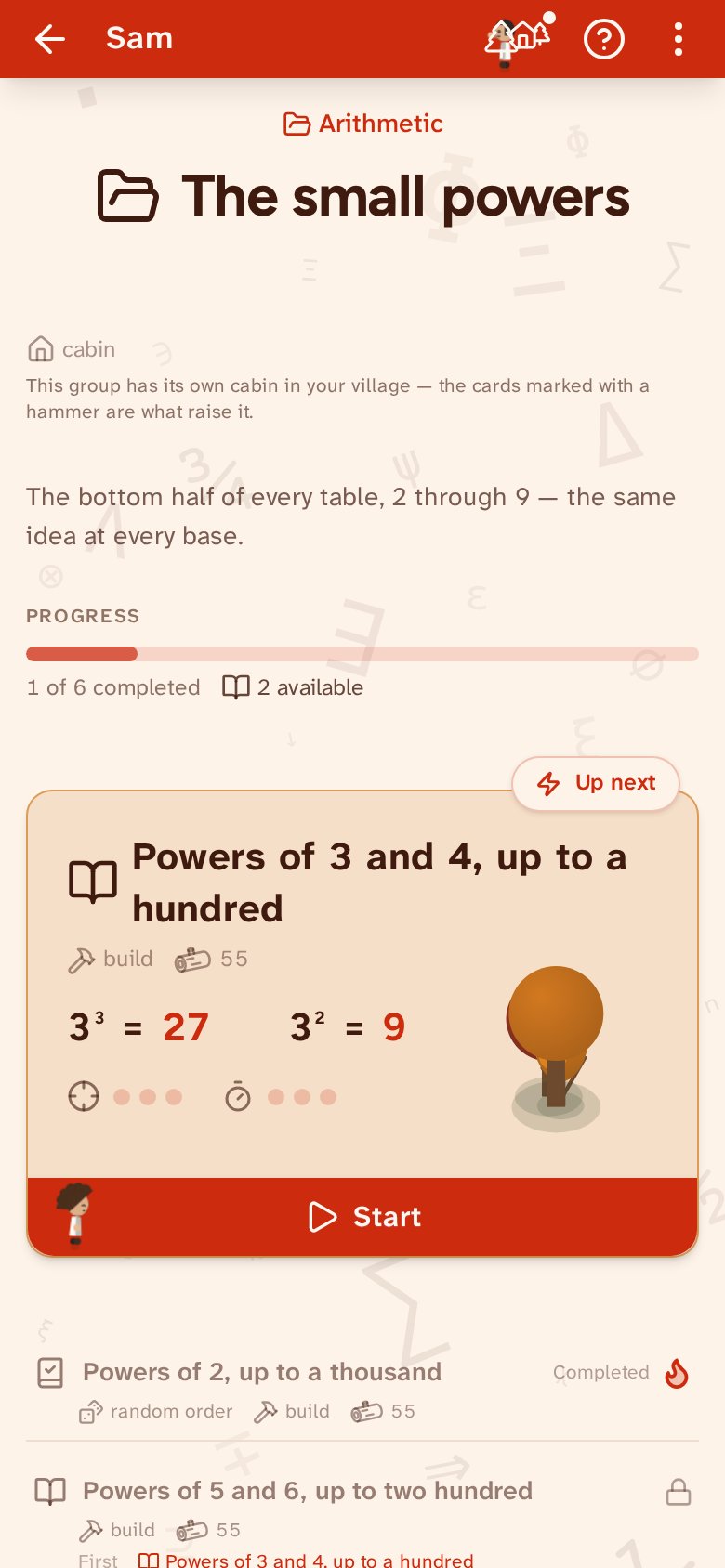
With one exercise from this topic as the example: Powers of 2, up to a thousand.
1
2
3
4
How it fits together
The arrows point to what can be done next. Whatever sits inside a box belongs to it.
Needed first
Explore
Powers
The small powers
first this, then that belongs to
3 × 3 × 3 × 3 — write it as a power
Everything in this topic in one round of 80 sums.
The small powers
Each power is the one before times the base: 2⁵ = 2⁴ × 2.
Each power is the one before times the base: 3⁴ = 3³ × 3.
Each power is the one before times the base: 5³ = 5² × 5.
Up to a hundred these are the squares: a number times itself, like 8² = 8 × 8.
Every base from 2 to 9, the small powers — which table is this?
The large powers
Each power is the one before times the base: 2¹⁰ = 2⁹ × 2.
Each power is the one before times the base: 4⁶ = 4⁵ × 4.
Each power is the one before times the base: 6⁵ = 6⁴ × 6.
Each power is the one before times the base: 8⁴ = 8³ × 8.
Every base from 2 to 9, the large powers — the hardest of the lot.
Why it matters
A power is a shorthand: 5 × 5 × 5 is written as 5³. That looks like a small trick of notation, but it is the language of big numbers. Square numbers, area and the steps from a thousand to a million all lean on it.
Powers also grow surprisingly fast, and that feeling is valuable. A child who sees that 2 to the power of 10 is already over a thousand understands better why something that keeps doubling grows so quickly.
How to approach it
Start with reading and writing: how many times does the same number appear, and which number is it? The base is written large, and the small number at the top right says how many times you multiply it by itself. So 6² is 6 × 6, not 6 × 2.
Then come the power tables, just like the times tables: first the small powers, then the big ones. Each power is the one before times the base, so a child who knows 3⁴ = 81 finds 3⁵ through 81 × 3 = 243. That way not everything has to be learned by heart.
When is it secure?
When your child gets all 10 sums right in 30 seconds or less. Answers only come that quickly once they come from memory.