The number that comes before: before 4 comes 3.
Subtraction to 5
Subtraction to 5 practice, from 3 − 1 to 3 − 3 = 0: minus 1 first, then filling in the gap, then mixed rounds, including taking everything or nothing away.
Your child can start here once they can add to 5. Subtraction to 5 is that addition turned round: a child who knows that 2 and 3 make 5 can work out what is left when 3 goes away, instead of counting it out.
Usually taught in Reception and Year 1 in England and Wales, around ages 4 to 6. Every child goes at their own pace; this is a guide, not a requirement.
The first of 7 exercises in this topic. See them all
What it looks like for your child
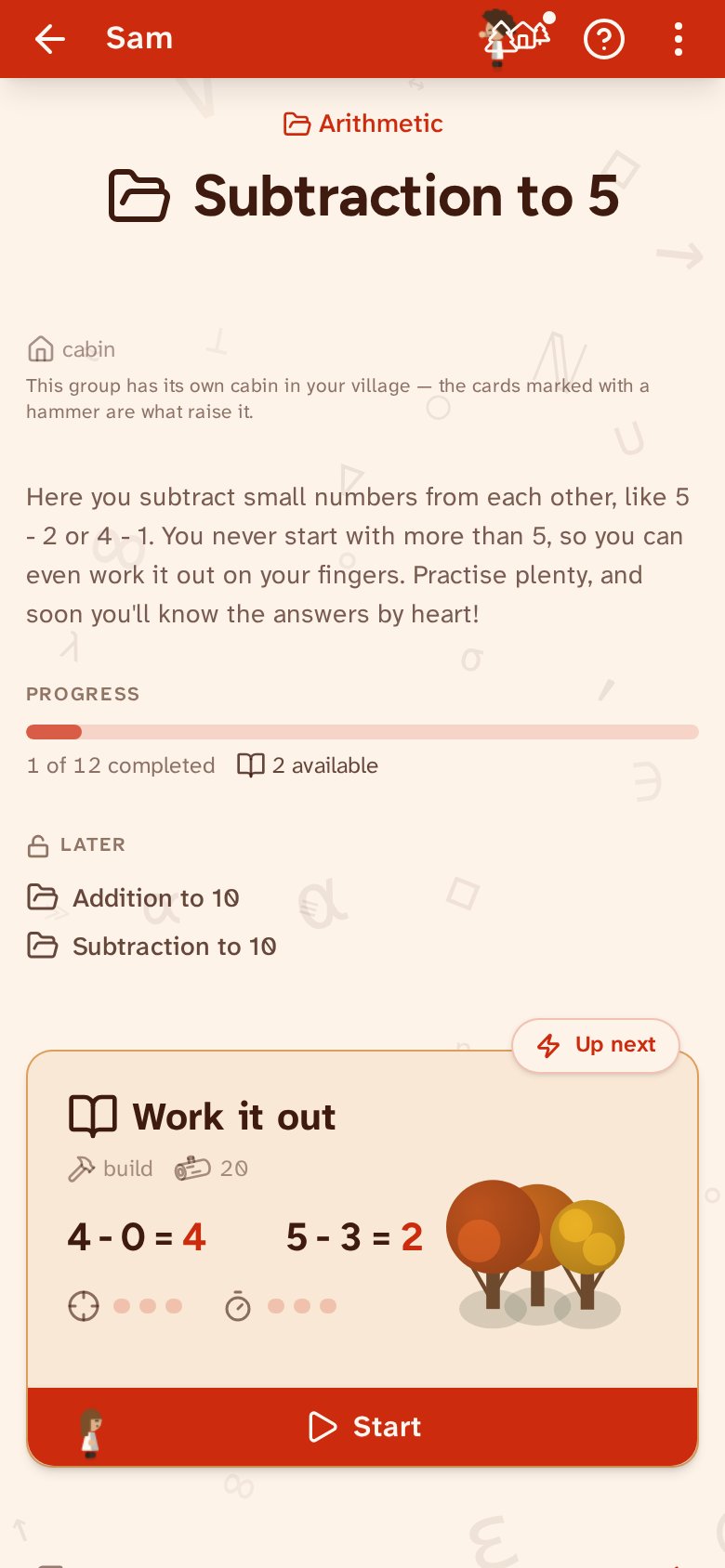
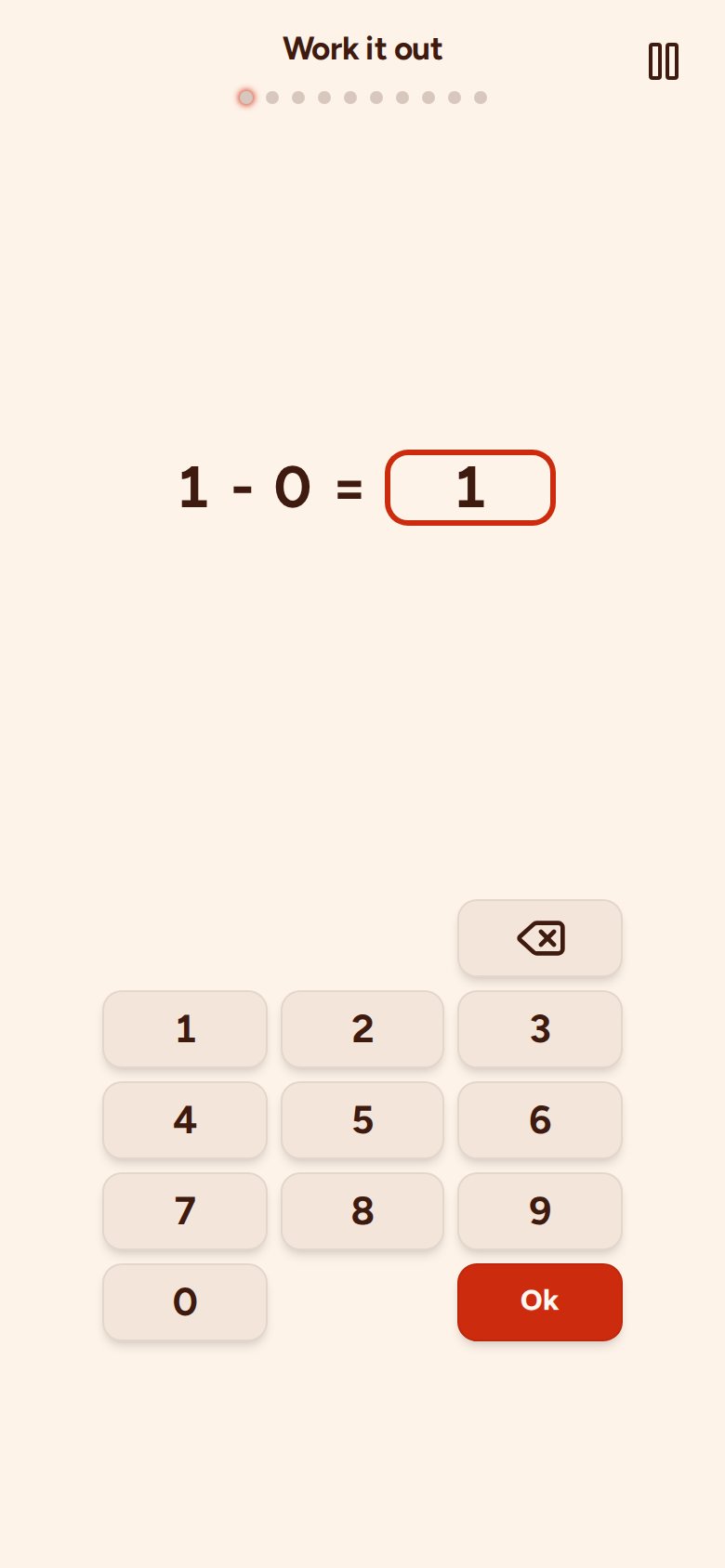
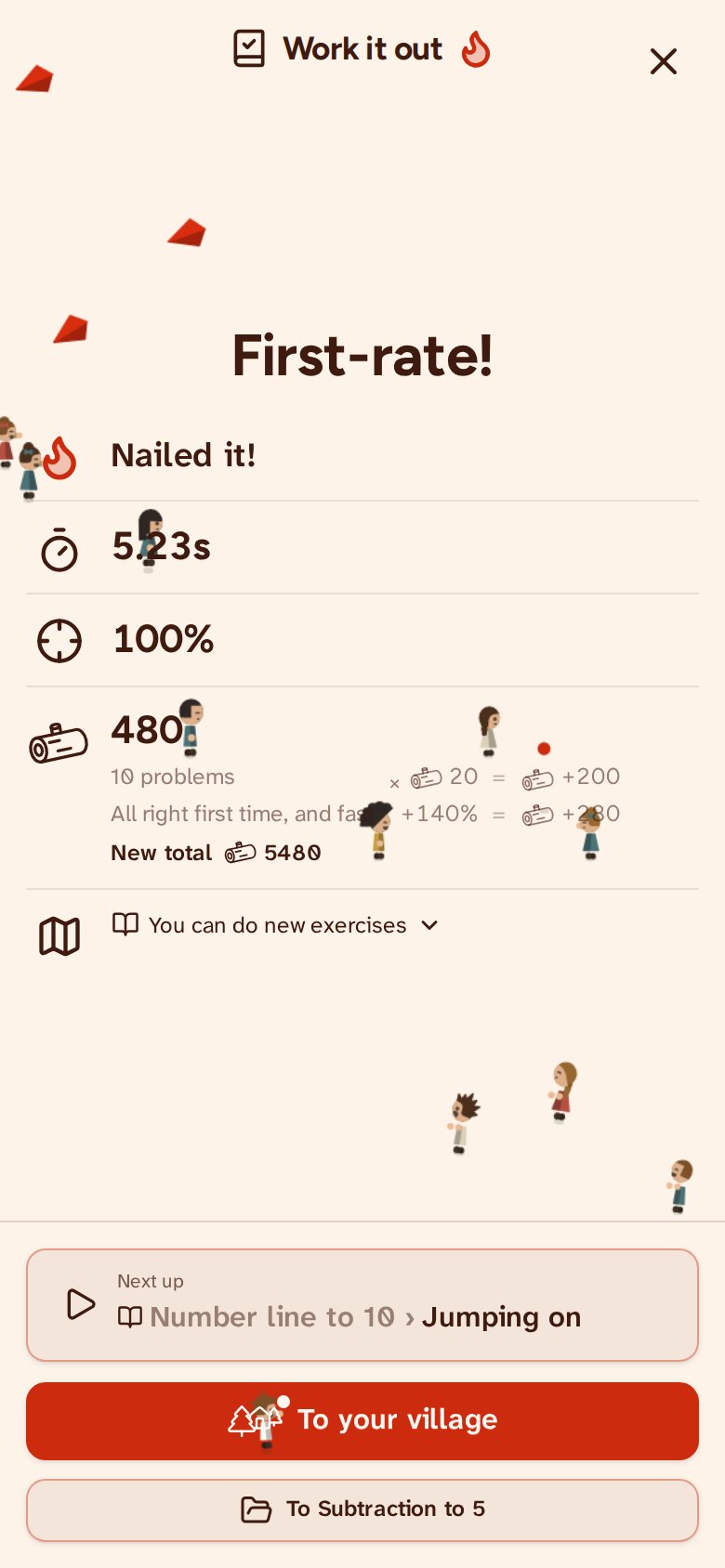
With one exercise from this topic as the example: Work it out.
1
2
3
4
How it fits together
The arrows point to what can be done next. Whatever sits inside a box belongs to it.
Needed first
Subtraction
Subtraction to 5
Can come next
first this, then that belongs to
Count back from the first number: 5 − 2 → 4, 3.
Turn it round: 5 − ? = 3 is the same as 3 + ? = 5.
One minute, as many sums as possible. Not needed to move on, but good for getting quicker.
Working out and missing numbers mixed: first look where the gap is.
One minute, as many sums as possible. Not needed to move on, but good for getting quicker.
Everything in this topic in one round of 30 sums.
- Plus and minus — on the Addition to 5 page
- Plus and minus: fill in — on the Addition to 5 page
- Plus and minus: big round — on the Addition to 5 page
- Quick: plus and minus — on the Addition to 5 page
Why it matters
In subtraction to 5, your child learns that numbers can get smaller too. It is addition to 5 turned round: a child who knows that 2 and 3 make 5 can work out what is left when you take 3 away. That link is what this step is about.
Zero gets its place here as well. Sums like 4 − 4 and 3 − 0 look too easy, but they show what ‘take everything away’ and ‘take nothing away’ mean. That idea keeps coming back, right up to sums with hundreds.
How to approach it
A hand with five fingers is the best tool here. Hold up three, fold one down, and count what is left. Your child sees the taking away happen instead of only hearing about it.
Once that goes smoothly, you can slowly let the fingers disappear. Try asking without hands: ‘you had four and two go away, how many are left?’ If that works, the sums are in their head. The Mix helps with this, because the gap is in a different place each time, so your child has to keep looking.
When is it secure?
A round of 10 sums in one go without a mistake, within 20 seconds. That is about 2 seconds a sum: no more counting, just knowing.