One more each time: 2 + 1, 4 + 1. The first step from counting to adding.
The number that comes next: after 3 comes 4.
Adding to 5 practice, from 1 + 1 to 2 + 3 = 5: plus 1 first, then filling in the gap, then plus and minus mixed, until the sums come without counting.
Your child can start here once they can find numbers on the number line; the later exercises also need taking away to 5. That order is deliberate: a child who sees 2 + 3 as jumping on from 2 to 5 stops counting from one each time, and the mixed plus-and-minus rounds then use the same fact turned round.
Usually taught in Reception and Year 1 in England and Wales, around ages 4 to 6. Every child goes at their own pace; this is a guide, not a requirement.
The first of 11 exercises in this topic. See them all
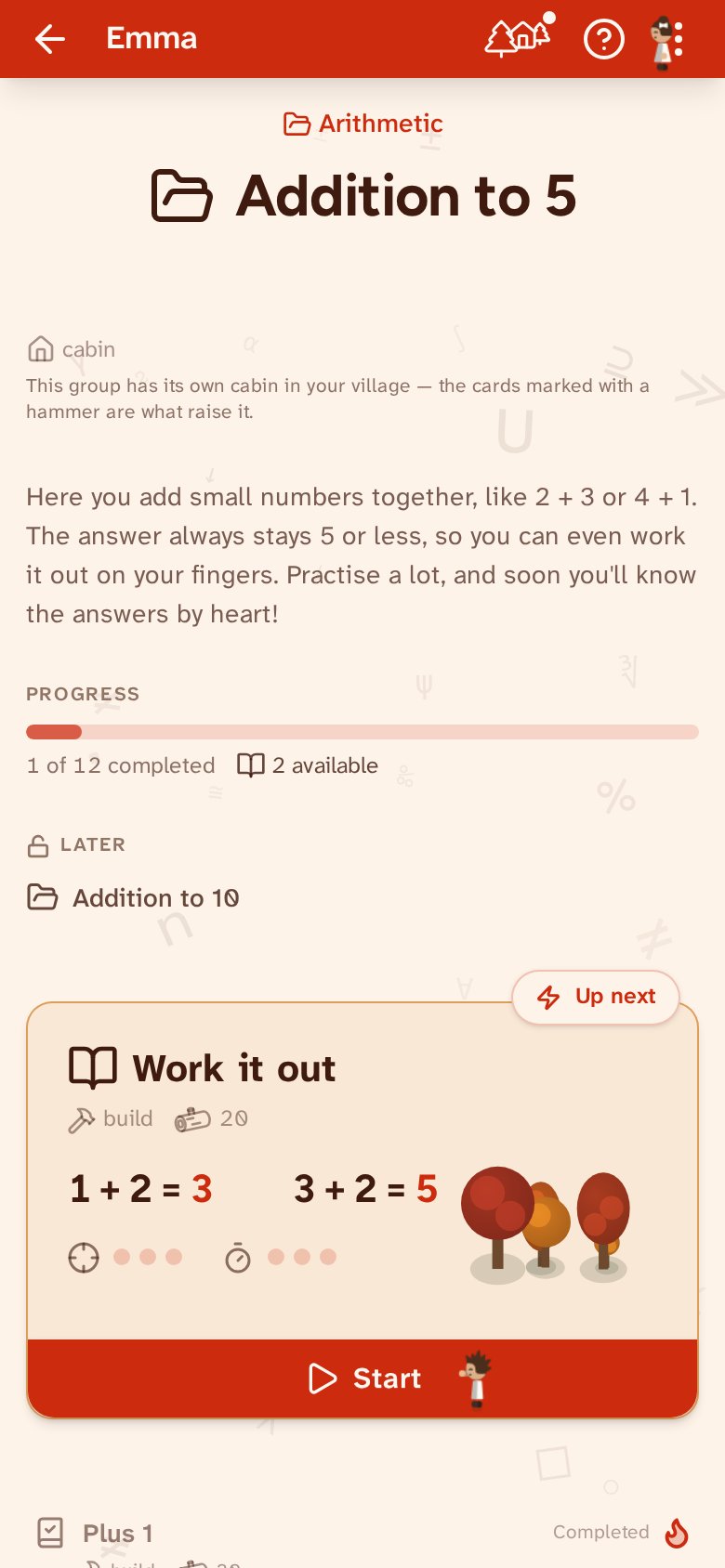
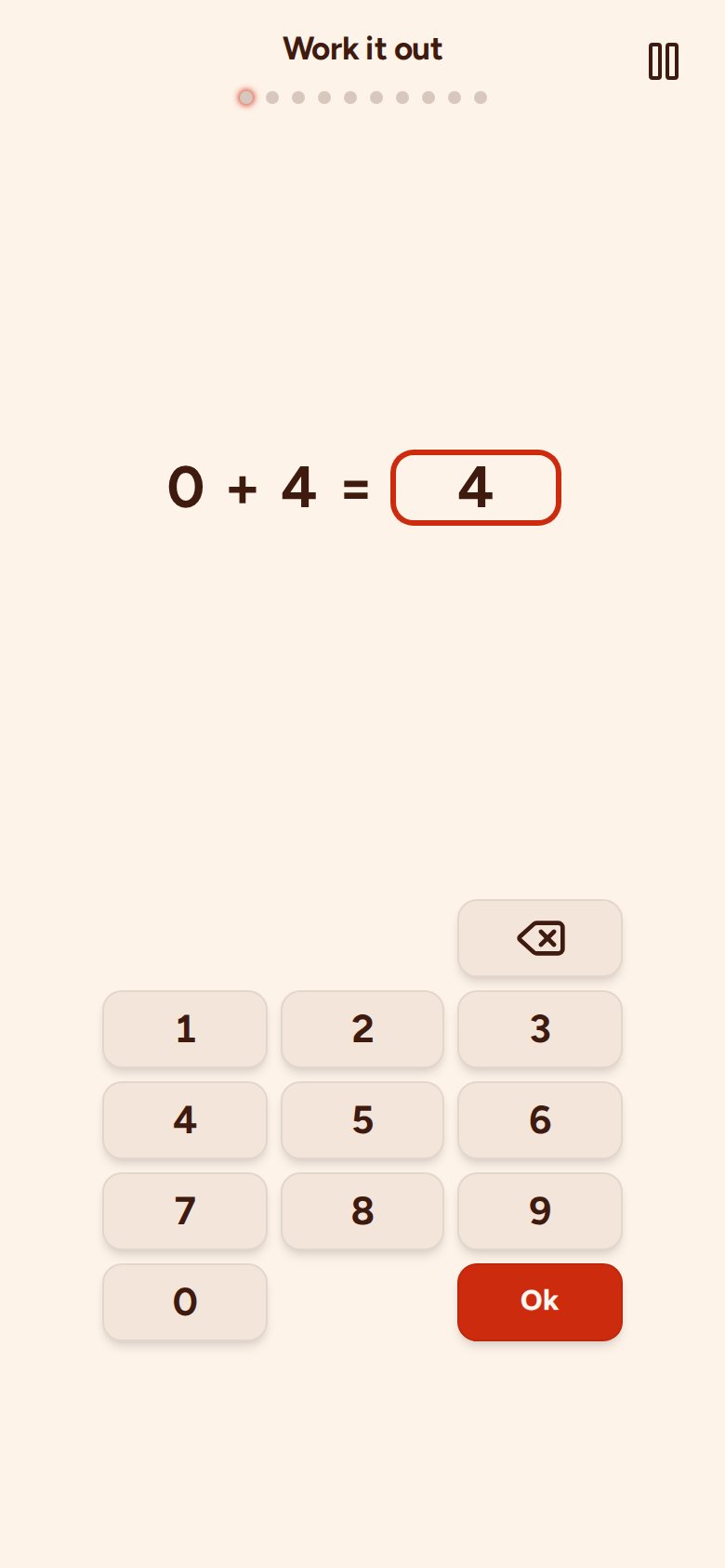
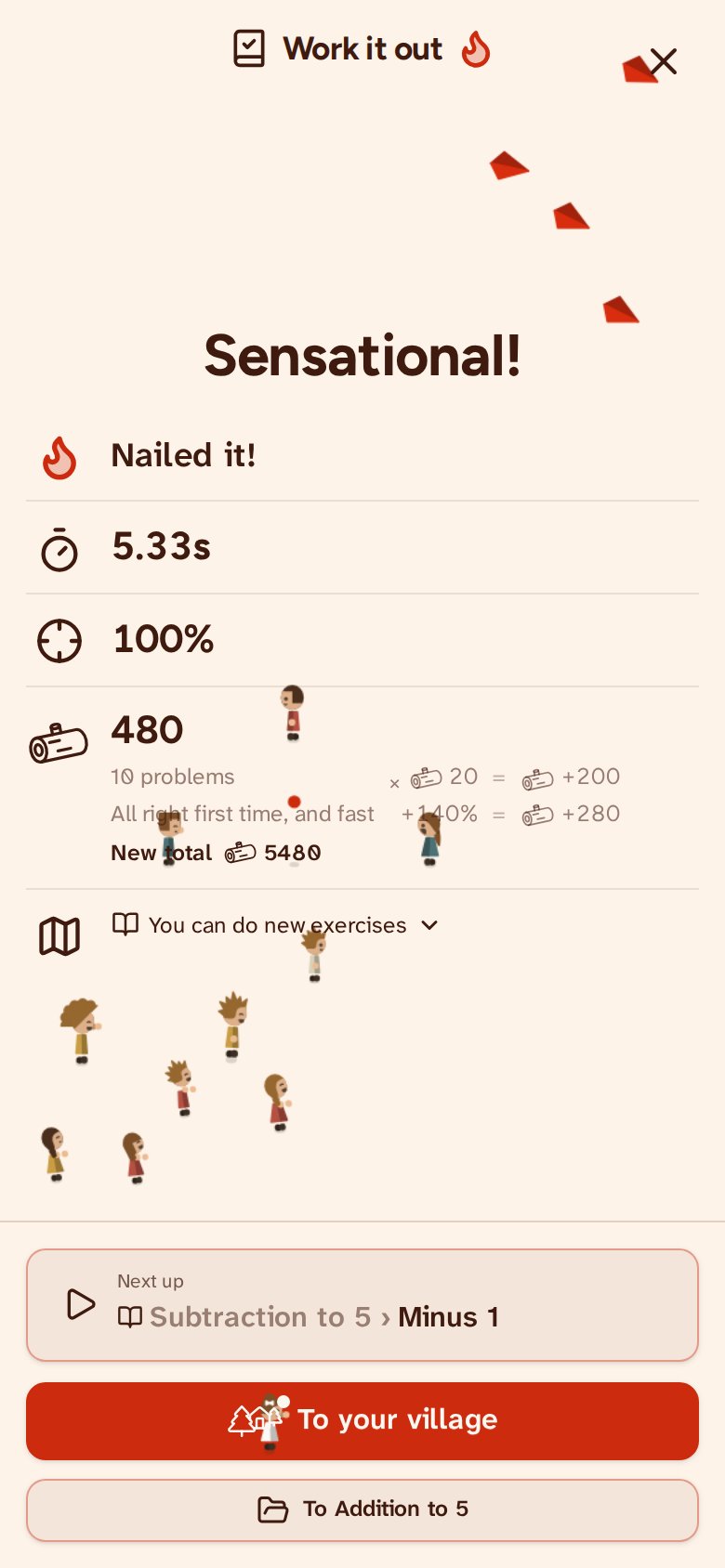
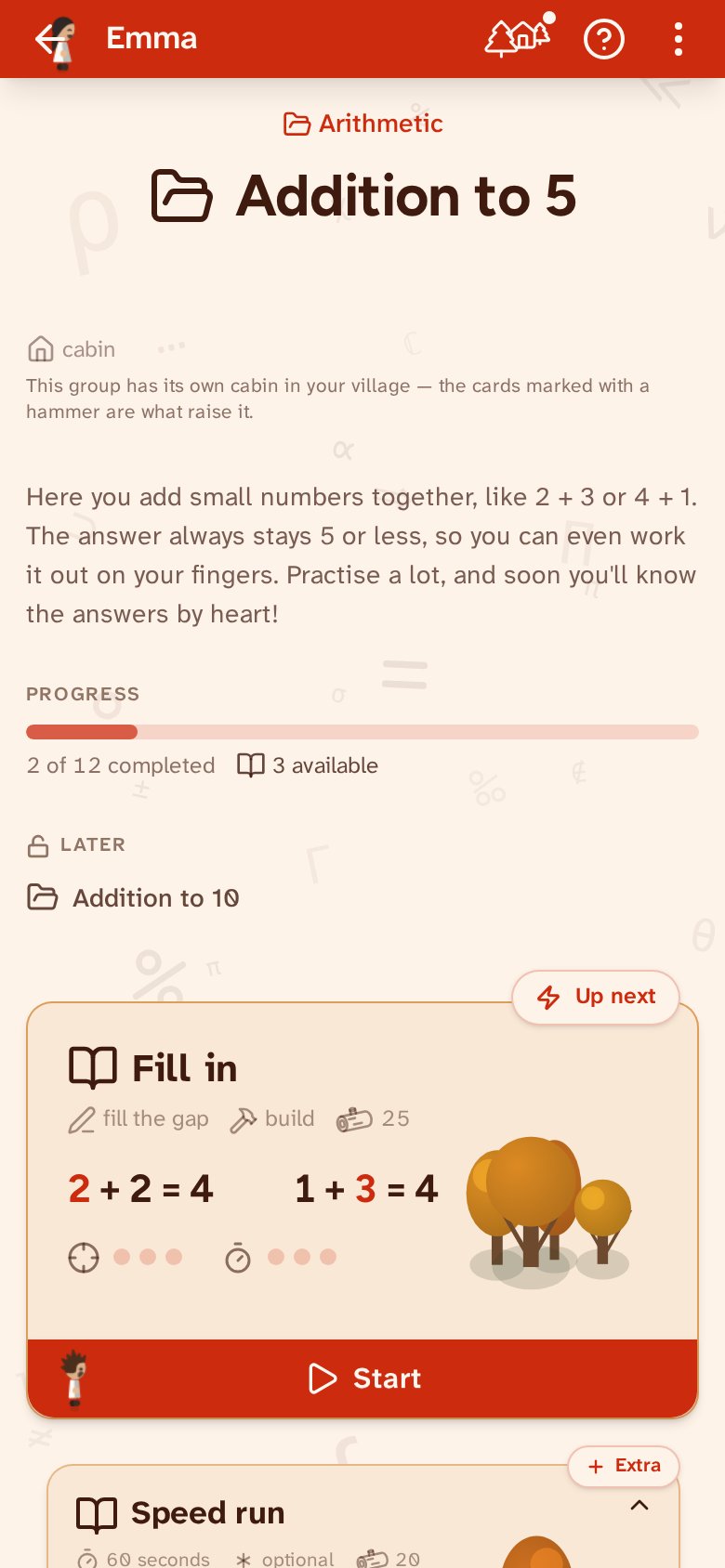
With one exercise from this topic as the example: Work it out.
The arrows point to what can be done next. Whatever sits inside a box belongs to it.
Needed first
Addition
Addition to 5
Can come next
first this, then that belongs to
One more each time: 2 + 1, 4 + 1. The first step from counting to adding.
The number that comes next: after 3 comes 4.
Putting two numbers together and saying how many that makes.
Start at the bigger number and count on: 2 + 3 → 4, 5.
The answer is already there, but a number before it is missing. Your child notices that a sum can be read from both ends.
Count on from the number that is there: 3 + ? = 5 → 4, 5, so 2.
Sixty seconds, as many sums as possible. Good for children who can already add to 5 and want to get quicker.
The gap can be anywhere: sometimes it is the answer, sometimes one of the numbers before it. Look first, then work it out.
The mix against the clock: how many in a minute?
Thirty sums in a row, every kind from this part mixed. A final round for children who have it at their fingertips.
Addition and subtraction in one round. Now the sign matters too, not just the numbers.
Check each sum first: is it plus or minus?
Plus and minus with a gap. Sometimes your child has to work backwards to find the missing number.
Read the whole sum before you fill in: is something added, or taken away?
A long round of thirty addition and subtraction sums, as the real test.
Plus and minus against the clock. How far can your child get in one minute?
Adding to 5 is where maths begins. Your child learns to put two amounts together and know how many there are, without counting them all again. Everything after builds on this: adding to 10, subtraction, and later sums that cross ten.
The more easily these small sums come, the more attention is left for the next step. A child who knows 3 + 2 straight away has room to think about crossing ten in 8 + 5; a child who still has to count for 3 + 2 is more likely to lose track there.
At first your child may count, fingers included. Start from the bigger number and count on: for 1 + 3, say ‘three’ and carry on: ‘four’. That is quicker than starting from one.
The aim is for the counting to fade away on its own. Lots of short rounds fix the sums in memory, and one day your child knows 4 + 1 without thinking about it. A few minutes at a time works better for this than one long session.
All 10 right in one round, and no more than 20 seconds altogether. Around 2 seconds a sum shows your child is no longer counting.