Each answer is the one before plus 1.
1 times table
1 times table practice, from 1 × 1 to 8 × 1 = 8 and 6 ÷ 1 = 6: the table where nothing changes, in order, mixed up and filled in, then dividing by 1.
This is where the times tables begin: nothing else needs to come first. The 10 times table and the 11s build on it, because 6 × 10 is six tens the way 6 × 1 is six ones, and 6 × 11 is those two together.
Usually taught in Year 2–4 in England and Wales, around ages 6 to 9. Every child goes at their own pace; this is a guide, not a requirement.
The first of 6 exercises in this topic. See them all
What it looks like for your child
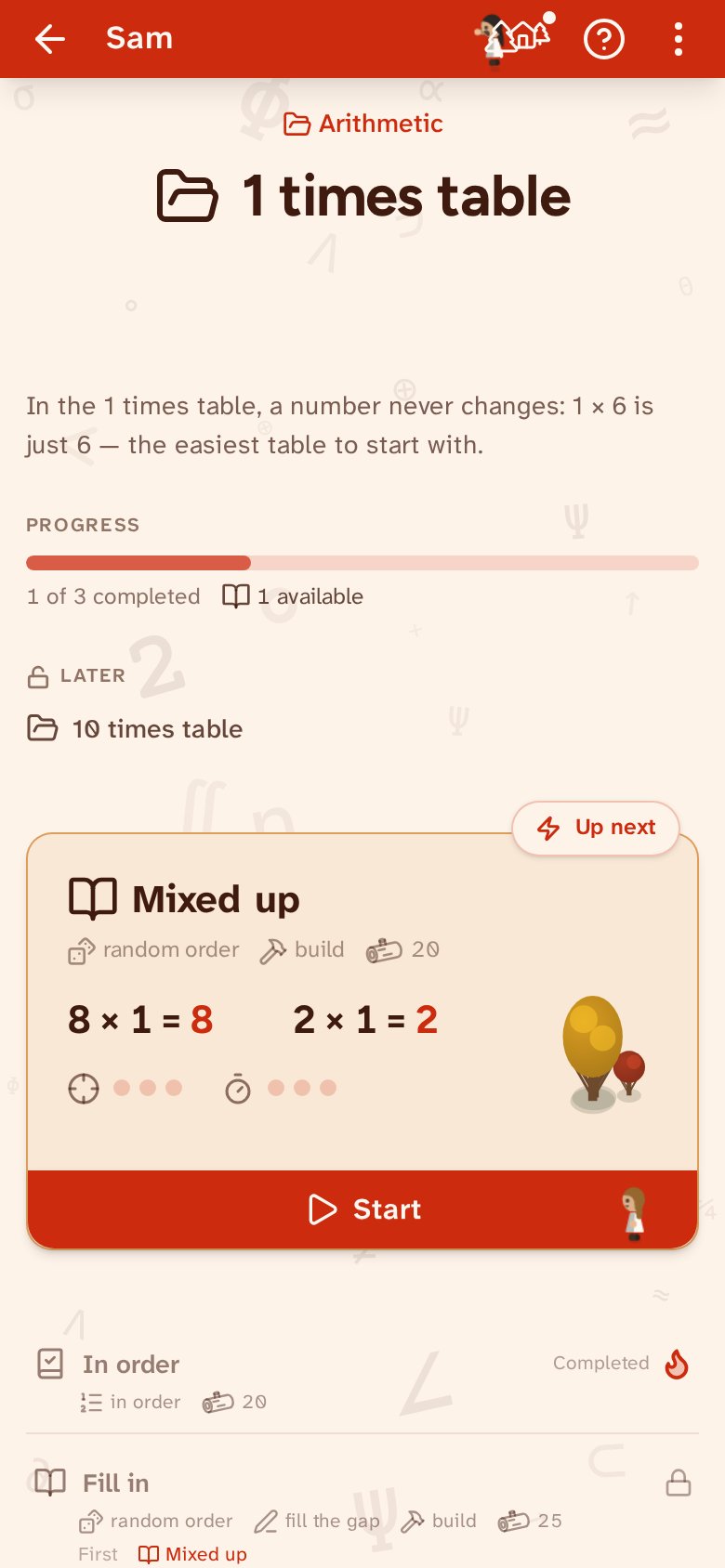
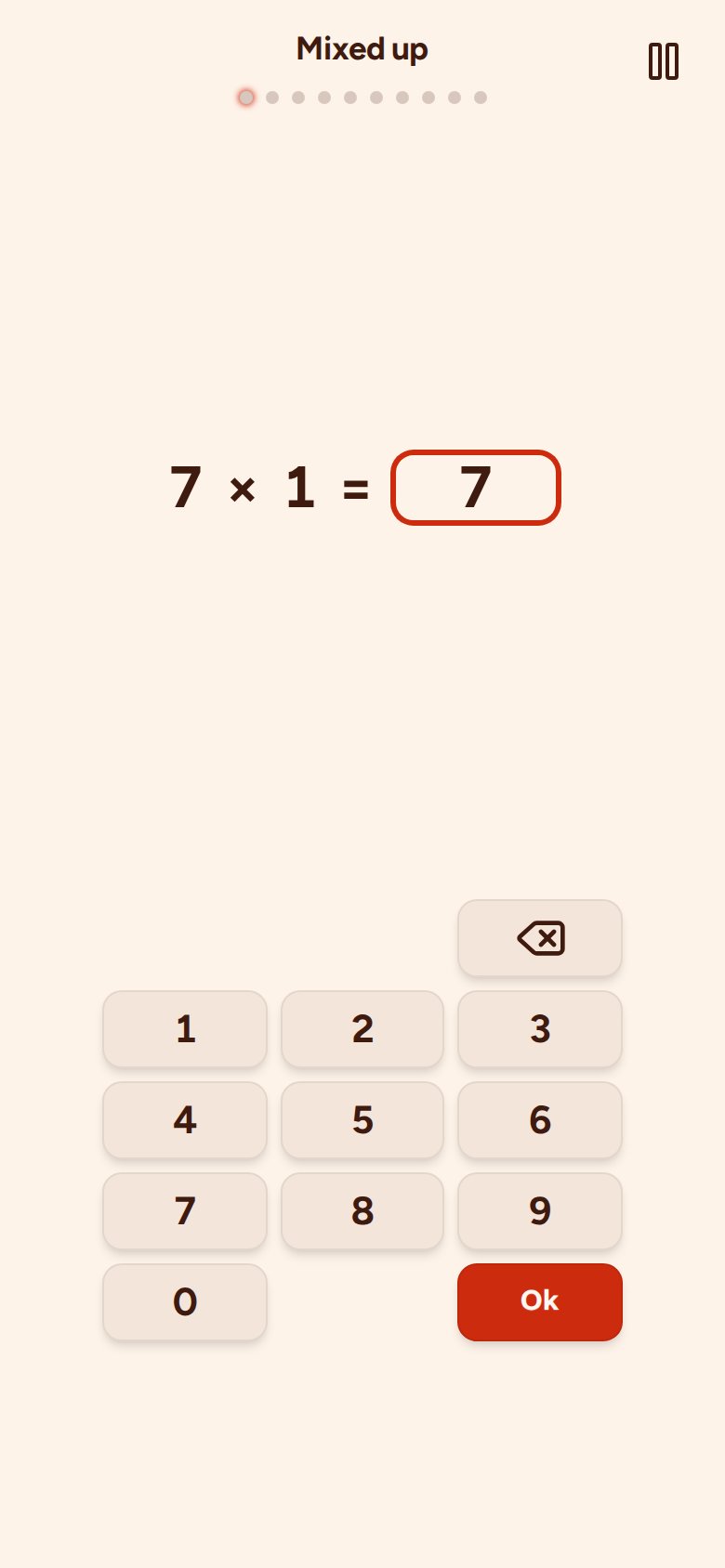
With one exercise from this topic as the example: Mixed up.
1
2
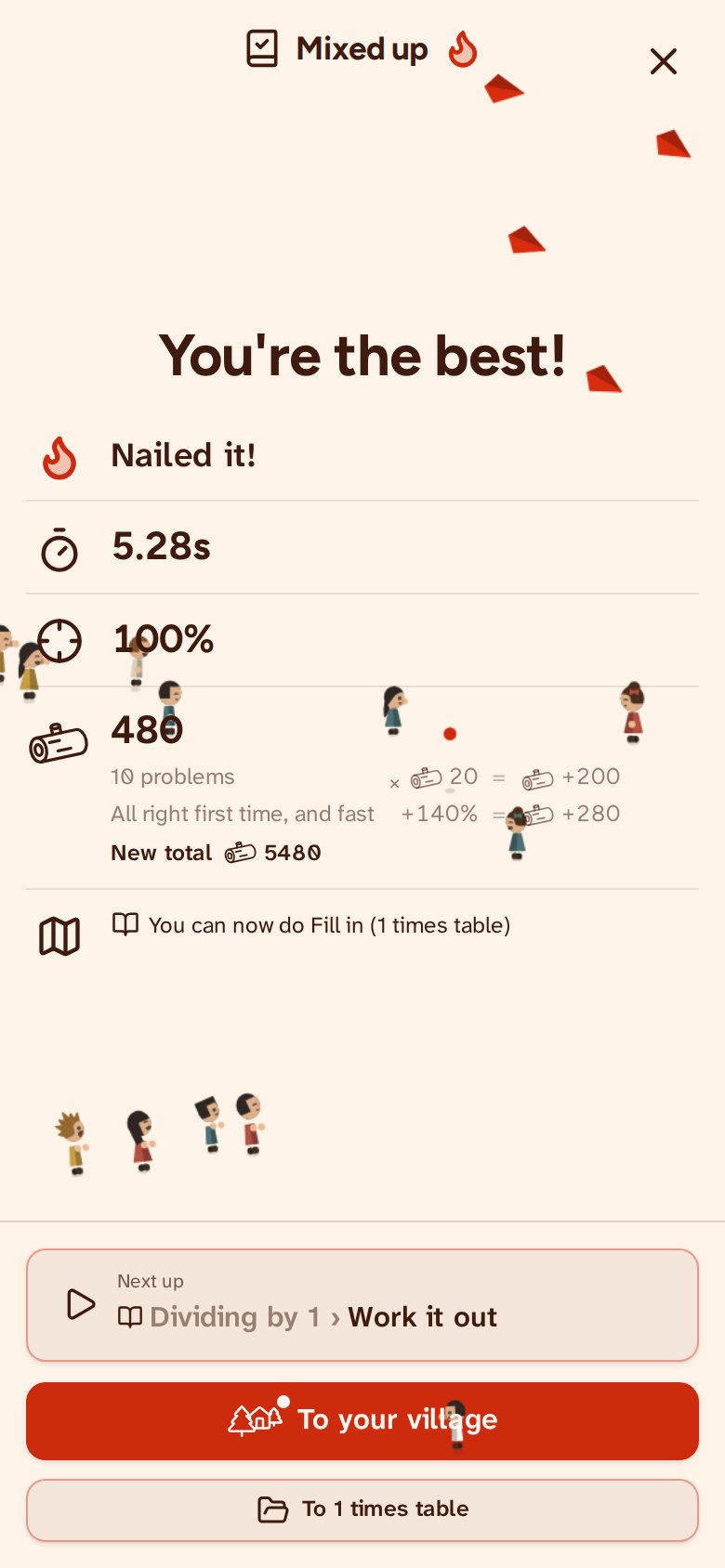
3
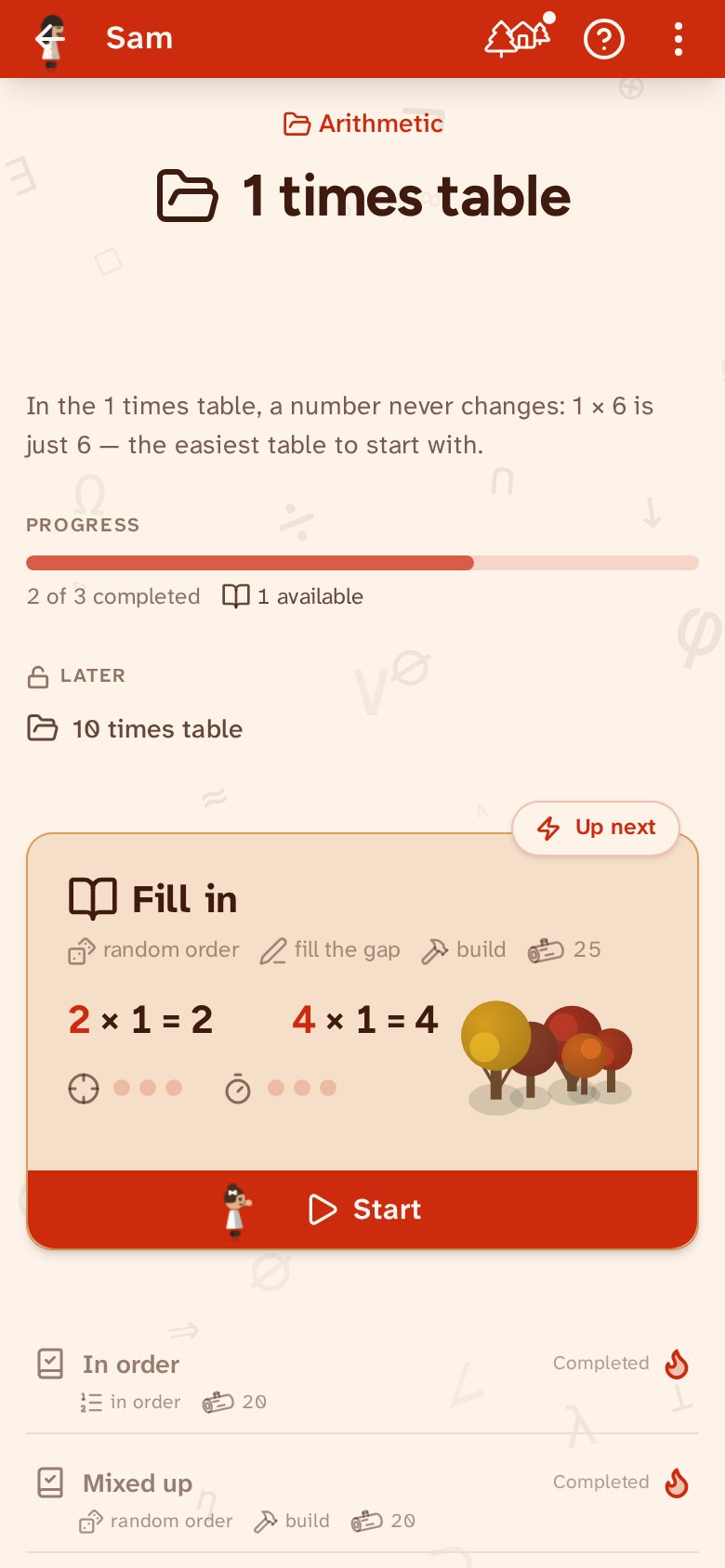
4
How it fits together
The arrows point to what can be done next. Whatever sits inside a box belongs to it.
Tables 1, 2 & 10
Can come next
first this, then that belongs to
1 times table
Times 1 changes nothing: 7 × 1 = 7.
What times 1 gives the answer? Say the table until you hear it.
Dividing by 1
What times 1 makes it? Find it in the 1 times table.
The number that was divided is the answer times 1.
Working out and missing numbers mixed: first look where the gap is.
Why it matters
The 1 times table looks too easy to practise, and in a way it is. Yet it teaches something that keeps coming back: one group of 8 is simply 8. A child who understands that sees why 1 × 9 and 9 × 1 are the same, and spots straight away that a 1 in a bigger sum needs no working out at all.
How to approach it
Saying it out loud helps: three ones are three, six ones are six. After a few rounds this happens without thinking, and that is all this table needs.
The division facts are the same rule backwards. 5 ÷ 1 asks how many groups of one fit into 5, and the answer is exactly five. Once your child sees that, it will not trip them up later in a long division.
When is it secure?
All 10 right in one round, and no more than 20 seconds altogether. Around 2 seconds a sum shows your child is no longer counting.