Each answer is the one before plus 10.
10 times table
10 times table practice, from 1 × 10 to 10 × 10 = 100 and 90 ÷ 10 = 9: a zero on the end and why, first the table, then dividing by 10.
Your child can only do the exercises here once they know the 1 times table. The 10s rest on the same idea one step up: 6 × 1 is six ones, 6 × 10 is six tens, and a child who has seen the first writes 60 with understanding rather than as a trick with a zero.
Usually taught in Year 2 in England and Wales, around ages 6 to 7. Every child goes at their own pace; this is a guide, not a requirement.
The first of 6 exercises in this topic. See them all
What it looks like for your child
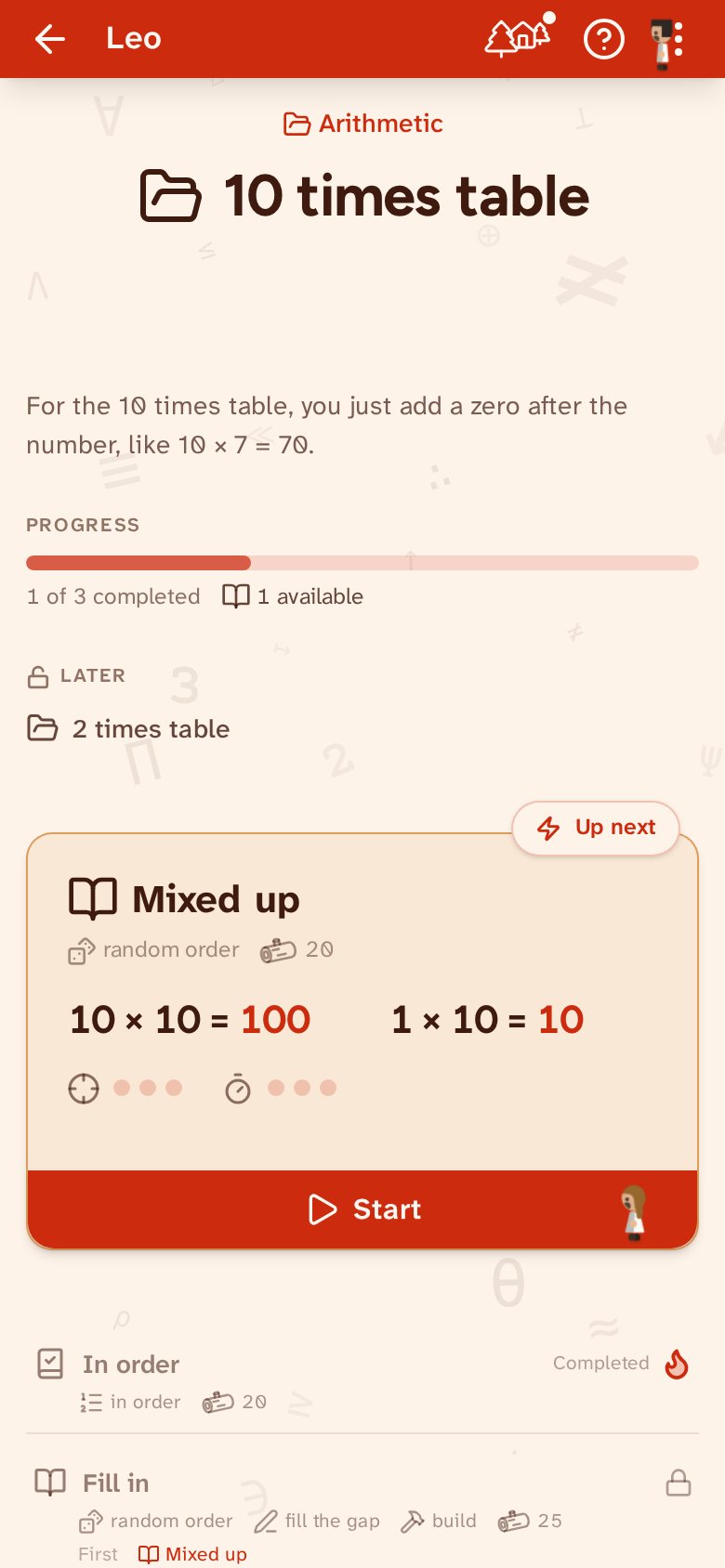
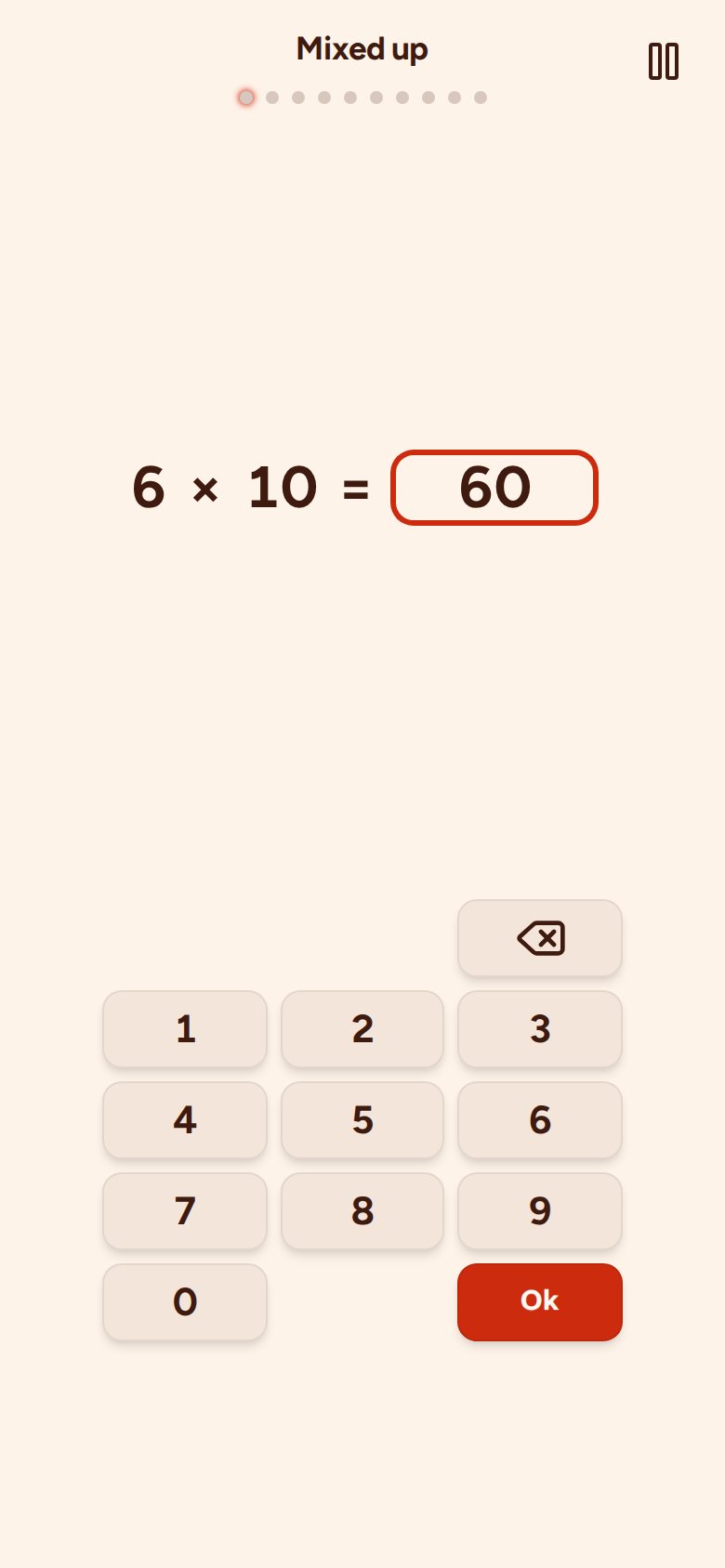
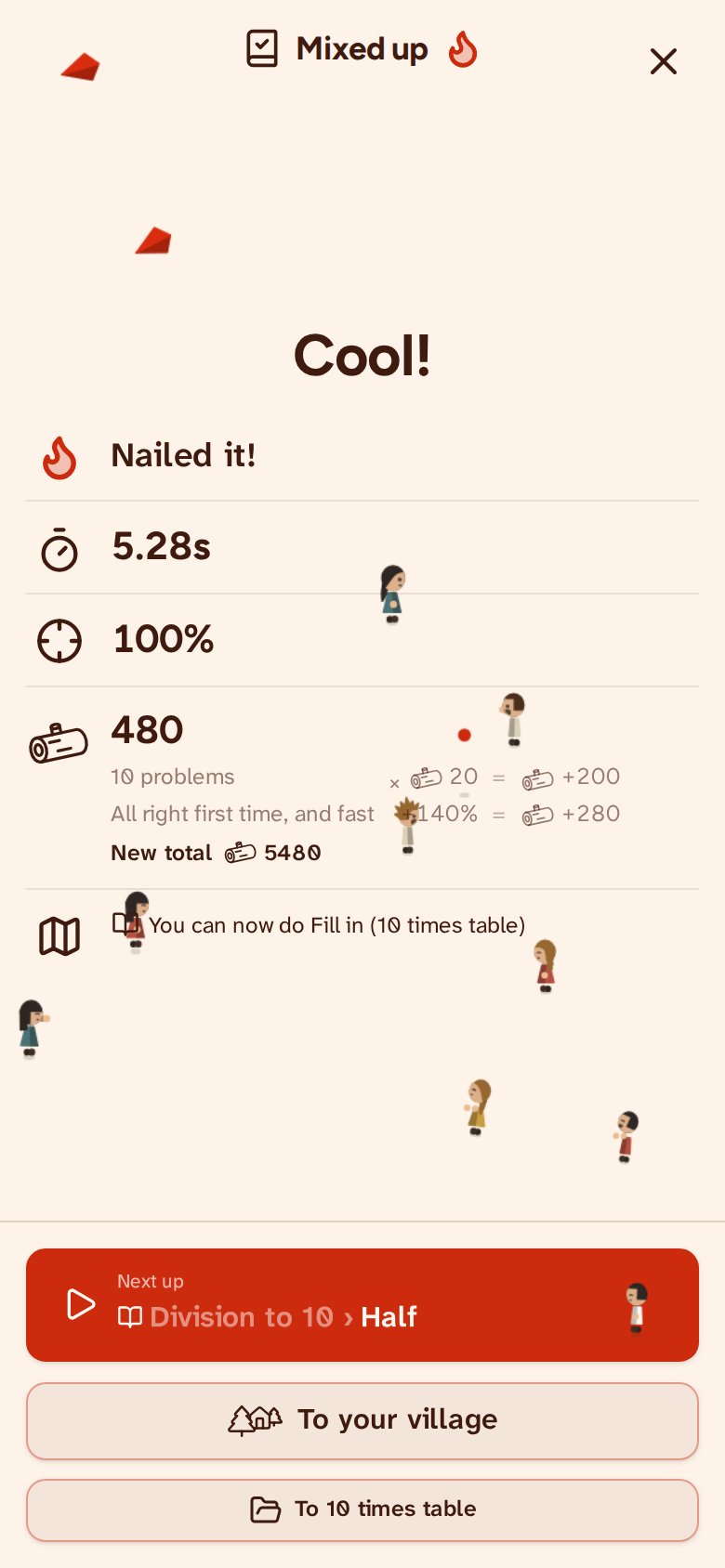
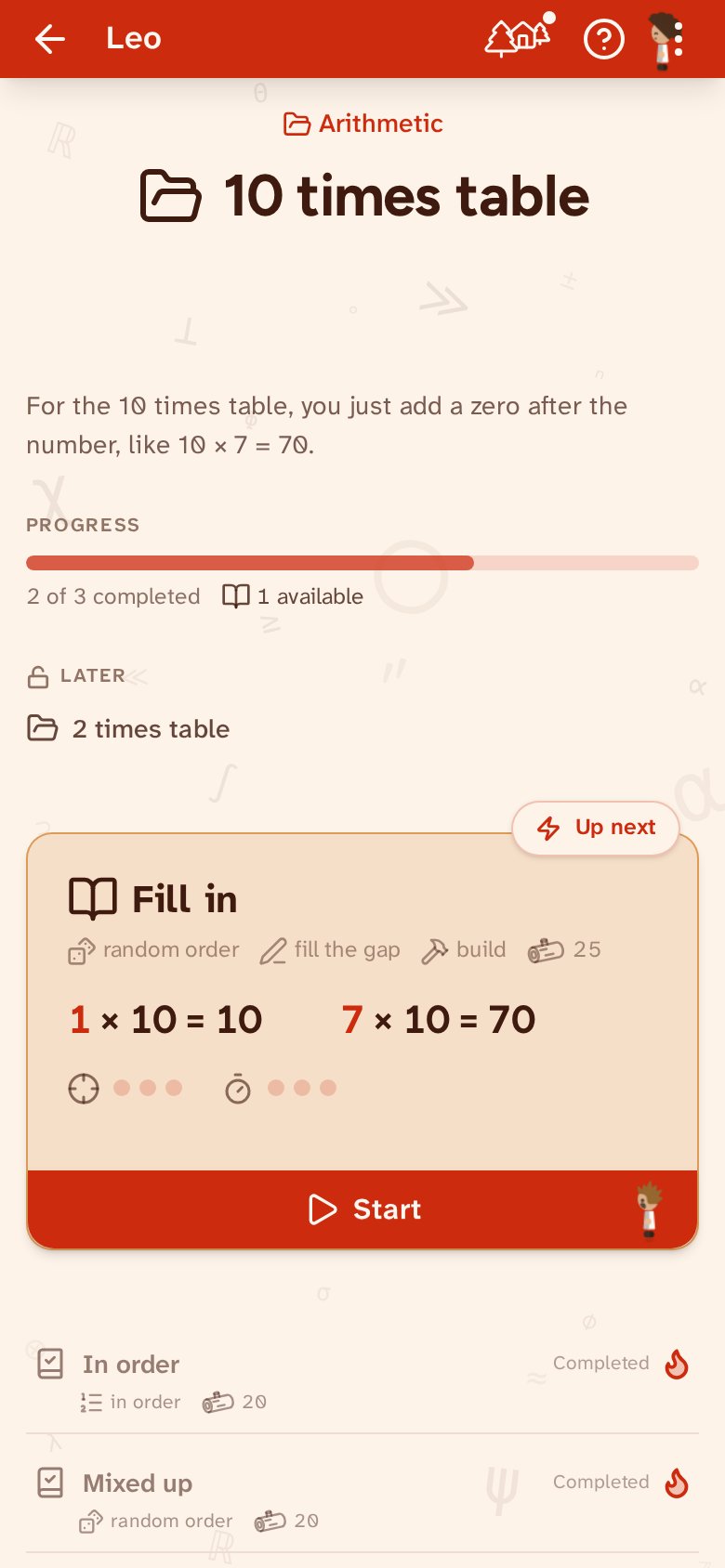
With one exercise from this topic as the example: Mixed up.
1
2
3
4
How it fits together
The arrows point to what can be done next. Whatever sits inside a box belongs to it.
Needed first
Tables 1, 2 & 10
first this, then that belongs to
10 times table
Times 10: put a zero on the end. 7 × 10 = 70.
What times 10 gives the answer? Say the table until you hear it.
Dividing by 10
What times 10 makes it? Find it in the 10 times table.
The number that was divided is the answer times 10.
Mixed sums, with the empty box in a different place each time.
Why it matters
Times 10 is more than a table. It is the idea behind our whole number system: ten ones make a ten. A child who sees why 6 × 10 = 60 also understands why 60 is made of six tens. On top of that, the 10s are the anchor for the 5s (half), the 9s (one lot less) and all the tables from 11 to 20.
How to approach it
The zero rule is quickly learnt, but now and then ask what is actually happening: 4 × 10 is four tens, and you write that as 40. That way it stays understanding rather than a trick, and that understanding is needed later with decimals, where adding a zero on the end no longer works.
Dividing by 10 takes the zero off again: 80 ÷ 10 = 8. How many tens are there in 80? Eight. So the division facts become a question about tens, not a rule to remember.
When is it secure?
All 10 right in one round, and no more than 20 seconds altogether. Around 2 seconds a sum shows your child is no longer counting.