Each answer is the one before plus 17.
17 times table
17 times table practice, from 1 × 17 to 6 × 17 = 102 and 7 × 17 = 119: ten lots and seven lots added carefully, in order, mixed up and filled in.
Your child can only do the exercises here once they know the 7, 10 and 16 times tables. The 17s lean on the 7s, the table that is often last to stick, and 7 × 17 = 70 + 49 only goes smoothly when 7 × 7 comes without thinking.
The first of 3 exercises in this topic. See them all
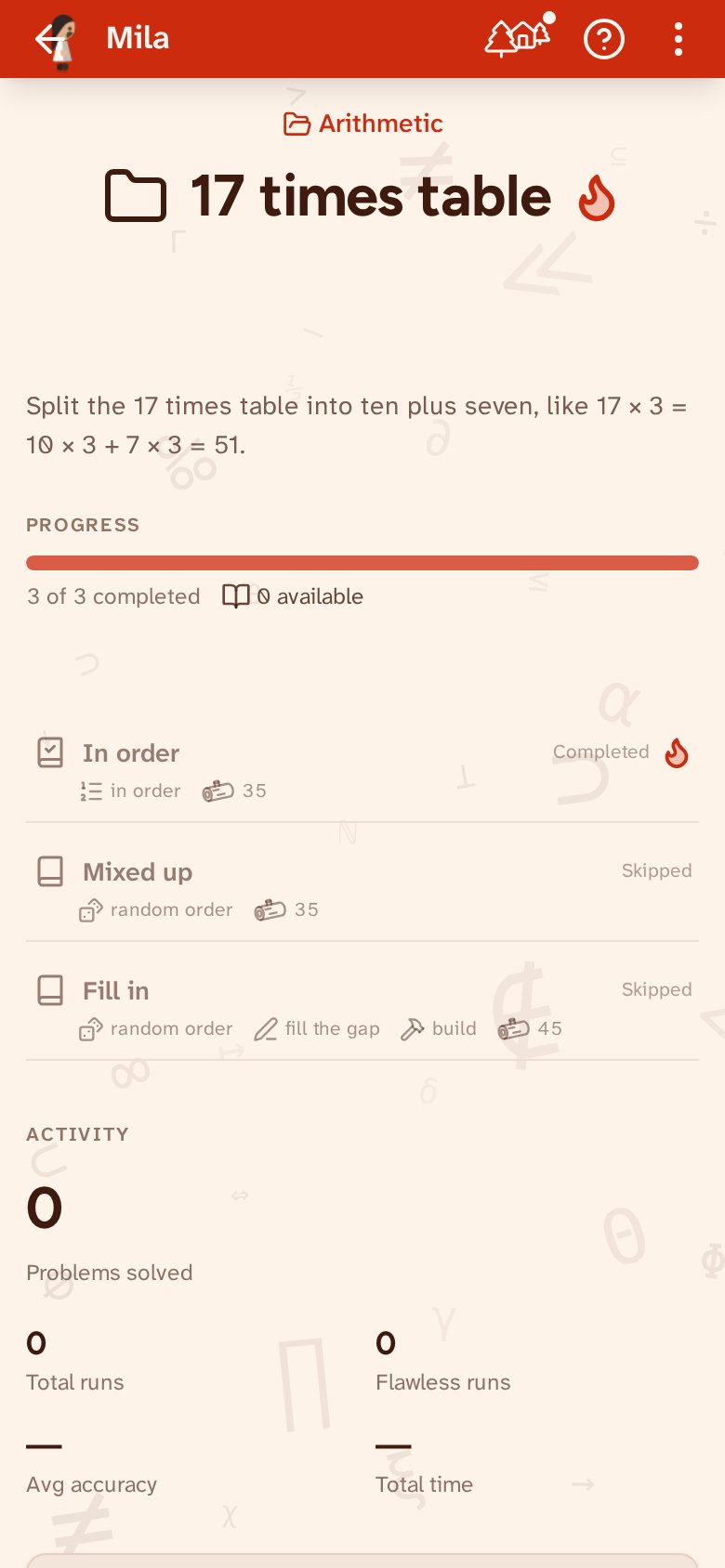
What it looks like for your child
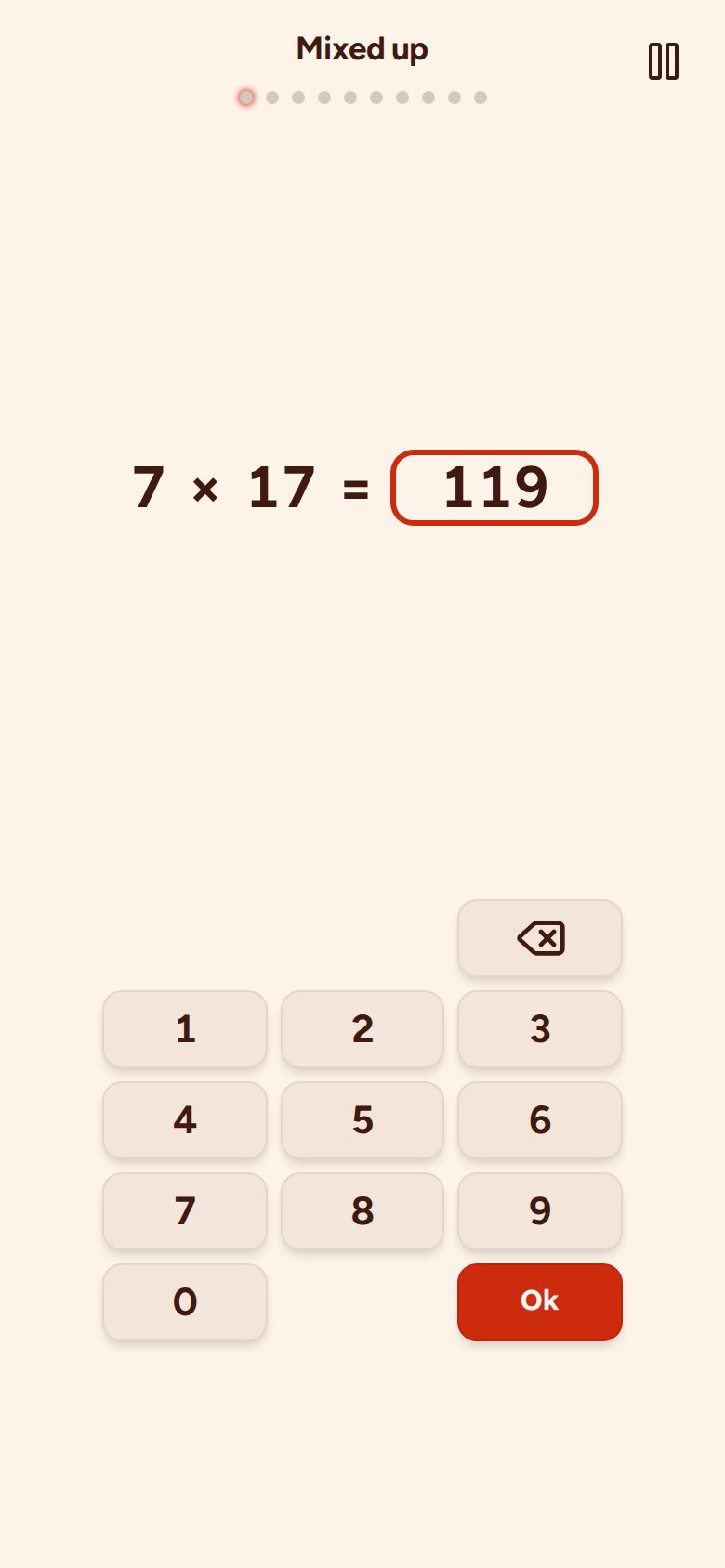
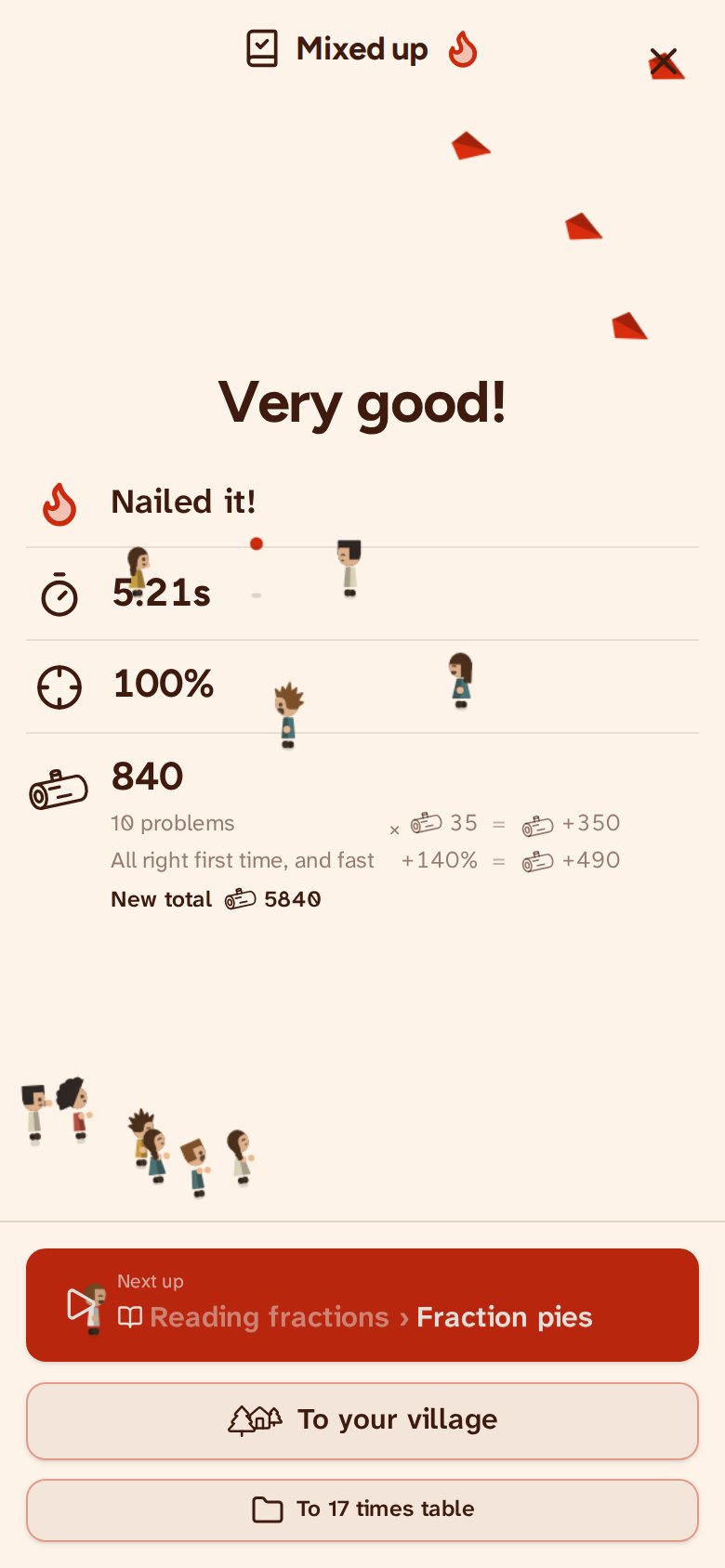
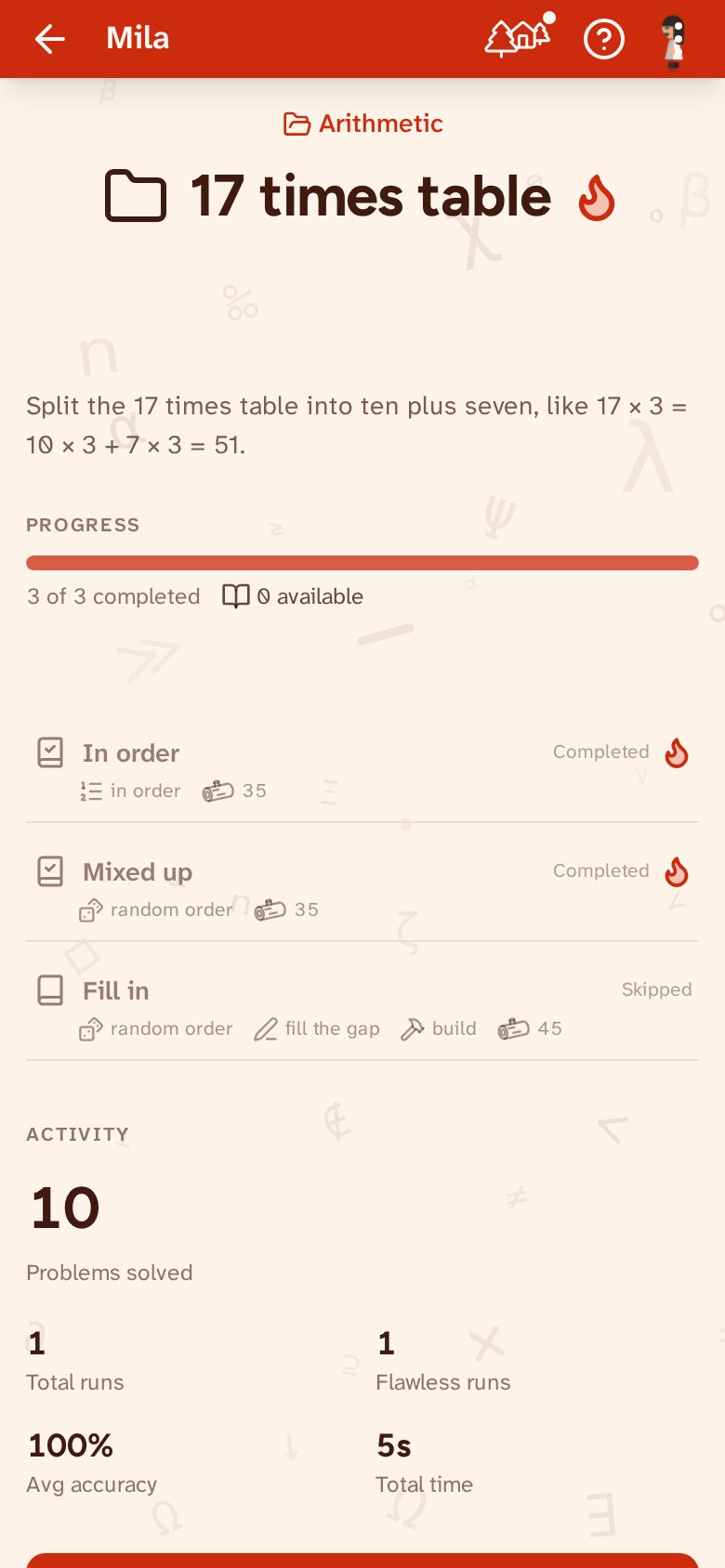
With one exercise from this topic as the example: Mixed up.
1
2
3
4
How it fits together
The arrows point to what can be done next. Whatever sits inside a box belongs to it.
Needed first
Can come next
first this, then that belongs to
Times 17 is times 10 plus times 7: 7 × 17 = 70 + 49.
What times 17 gives the answer? Say the table until you hear it.
Why it matters
The 17s are one of the toughest tables, because they lean on the 7s, the table that is often the last to stick. That is also their value: a child who partitions calmly here practises the 7 times table and adding larger numbers at the same time.
How to approach it
For 4 × 17 that becomes 40 + 28 = 68. The adding is often the sticking point, because a ten gets carried. Feel free to write the steps down until they fit in your child's head.
A second route starts from 20: 4 × 20 = 80, minus 4 × 3 = 12, which is also 68. That way your child looks at the same sum from two sides and catches a slip on their own.
When is it secure?
A round of 10 sums in one go without a mistake, within 35 seconds. That is about 3.5 seconds a sum: no more counting, just knowing.