Each answer is the one before plus 18.
18 times table
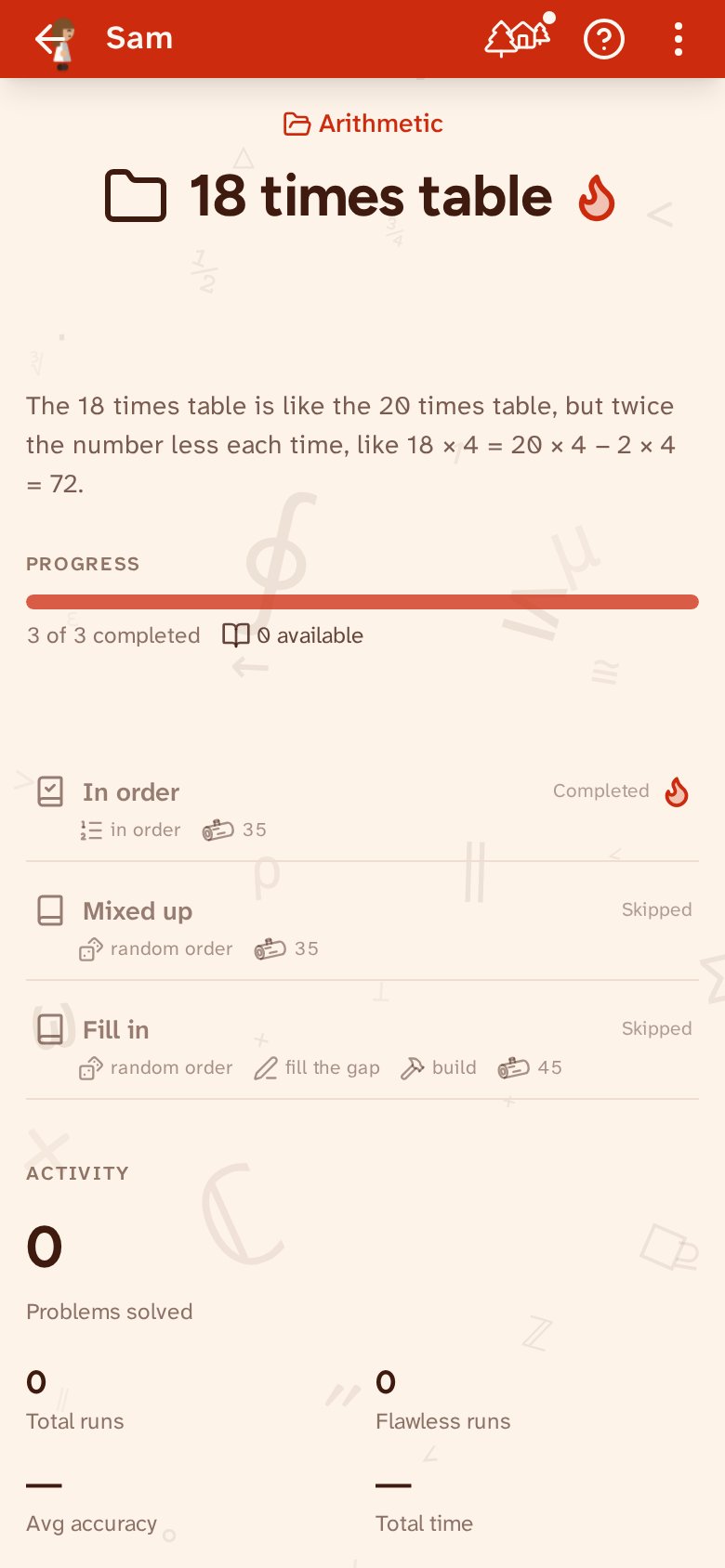
18 times table practice, from 3 × 18 = 54 to 9 × 18 = 162: times 20 minus two lots, or double the 9s, in order, then mixed up, then filling in.
Your child can only do the exercises here once they know the 8, 10 and 17 times tables. Partitioning 6 × 18 into 60 + 48 needs 6 × 8 = 48 at once, one of the facts that are easily muddled, and after the 17s the split itself should be routine.
The first of 3 exercises in this topic. See them all
What it looks like for your child
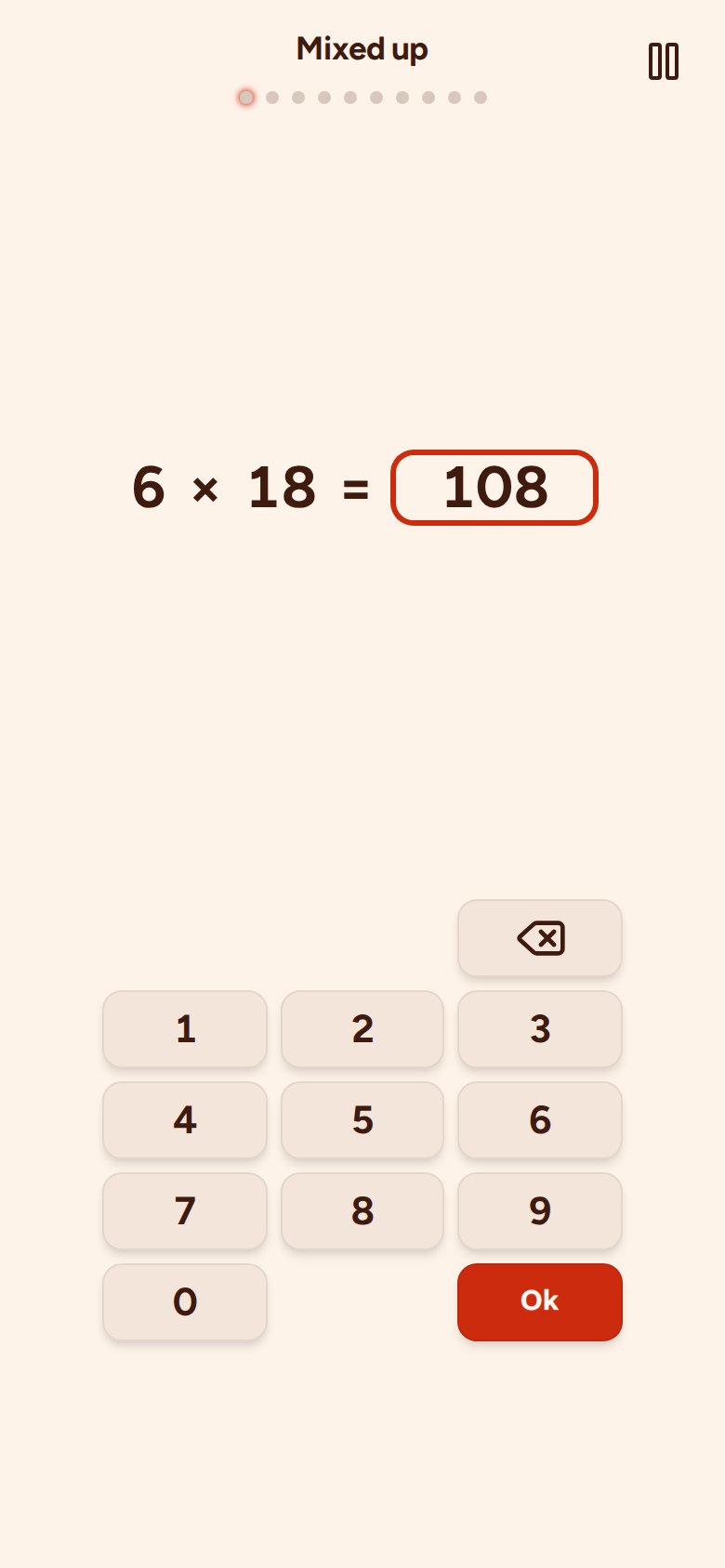
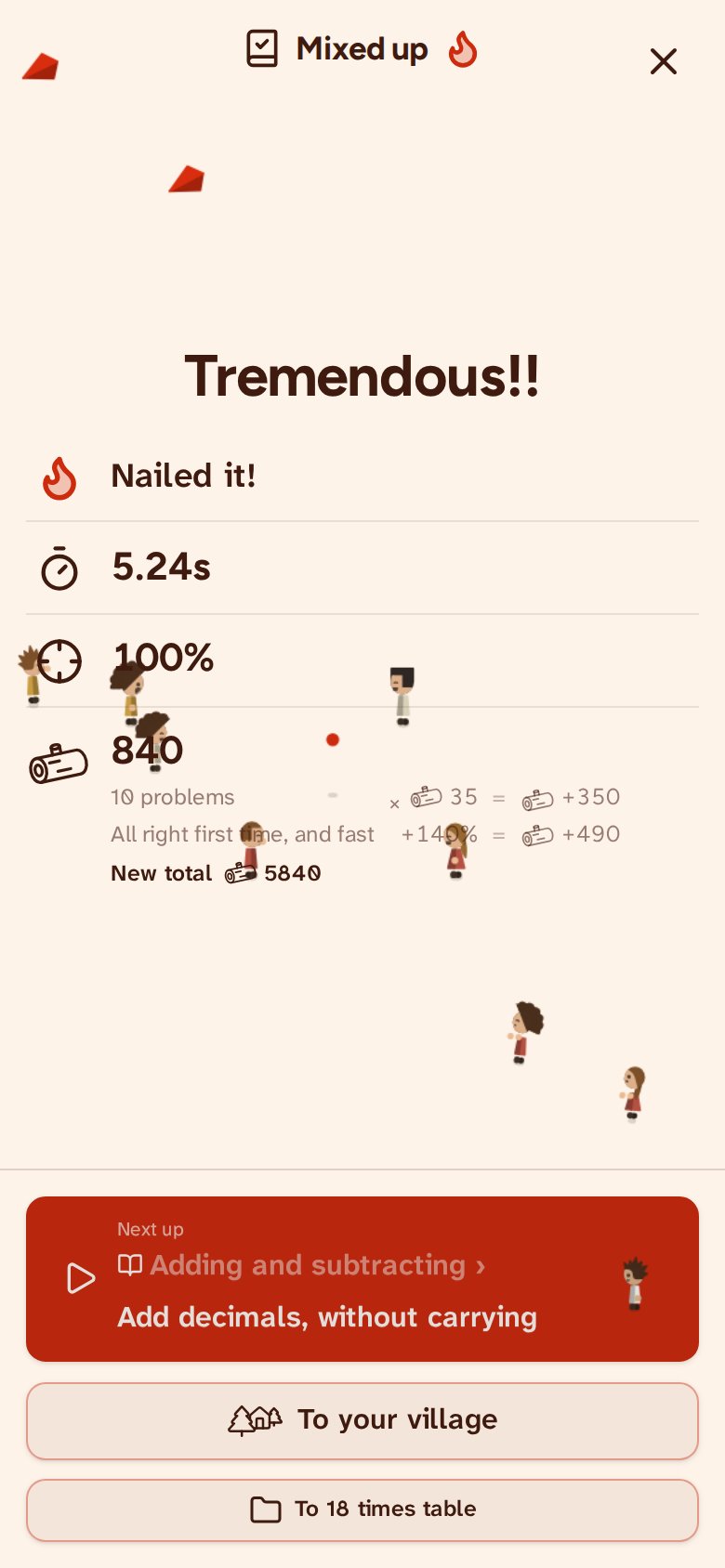
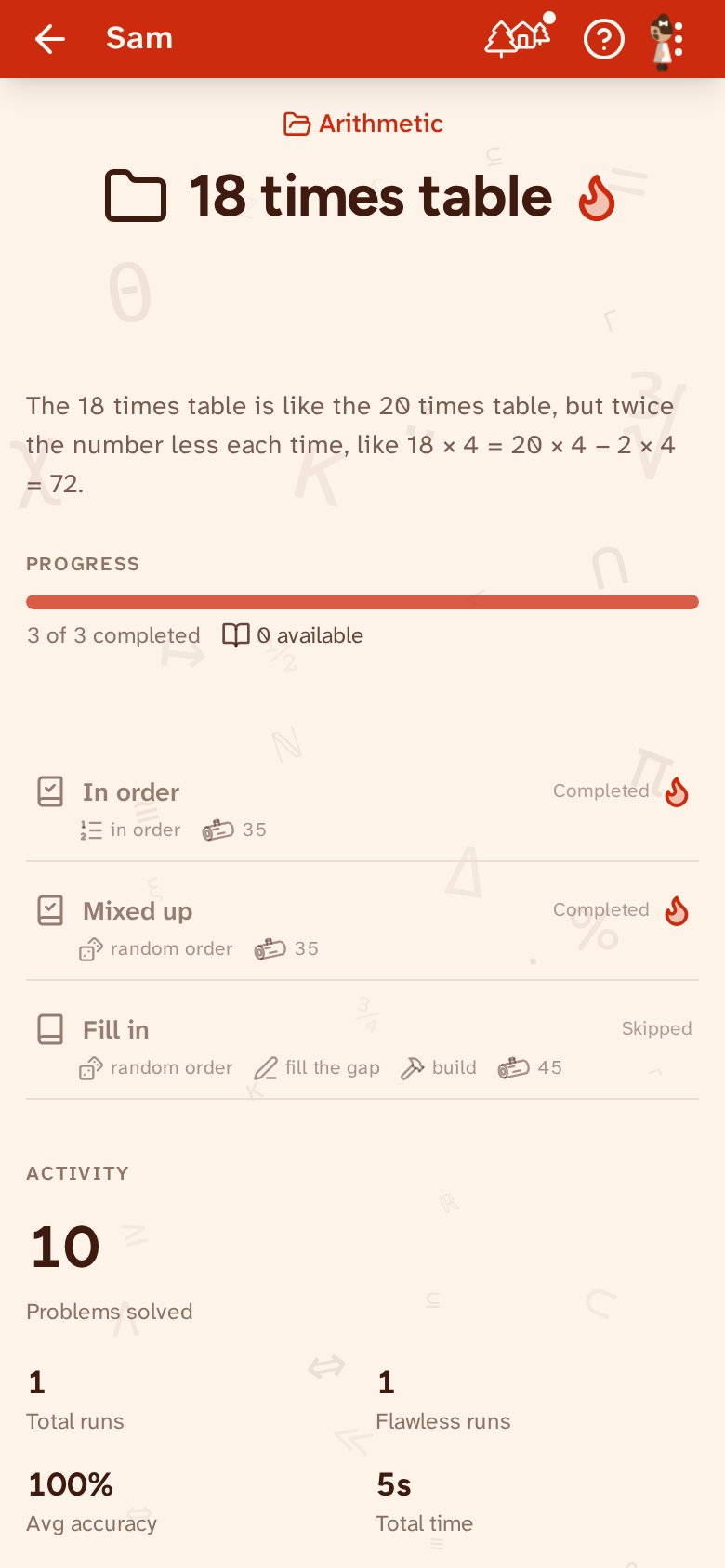
With one exercise from this topic as the example: Mixed up.
1
2
3
4
How it fits together
The arrows point to what can be done next. Whatever sits inside a box belongs to it.
Needed first
Can come next
first this, then that belongs to
Times 18 is times 20 minus two: 7 × 18 = 140 − 14.
What times 18 gives the answer? Say the table until you hear it.
Why it matters
Eighteen sits just below twenty, and that makes the 18 times table lighter than it looks. Your child can also see the 9 times table in it, because 18 is double 9: 4 × 9 = 36, so 4 × 18 = 72. It is a table that rewards a child who knows the small tables well.
How to approach it
Partitioning always works: 6 × 18 = 60 + 48 = 108. From 20 it is often shorter: 6 × 20 = 120, minus two sixes, 108. Try together which route runs most smoothly.
In the missing-number questions the 9s help again. What number times 18 is 90? That is the same question as what number times 9 is 45, and the answer is 5.
When is it secure?
When your child gets all 10 sums right in 35 seconds or less. Answers only come that quickly once they come from memory.