Each answer is the one before plus 13.
13 times table
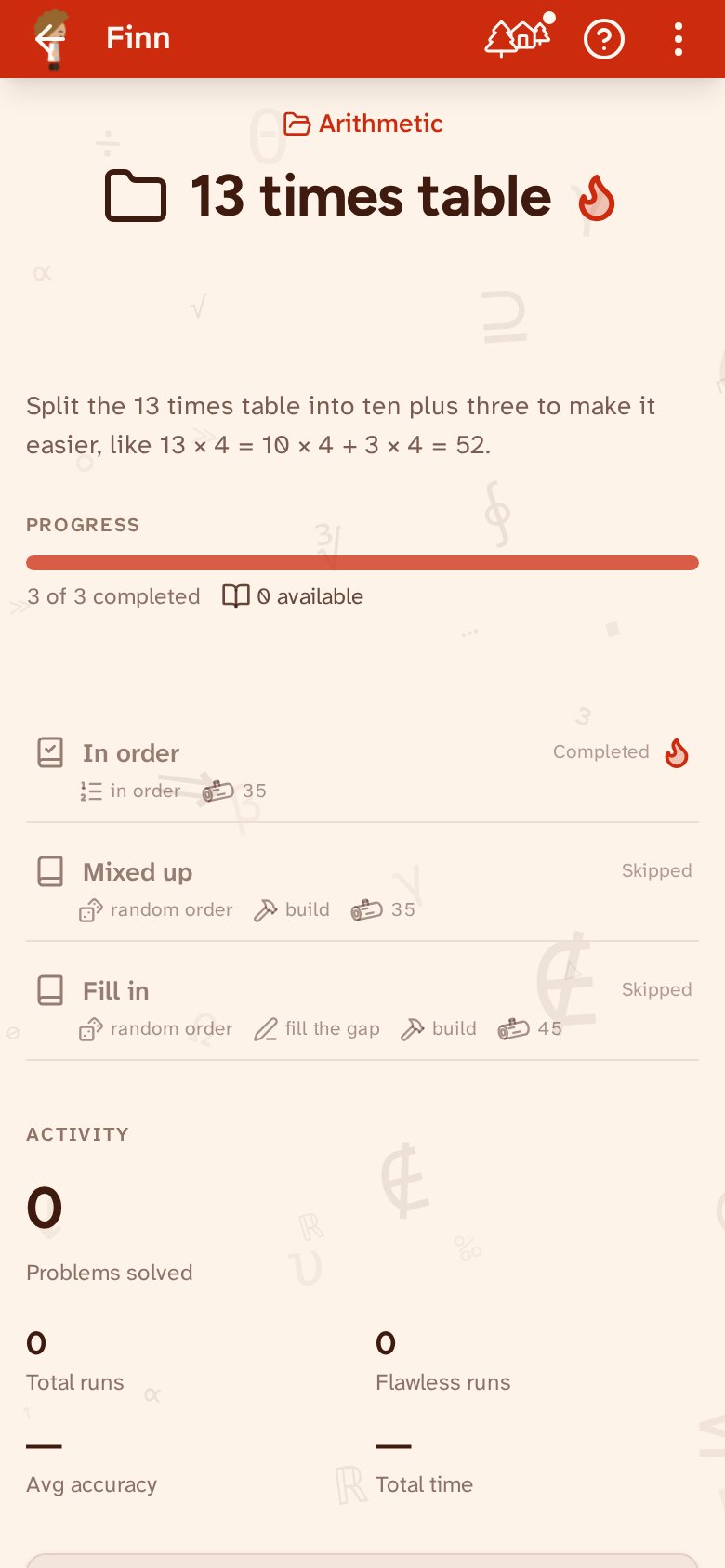
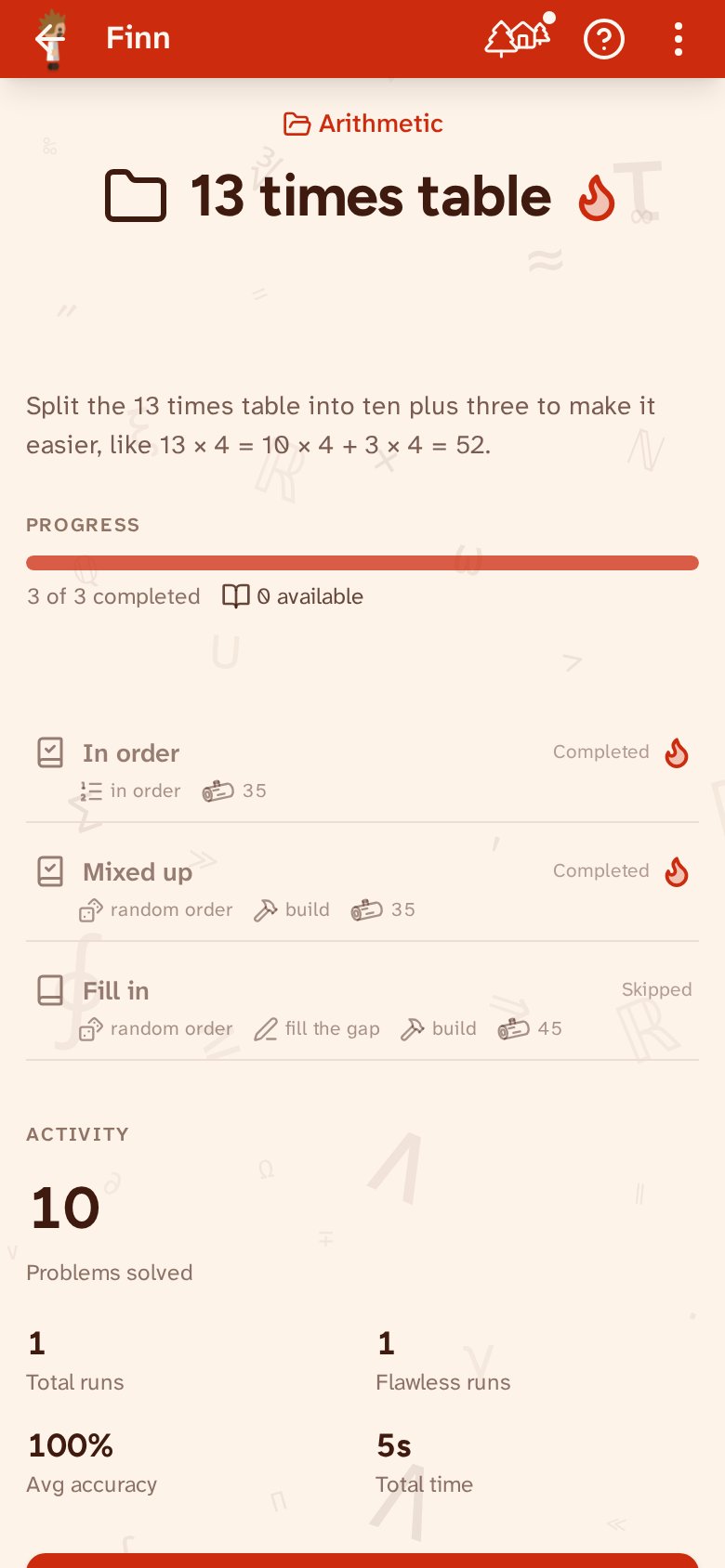
13 times table practice, from 1 × 13 to 7 × 13 = 91 and 8 × 13 = 104: ten lots plus three lots, in order, then mixed up, then filling in.
Your child can only do the exercises here once they know the 3, 10 and 15 times tables. From 13 on there is no pattern, only partitioning, and the 15s are where your child practised adding the two parts, as in 70 + 35, which is often the hardest step.
The first of 3 exercises in this topic. See them all
What it looks like for your child
With one exercise from this topic as the example: Mixed up.
1
2
3
4
How it fits together
The arrows point to what can be done next. Whatever sits inside a box belongs to it.
Needed first
Can come next
first this, then that belongs to
Times 13 is times 10 plus times 3: 7 × 13 = 70 + 21.
What times 13 gives the answer? Say the table until you hear it.
Why it matters
From 13 onwards the tables have no pattern of their own, like the 9s or the 11s, and they go beyond what school asks for. What they do have is a reliable method, and that is the real gain: partitioning a big number into pieces you already know. That is exactly what your child will do later when multiplying larger numbers.
How to approach it
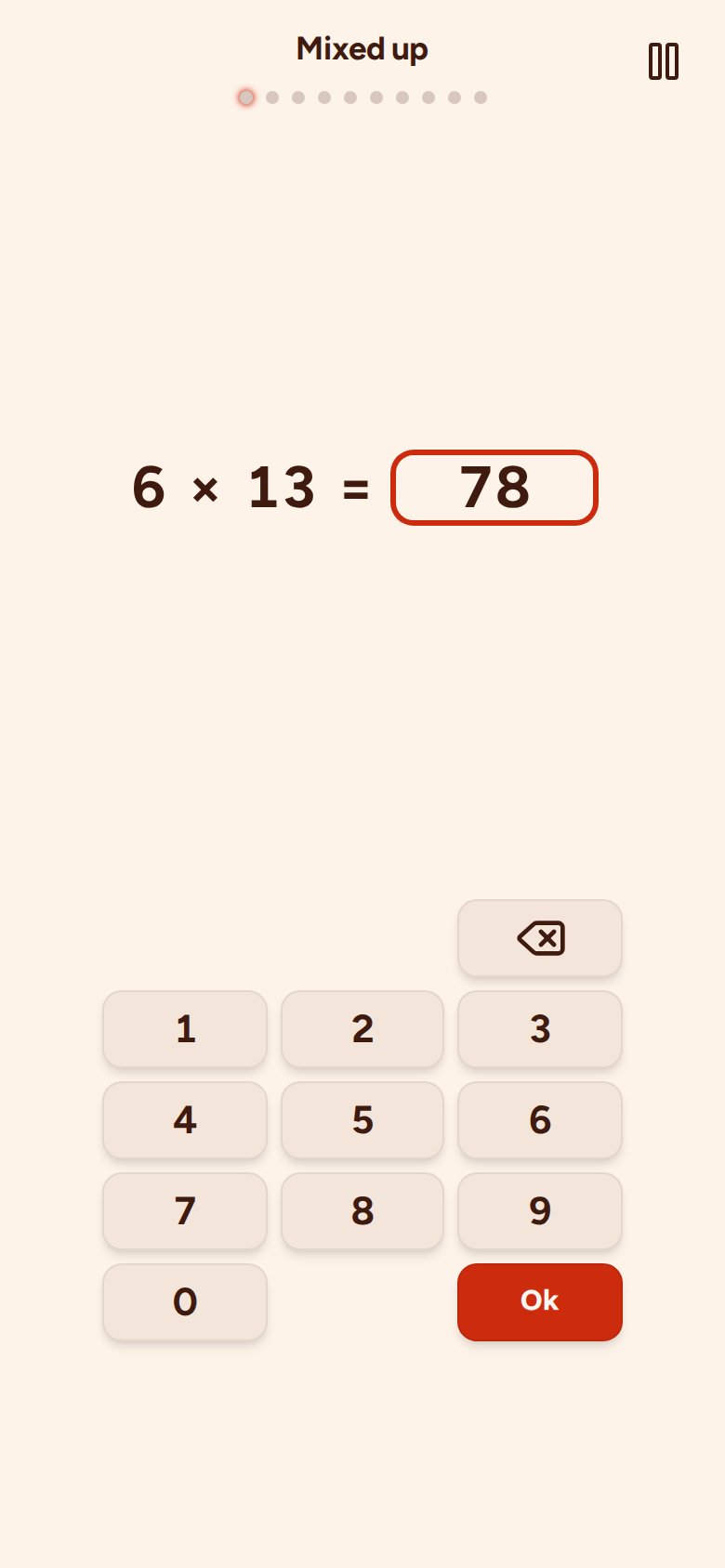
For 6 × 13, your child works out 6 × 10 = 60 and 6 × 3 = 18, and adds them: 78. The adding is often the hardest part here, so the steps in between can stay for a while, on paper or out loud.
The missing-number questions turn the question round: what number times 13 is 52? Estimating helps. 4 × 13 is a bit more than 40, and 40 + 12 = 52 is exactly right.
When is it secure?
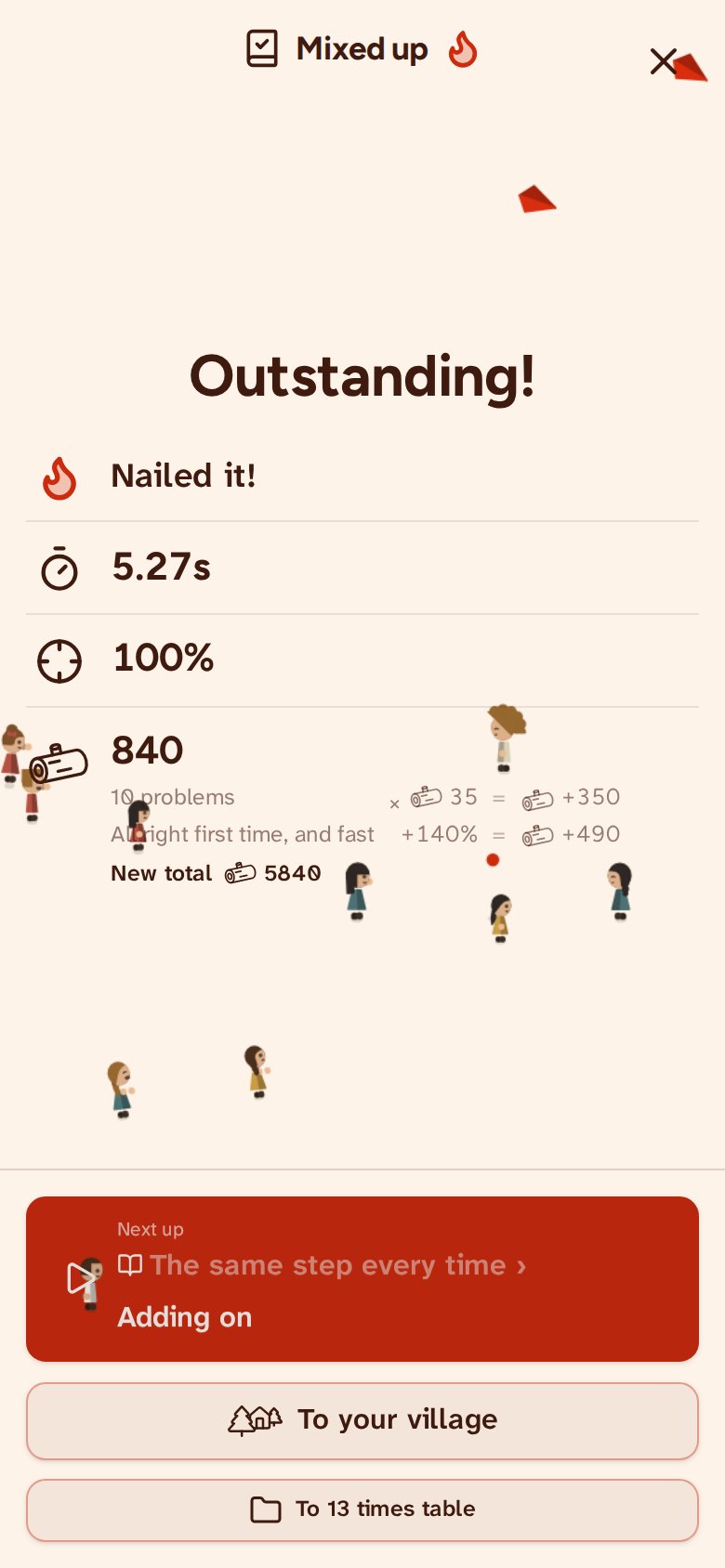
All 10 right in one round, and no more than 35 seconds altogether. Around 3.5 seconds a sum shows your child is no longer counting.