Each answer is the one before plus 3.
3 times table
3 times table practice, from 1 × 3 to 6 × 3 = 18 and 21 ÷ 3 = 7: the first table without a trick, in order, then mixed up, then dividing by 3.
Your child can only do the exercises here once they know the 5 times table and can multiply up to 20. The 3s have no handy trick, so a secure fact like 5 × 3 = 15 is the bridge: from there 6 × 3 is just three more.
Usually taught in Year 3 in England and Wales, around ages 7 to 8. Every child goes at their own pace; this is a guide, not a requirement.
The first of 6 exercises in this topic. See them all
What it looks like for your child
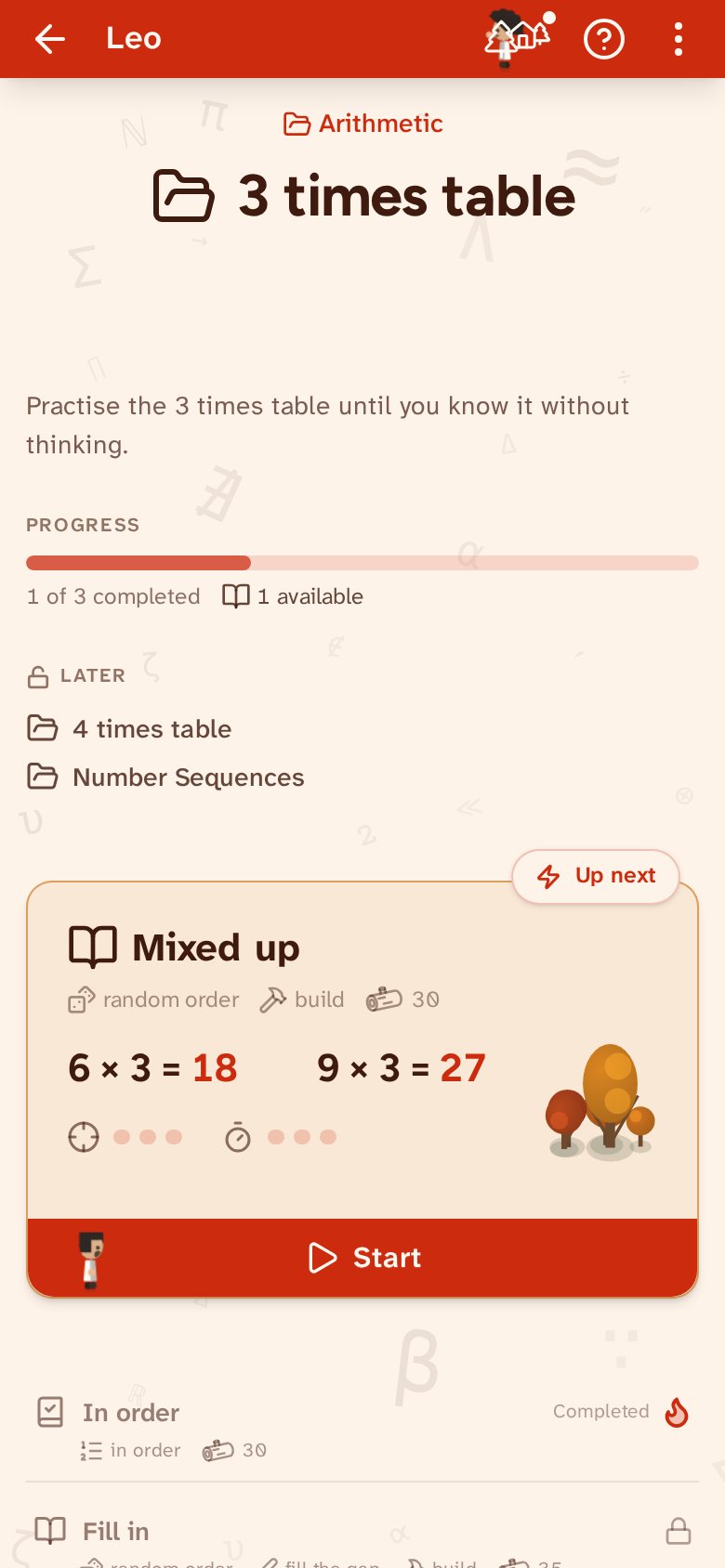
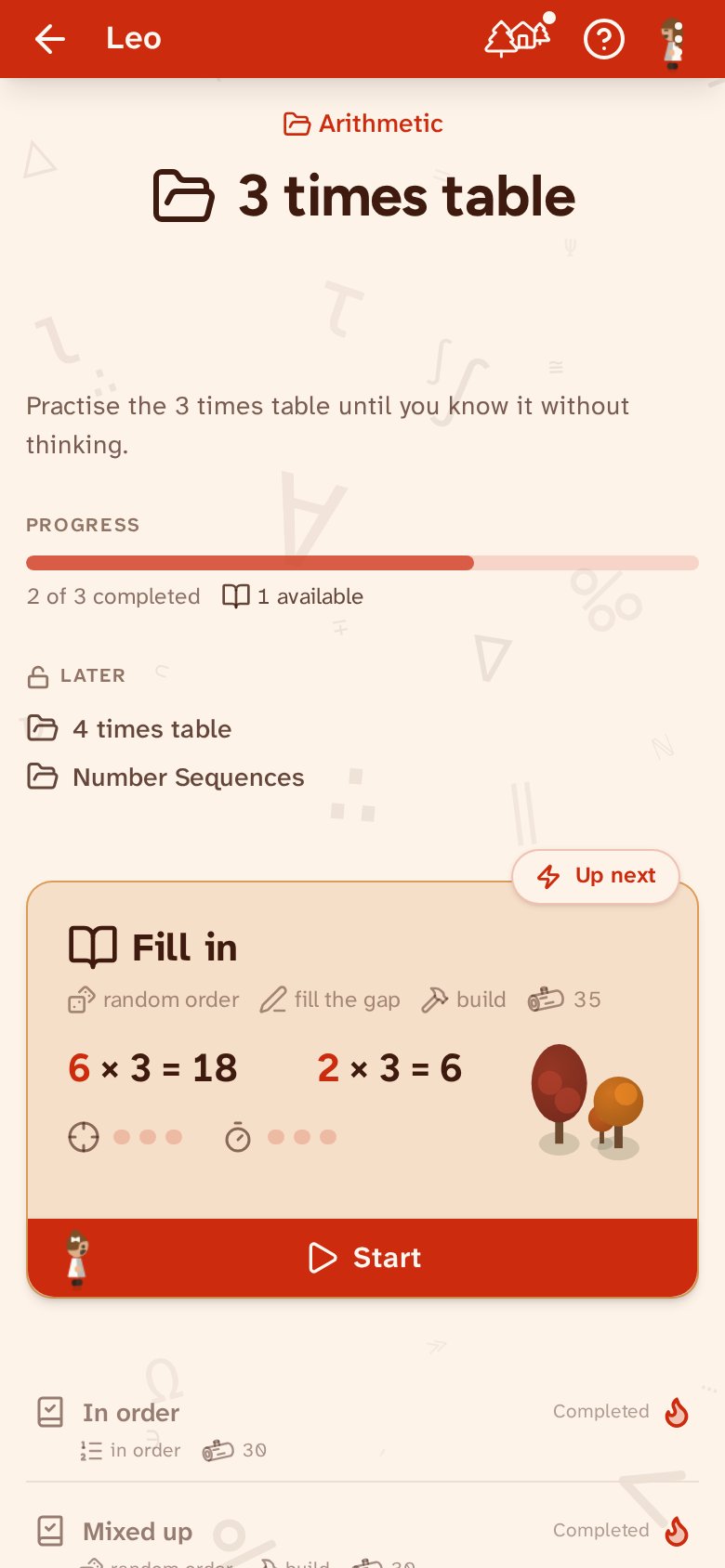
With one exercise from this topic as the example: Mixed up.
1
2
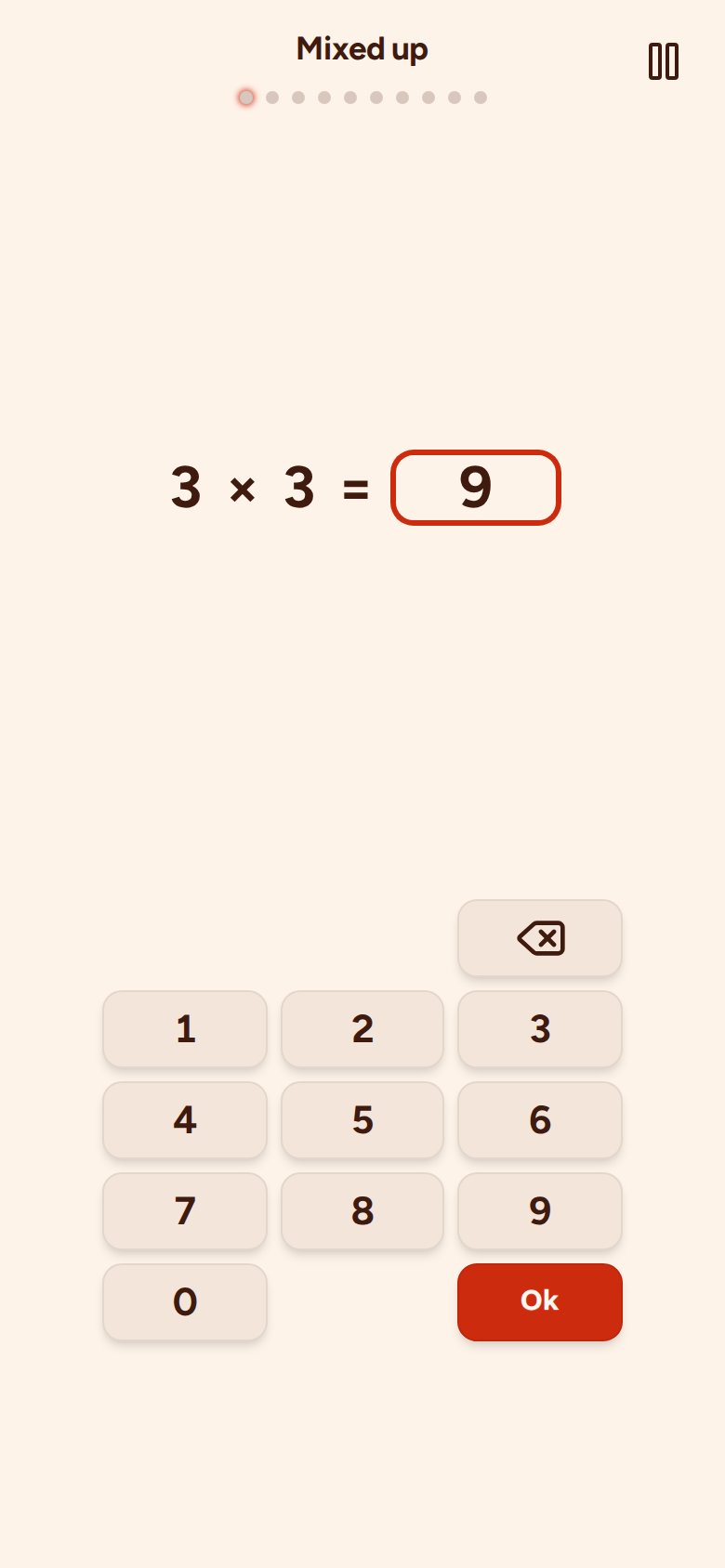
3

4
How it fits together
The arrows point to what can be done next. Whatever sits inside a box belongs to it.
Needed first
Tables 3, 4 & 5
first this, then that belongs to
3 times table
Times 3 is double and one more: 7 × 3 = 14 + 7.
What times 3 gives the answer? Say the table until you hear it.
Dividing by 3
What times 3 makes it? Find it in the 3 times table.
The number that was divided is the answer times 3.
Sometimes the answer is missing, sometimes a number before it.
Why it matters
With the 3s, the easy footholds run out. There is no zero to add and nothing to halve, so this is the first table a child genuinely has to learn. That makes it important: it shows whether your child remembers the tables as facts or counts them out every time. Later it also helps with the 6 times table, which is exactly double.
How to approach it
Chanting it in order is a fine start: 3, 6, 9, 12. The aim, though, is to answer 8 × 3 on its own, without running through the list. A good bridge is a fact that is already secure, such as 5 × 3 = 15. From there, 6 × 3 is just three more: 18.
The division facts read the same facts from the other end. If your child knows that 8 × 3 = 24, they also know that 24 ÷ 3 = 8: eight groups of three fit into 24.
When is it secure?
When your child gets all 10 sums right in 30 seconds or less. Answers only come that quickly once they come from memory.