Each answer is the one before plus 5.
5 times table
5 times table practice, from 1 × 5 to 9 × 5 = 45 and 20 ÷ 5 = 4: answers ending in 0 or 5, first the table in order and mixed up, then dividing by 5.
This table is a starting point: nothing else needs to come first, because the 5s carry their own pattern, with answers ending in 5 and 0 in turn. The 3 times table and the 15s build on it through facts like 5 × 3 = 15, and so do number sequences.
Usually taught in Year 2 in England and Wales, around ages 6 to 7. Every child goes at their own pace; this is a guide, not a requirement.
The first of 6 exercises in this topic. See them all
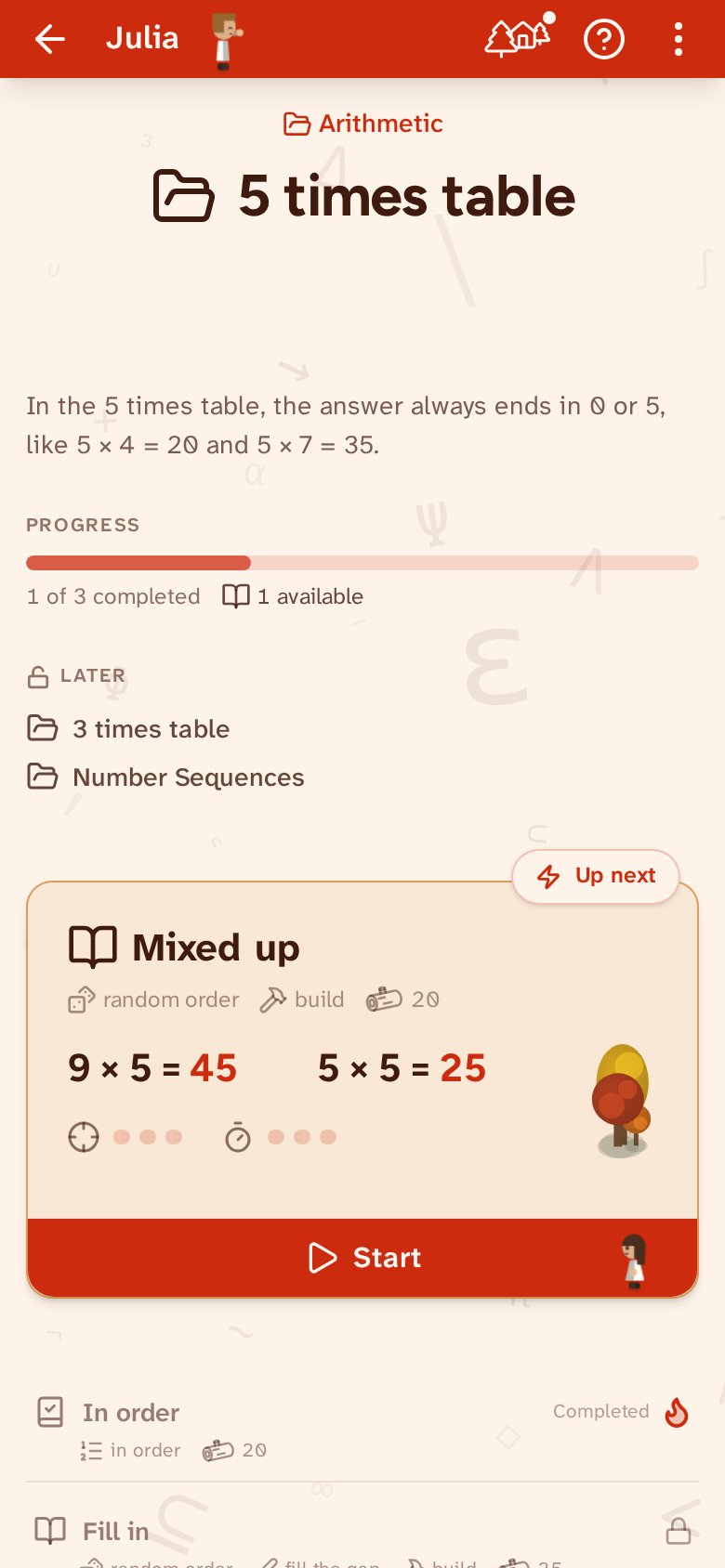
What it looks like for your child
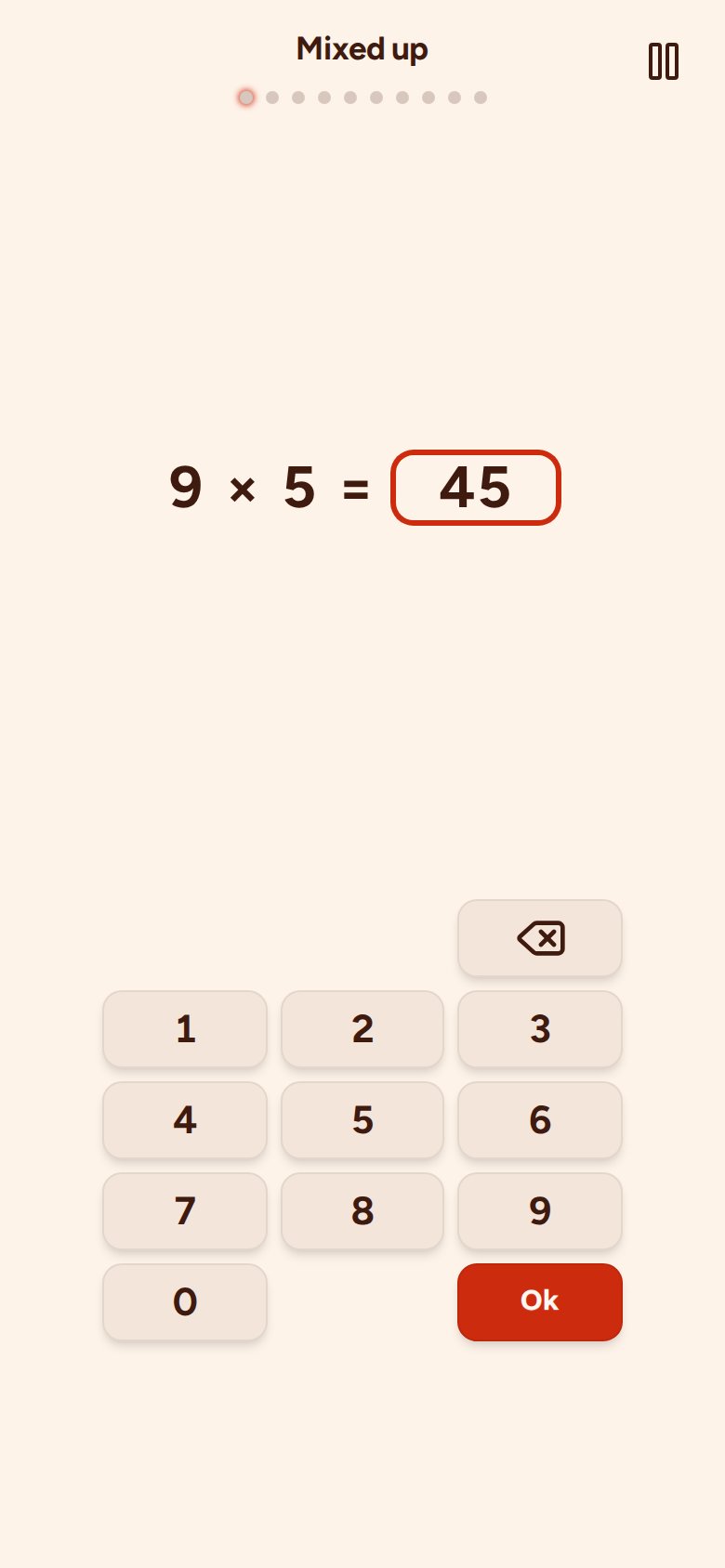
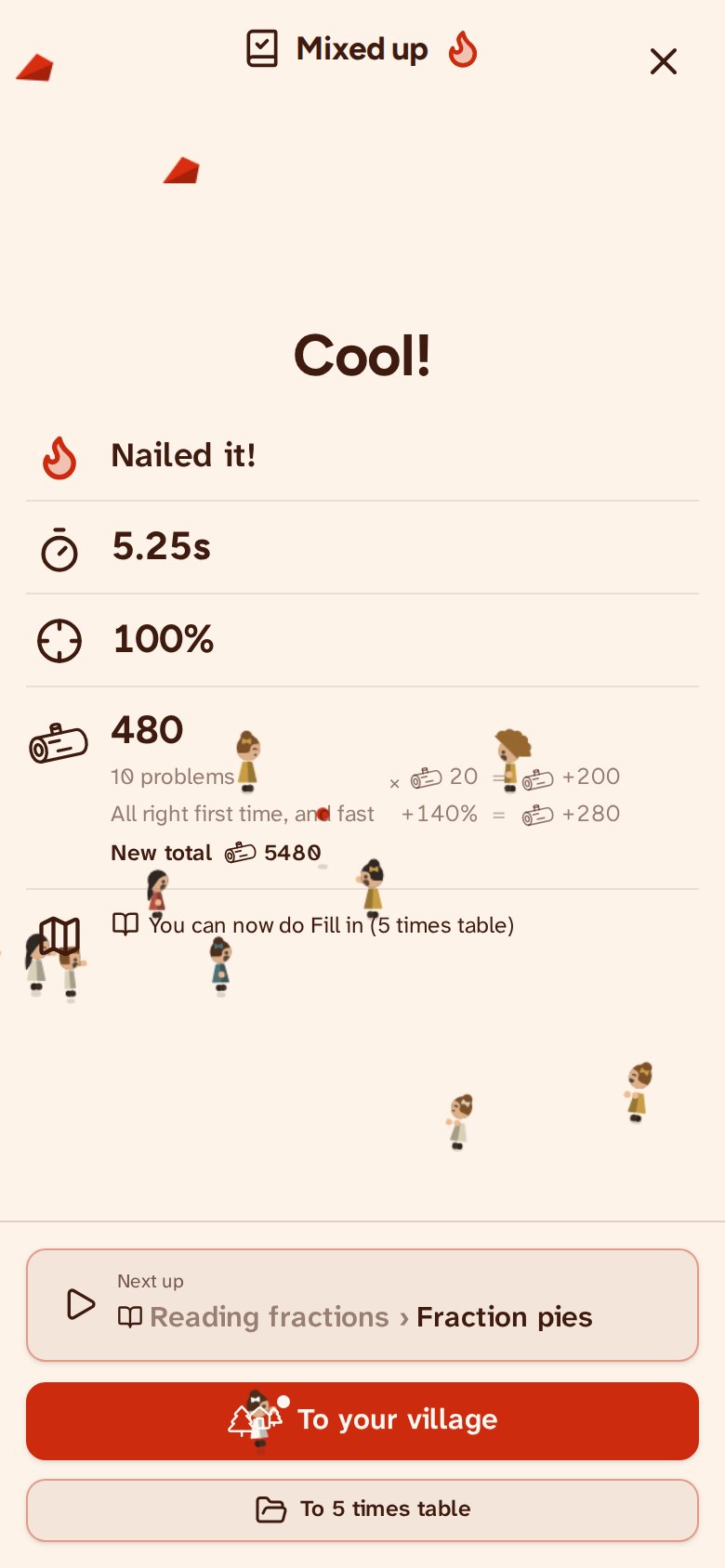
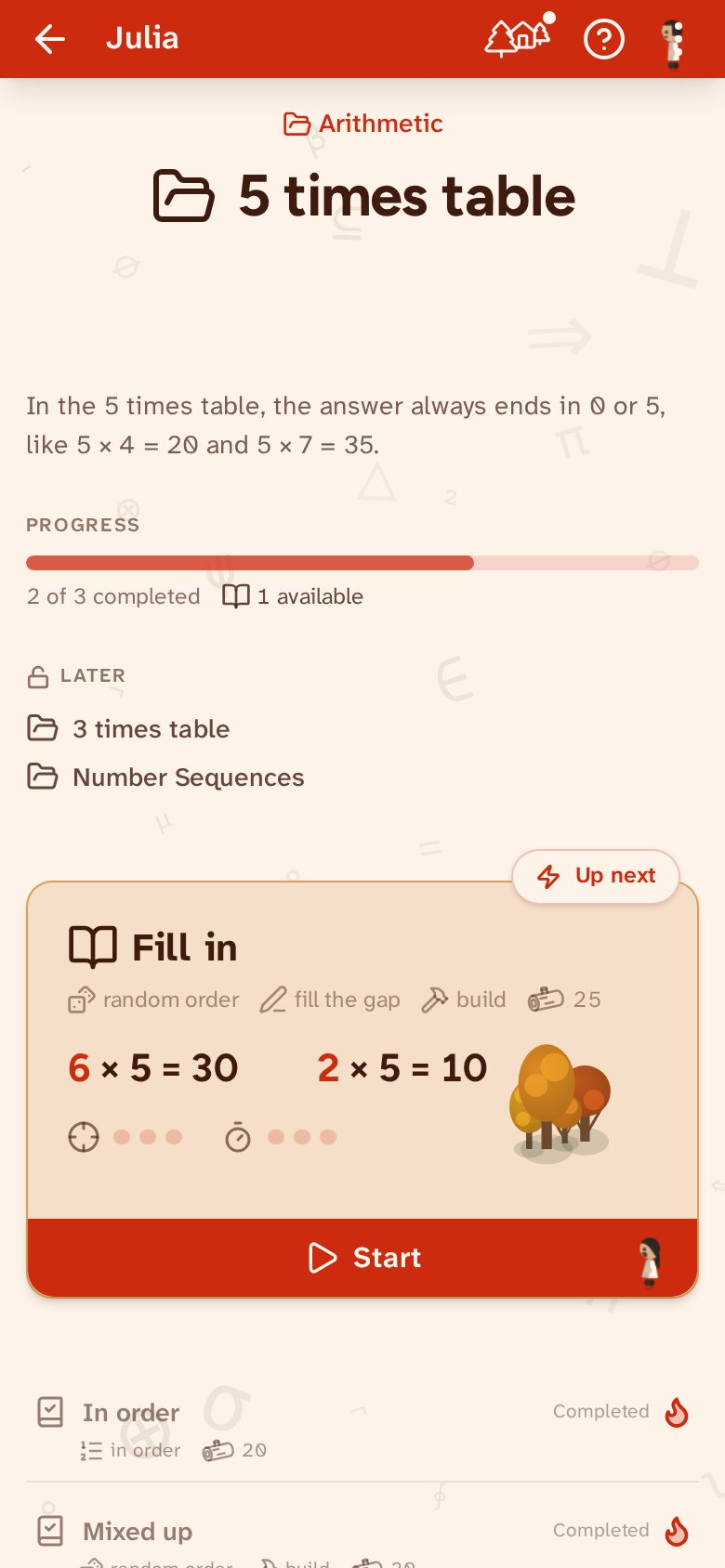
With one exercise from this topic as the example: Mixed up.
1
2
3
4
How it fits together
The arrows point to what can be done next. Whatever sits inside a box belongs to it.
Tables 3, 4 & 5
first this, then that belongs to
5 times table
Times 5 is half of times 10: 7 × 5 = 70 ÷ 2 = 35.
What times 5 gives the answer? Say the table until you hear it.
Dividing by 5
What times 5 makes it? Find it in the 5 times table.
The number that was divided is the answer times 5.
Working out and missing numbers mixed: first look where the gap is.
Why it matters
Many children find the 5 times table one of the easier ones, and that is down to the pattern: the answers end in 5 and 0 in turn. It also turns up everywhere, in money, in the minutes on a clock and in counting in fives, so it soon pays for itself.
How to approach it
Two things help. An even number times 5 ends in 0, an odd number in 5: so 8 × 5 ends in a 0 and 9 × 5 in a 5. And a child who knows the 10s can halve: 8 × 10 = 80, and half of that is 40.
The division facts follow the same path back. 45 ÷ 5 asks how many fives there are in 45; double 45 to make 90, take off the zero, and you have 9. Handy, but best of all is when your child simply knows that 9 × 5 = 45.
When is it secure?
A round of 10 sums in one go without a mistake, within 20 seconds. That is about 2 seconds a sum: no more counting, just knowing.