See how much is added each time.
Number sequences
Number sequences practice, from 7, 11, 15 to 2, 3, 5, 8, 12: the same step every time first, then steps that change, then everything mixed.
Your child can only do the exercises here once they know the 3, 4 and 5 times tables. Spotting that 7, 11, 15 goes up by 4 each time, or that a row is counting in threes, is far quicker for a child who recognises those steps from the tables.
Usually taught in Year 1–3 in England and Wales, around ages 5 to 8. Every child goes at their own pace; this is a guide, not a requirement.
The first of 11 exercises in this topic. See them all
What it looks like for your child
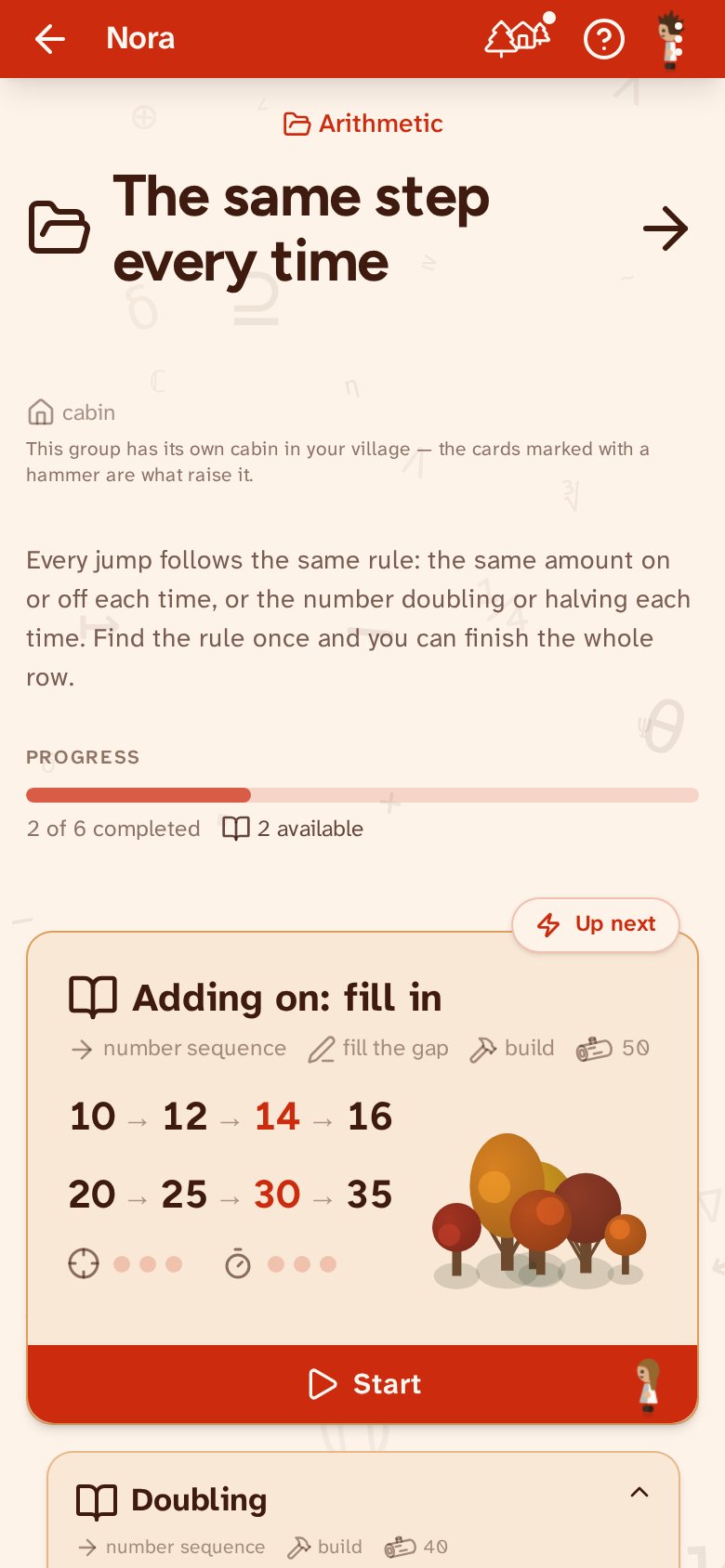
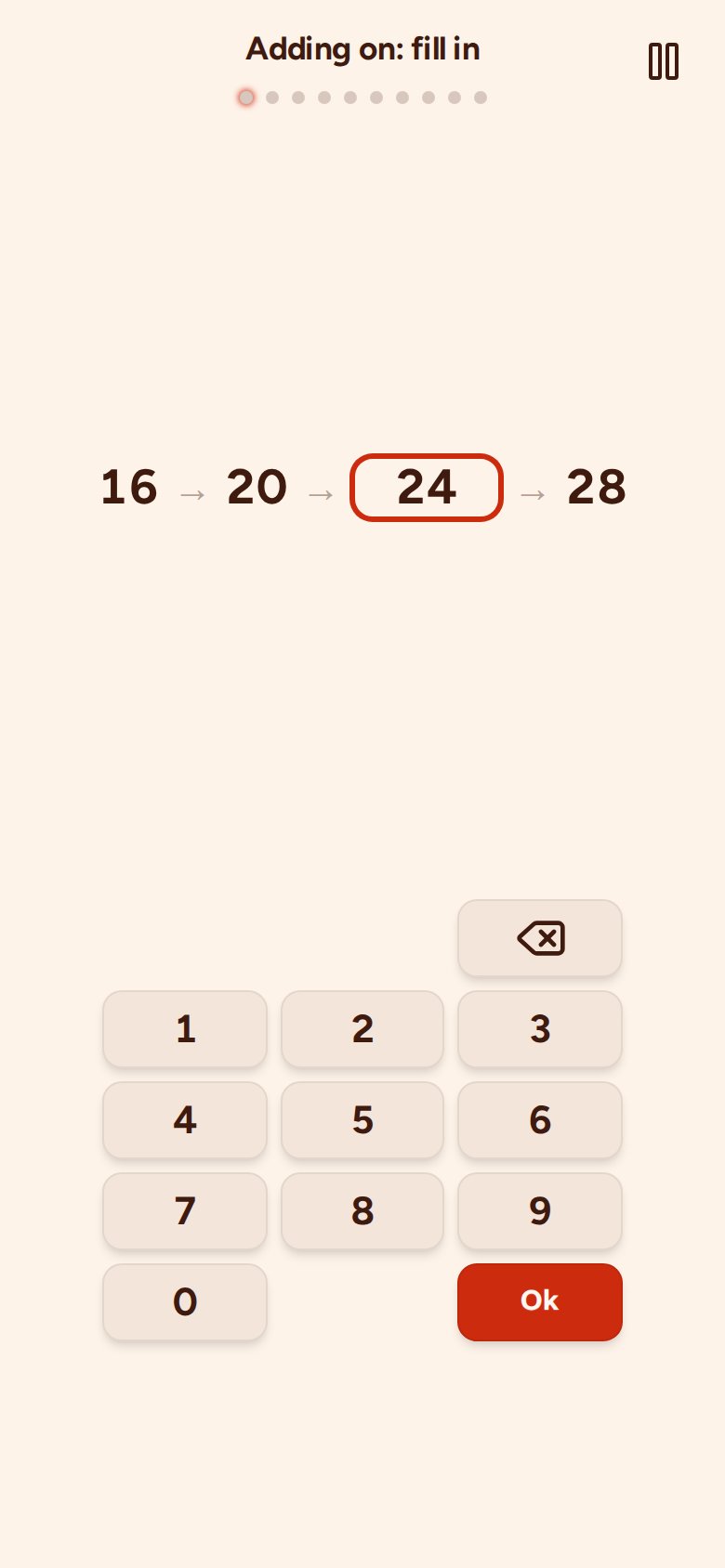
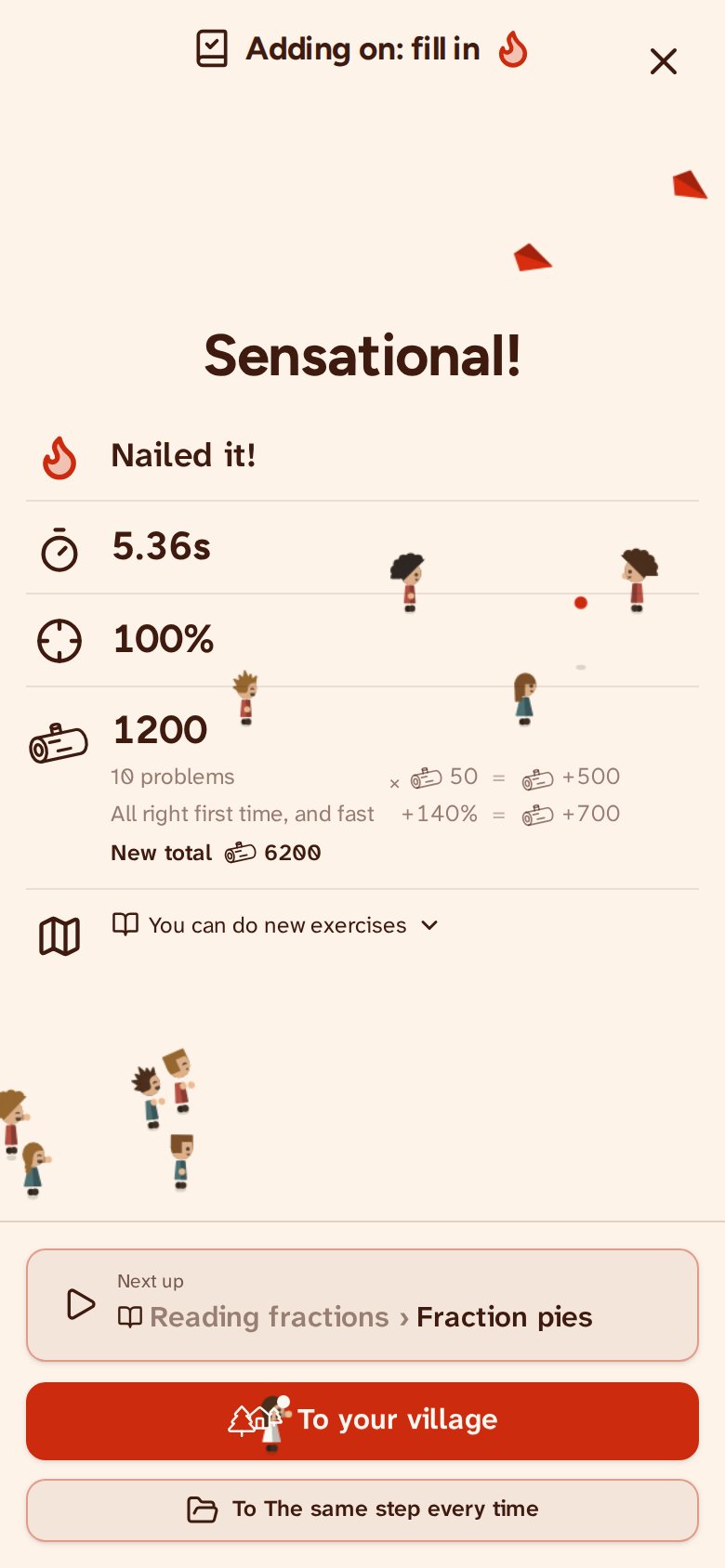
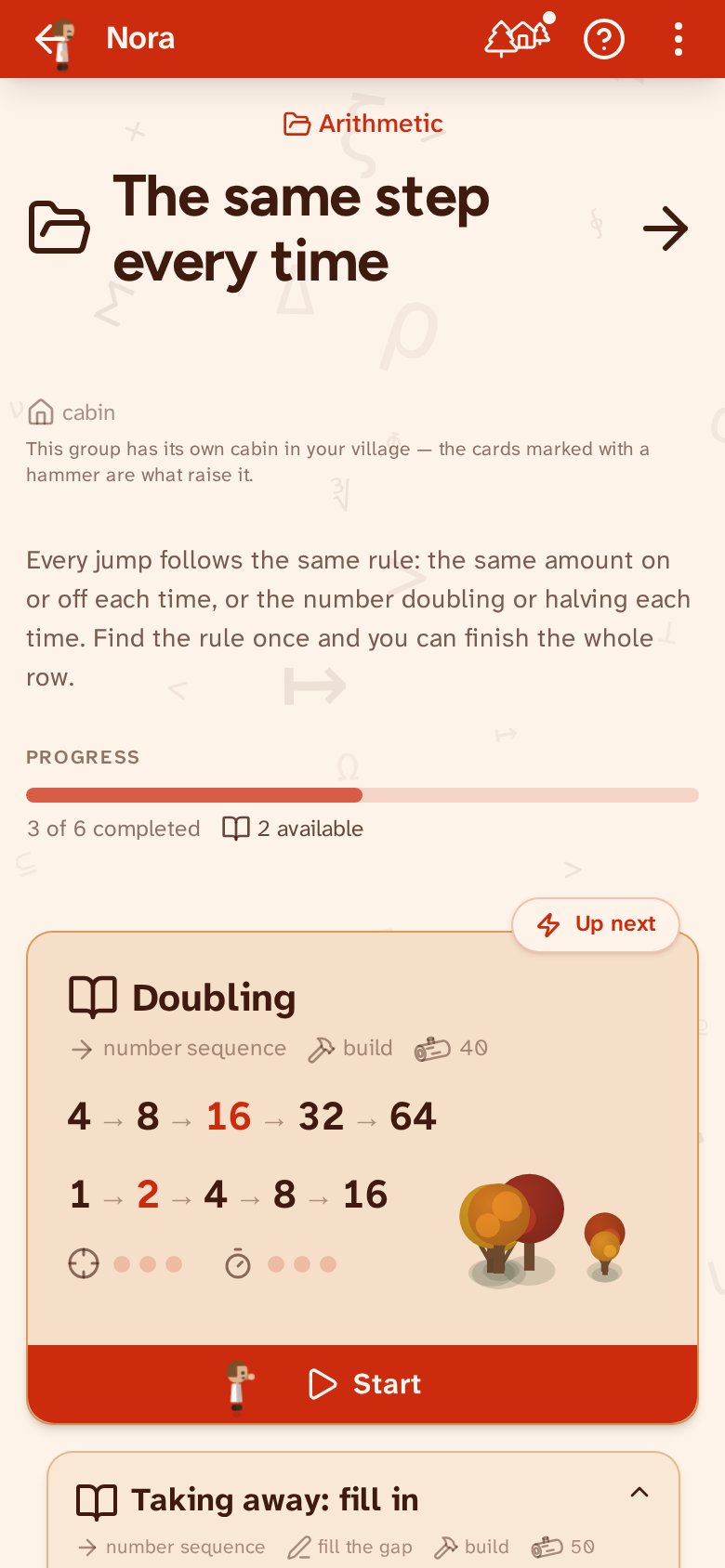
With one exercise from this topic as the example: Adding on: fill in.
1
2
3
4
How it fits together
The arrows point to what can be done next. Whatever sits inside a box belongs to it.
Needed first
Puzzles
Number sequences
The same step every time
Changing steps
All together
first this, then that belongs to
The same step every time
Find the step between two neighbours first.
Each number is double the one before. Which number is missing?
See how much is taken away each time.
Each number is half the one before. Which number is missing?
Find the step between two neighbours first.
Changing steps
Each jump is a little bigger than the one before. Which number is missing?
Each number is the sum of the two before it. Which number is missing?
Each jump is a little smaller than the one before. Which number is missing?
The row steps up, then down, then up again. Which number is missing?
All together
40 sums in a row, everything mixed: the real test.
Why it matters
A sequence is a puzzle: the numbers are there, the rule isn't. To find the missing number, a child has to look for a pattern, test a hunch and check that it works all the way along. That is calculating and reasoning at the same time.
Along the way there is a lot of practice that doesn't feel like it: adding, subtracting, doubling and halving. And looking for a rule is exactly the way of thinking that comes back later in algebra.
How to approach it
Start with the neighbours: what is the difference between two numbers side by side? In 7, 11, 15 it is 4 each time, so 19 comes next. If that difference doesn't hold all the way along, see whether the numbers are being doubled or halved.
In the trickier sequences, the step itself changes. In 2, 3, 5, 8, 12 each jump is one bigger, +1, +2, +3, +4, so the next number is 17. Have your child write the jumps above or below the numbers; often the pattern suddenly becomes clear.
When is it secure?
All 10 right in one round, and no more than 50 seconds altogether. Around 5 seconds a sum shows your child is no longer counting.