Each answer is the one before plus 4.
4 times table
4 times table practice, from 1 × 4 to 4 × 4 = 16 and 12 ÷ 4 = 3: doubling twice, first the table in order and mixed up, then dividing by 4.
Your child can only do the exercises here once they know the 3 times table. The 3s are where a child learns to recall a fact instead of counting up to it, and the 4s ask for exactly that, with 9 × 4 = 36 coming at once rather than via 4, 8, 12.
Usually taught in Year 3 in England and Wales, around ages 7 to 8. Every child goes at their own pace; this is a guide, not a requirement.
The first of 6 exercises in this topic. See them all
What it looks like for your child
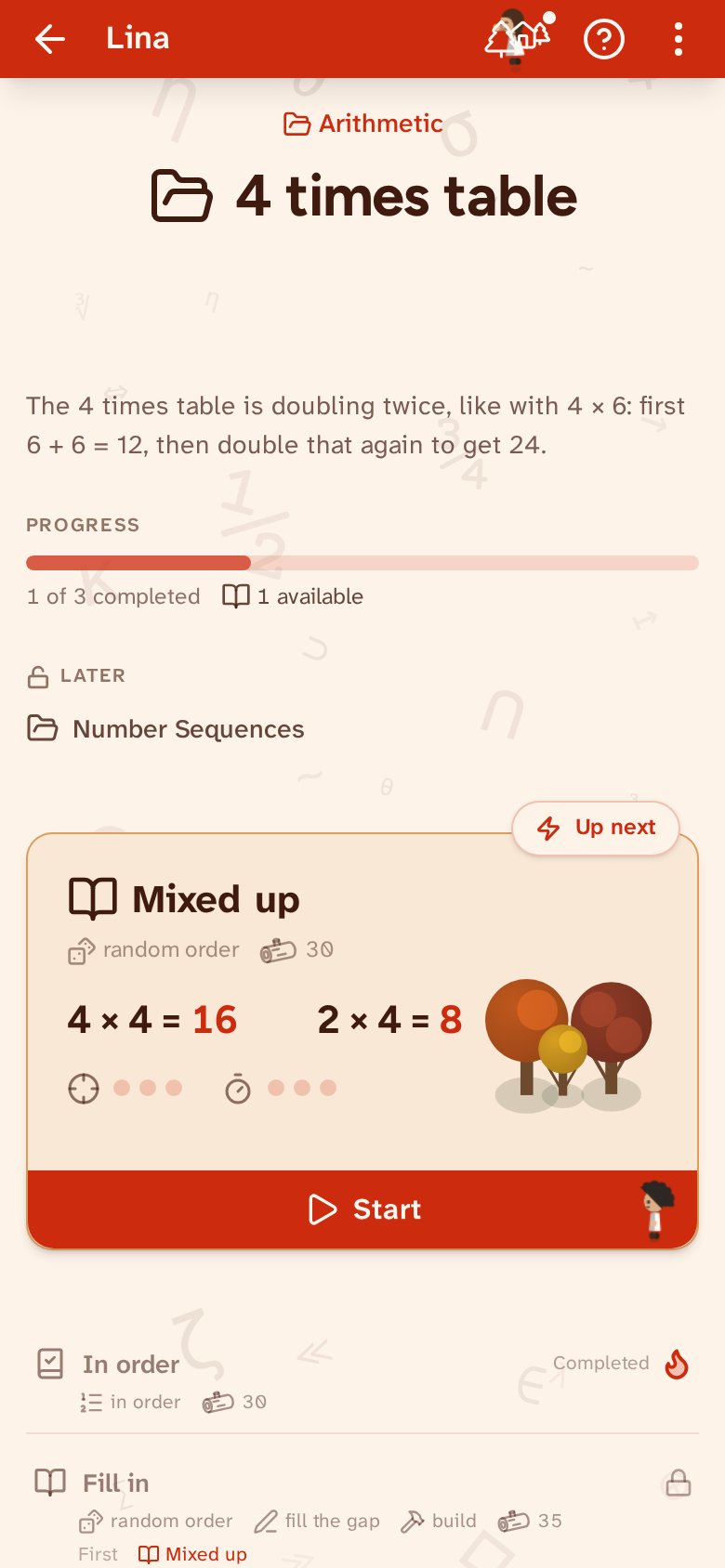
With one exercise from this topic as the example: Mixed up.
1
2
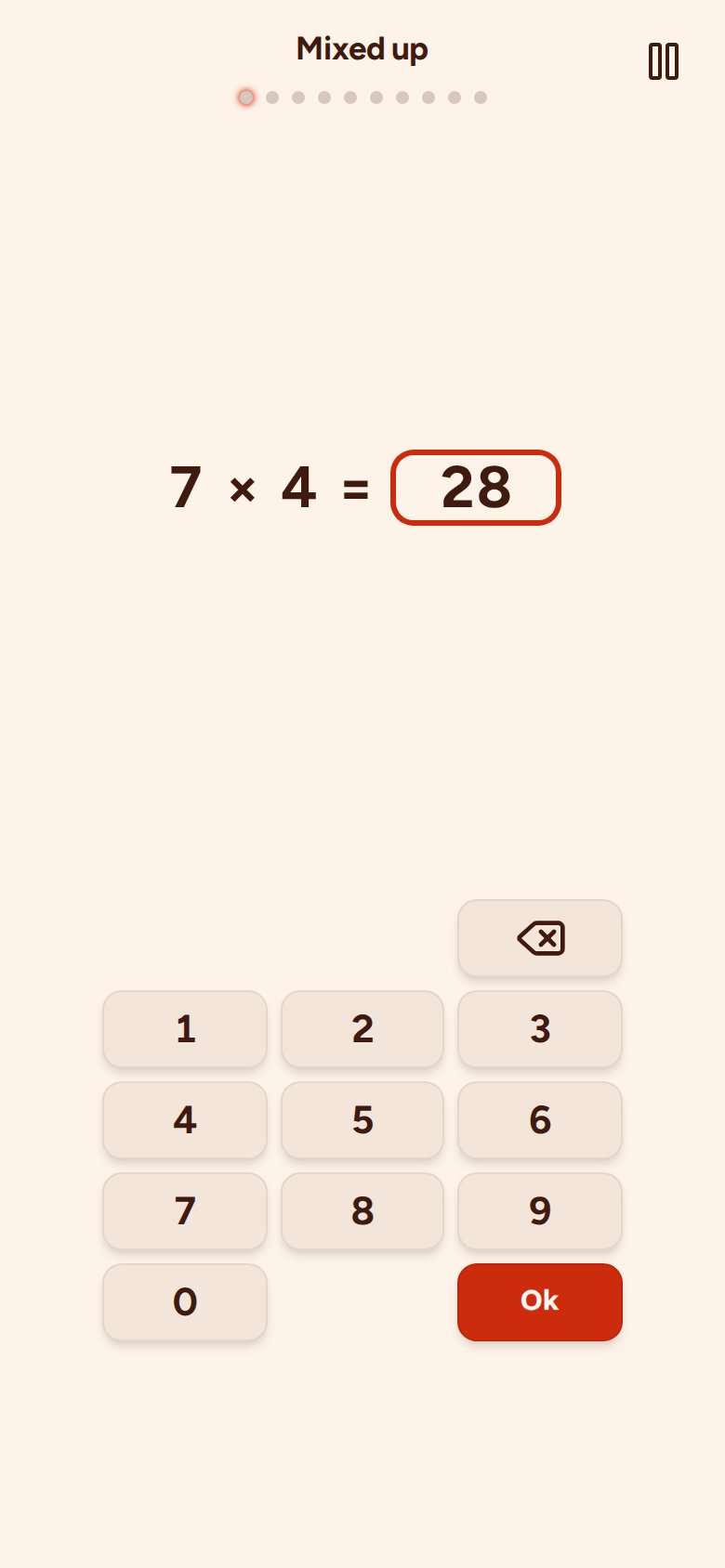
3
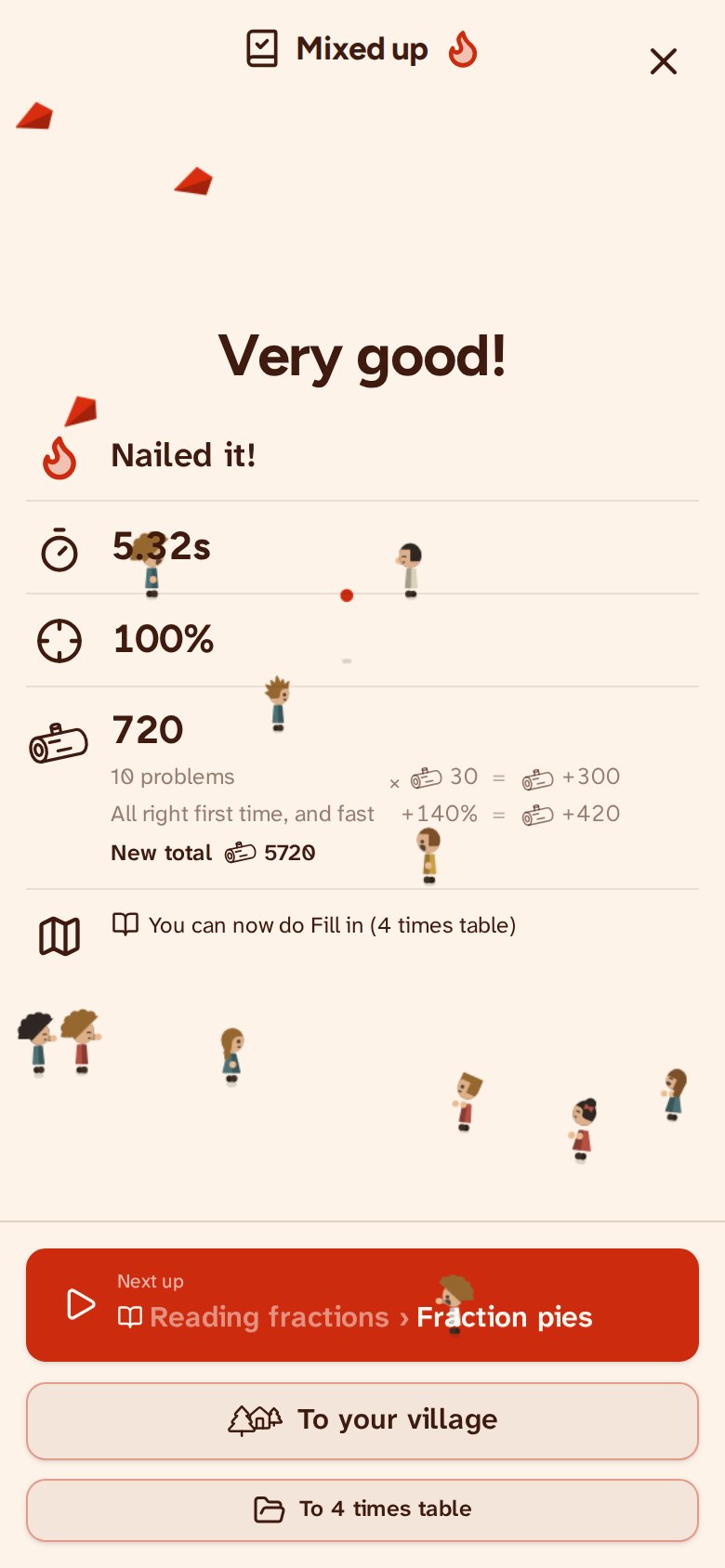
4
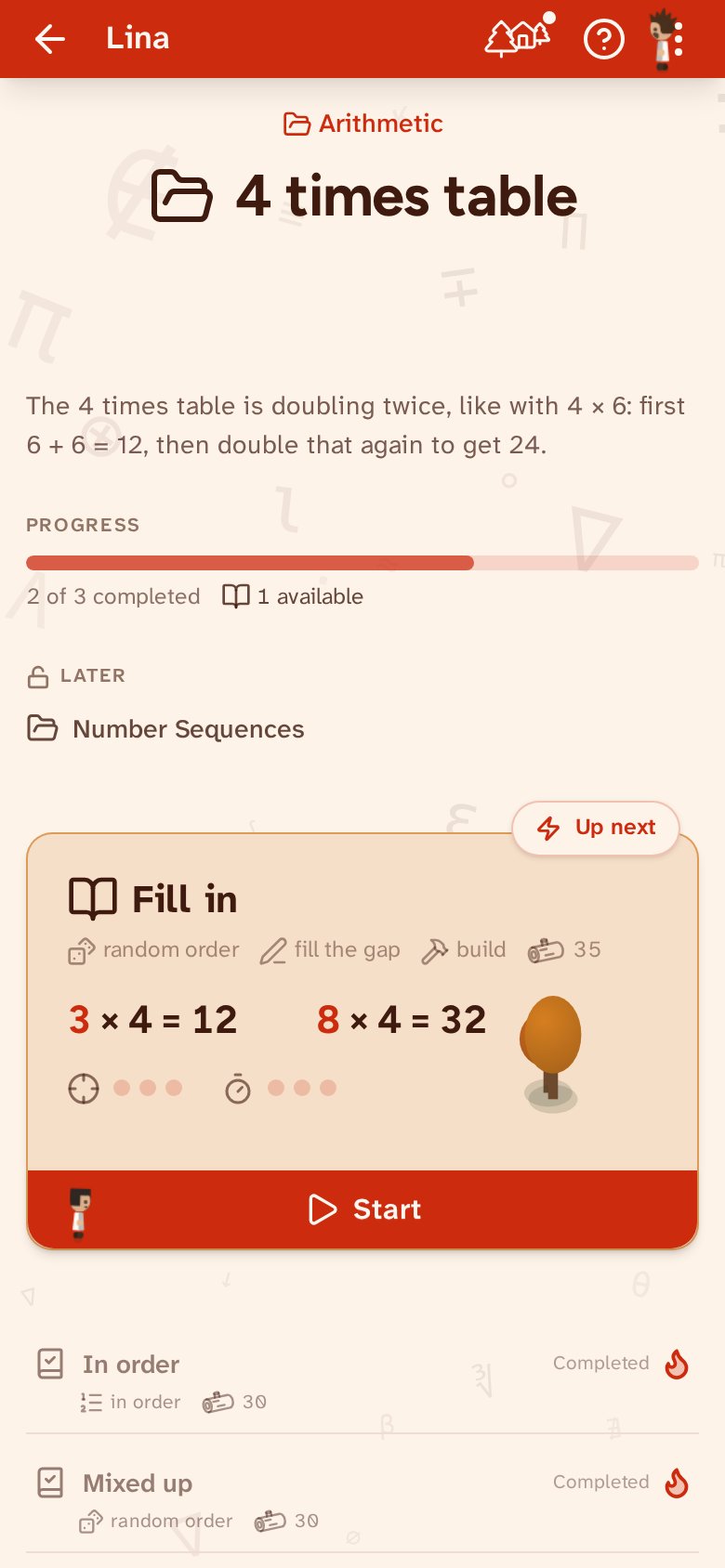
How it fits together
The arrows point to what can be done next. Whatever sits inside a box belongs to it.
Needed first
Tables 3, 4 & 5
Can come next
first this, then that belongs to
4 times table
Times 4 is doubling twice: 7 → 14 → 28.
What times 4 gives the answer? Say the table until you hear it.
Dividing by 4
What times 4 makes it? Find it in the 4 times table.
The number that was divided is the answer times 4.
Mixed sums, with the empty box in a different place each time.
Why it matters
The 4s are a good table for showing how times tables connect. Every answer is exactly double the answer in the 2 times table: 6 × 2 = 12, so 6 × 4 = 24. A child who discovers this isn't learning ten new facts but one new step, and that step comes back again with the 8s.
How to approach it
For a tricky one, doubling out loud helps. 9 × 4: first 9 + 9 = 18, then 18 + 18 = 36. After a while the middle step drops away and 36 just comes, and then you know the table has stuck.
Dividing by 4 is halving twice. For 32 ÷ 4, half is 16, and half of that is 8. That way multiplying and dividing sit side by side and strengthen each other.
When is it secure?
All 10 right in one round, and no more than 30 seconds altogether. Around 3 seconds a sum shows your child is no longer counting.