Each answer is the one before plus 14.
14 times table
14 times table practice, from 1 × 14 to 6 × 14 = 84 and 8 × 14 = 112: double the 7s, or ten lots plus four, in order, mixed up and filling in.
Your child can only do the exercises here once they know the 4, 10 and 13 times tables. 8 × 14 is 80 + 32, the same split into ten lots and the rest that the 13s taught, now with the 4s for the second part.
The first of 3 exercises in this topic. See them all
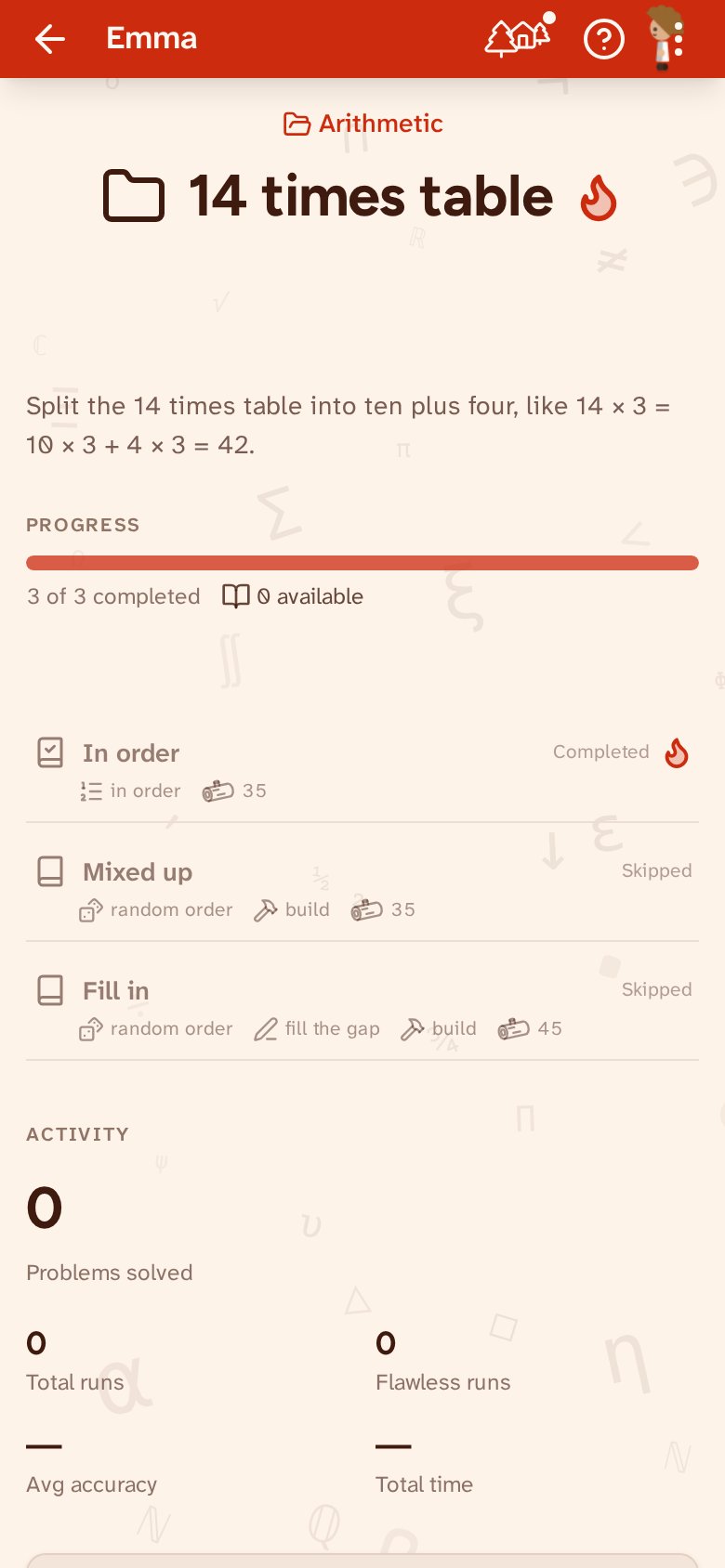
What it looks like for your child
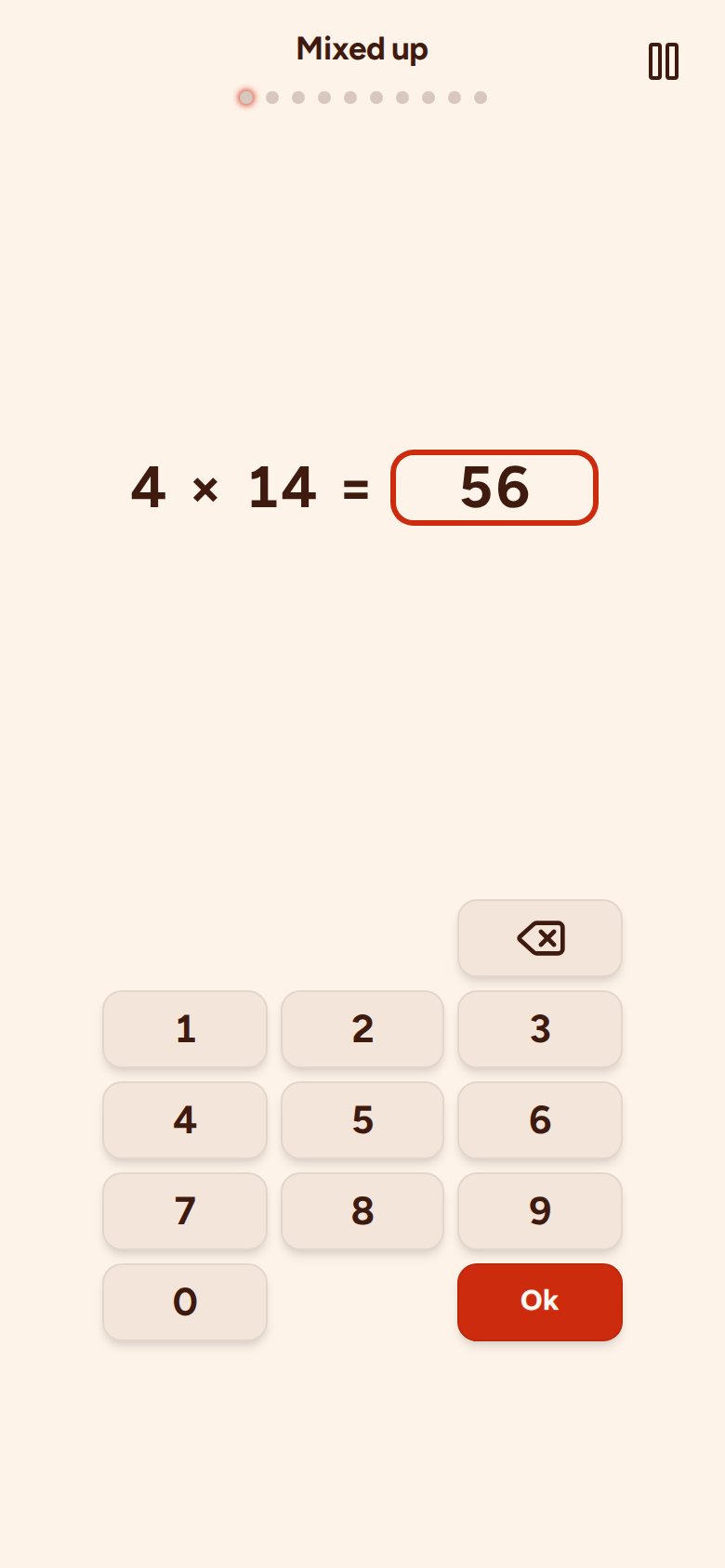
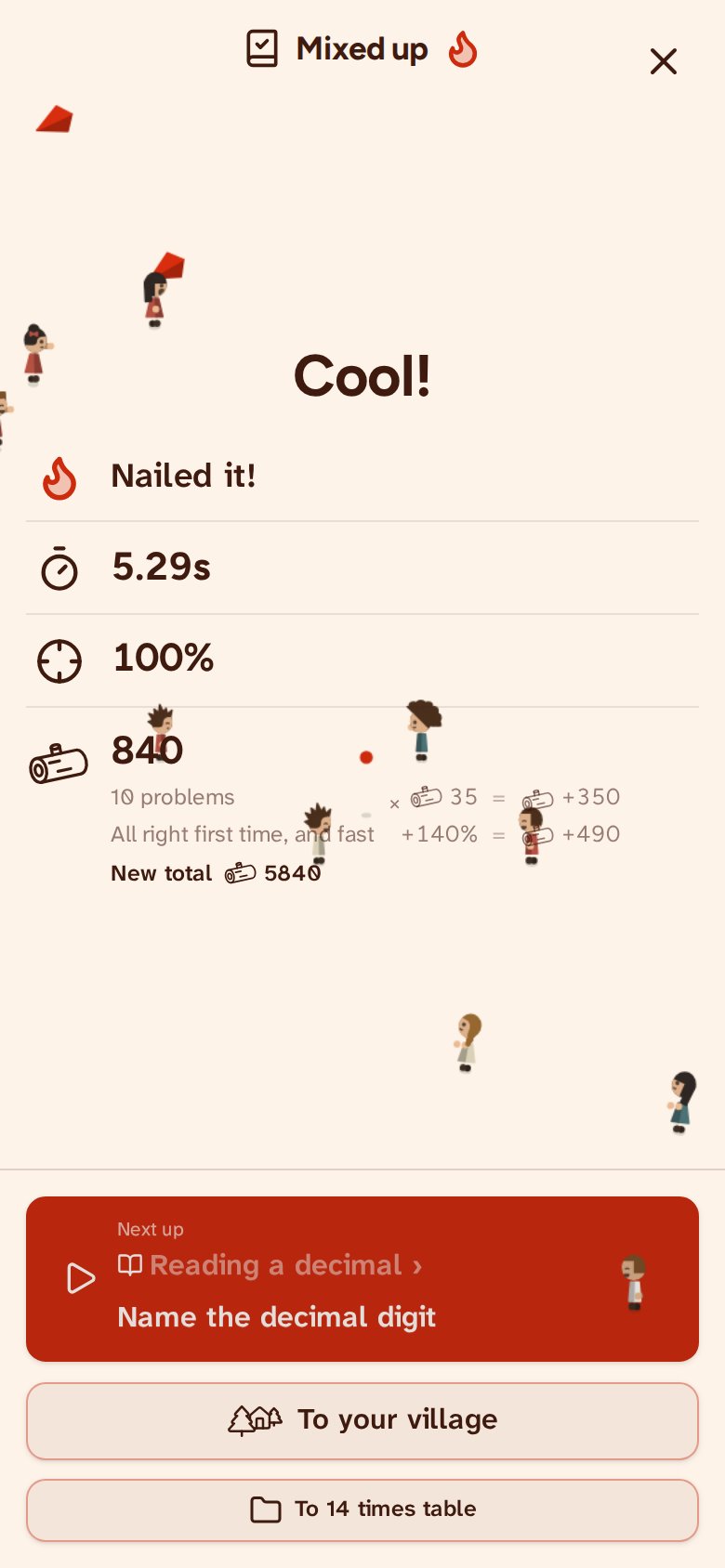
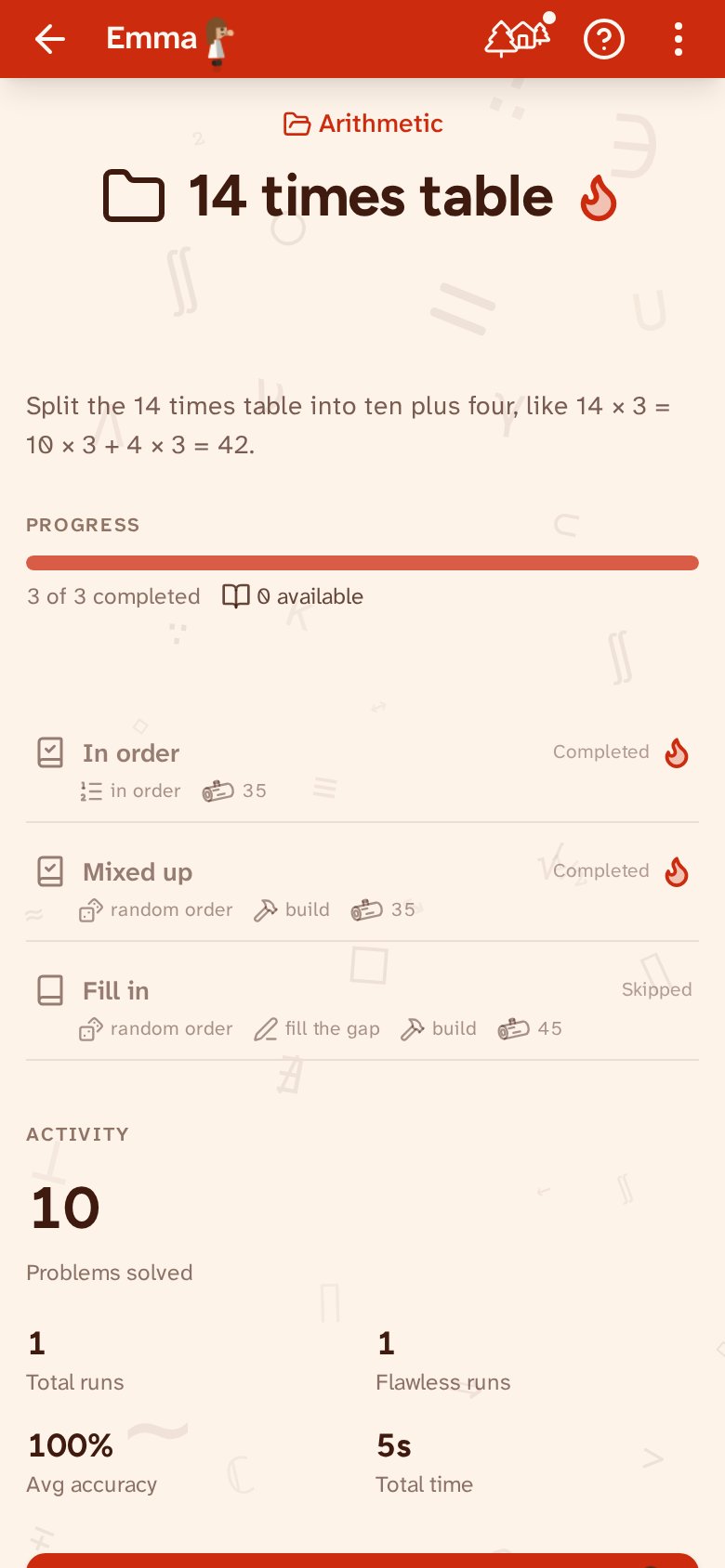
With one exercise from this topic as the example: Mixed up.
1
2
3
4
How it fits together
The arrows point to what can be done next. Whatever sits inside a box belongs to it.
Needed first
Can come next
first this, then that belongs to
Times 14 is times 10 plus times 4: 7 × 14 = 70 + 28.
What times 14 gives the answer? Say the table until you hear it.
Why it matters
Once your child knows the 7 times table, they will see it again here: every answer is exactly double. 3 × 7 = 21, so 3 × 14 = 42. In this way the 14s show that the old tables aren't separate lists but building blocks you can combine.
How to approach it
There are two ways in, and it helps if your child knows both. Through the ten: 9 × 14 = 90 + 36 = 126. Through doubling: 9 × 7 = 63, and double that is 126. If they come to the same answer, your child knows it for certain.
If one fact keeps catching, build up that one fact calmly rather than reciting the whole table again. That way the exact piece that is missing is the one that grows.
When is it secure?
A round of 10 sums in one go without a mistake, within 35 seconds. That is about 3.5 seconds a sum: no more counting, just knowing.