Each answer is the one before plus 15.
15 times table
15 times table practice, from 5 × 15 = 75 to 7 × 15 = 105: times 10 plus half of it again, the table of quarter hours, in order, mixed up and filled in.
Your child can only do the exercises here once they know the 5 and 10 times tables. 7 × 15 is 70 plus half of 70, and both the halving and the answers ending in 0 or 5 come straight from those two tables.
The first of 3 exercises in this topic. See them all
What it looks like for your child
With one exercise from this topic as the example: Mixed up.
1
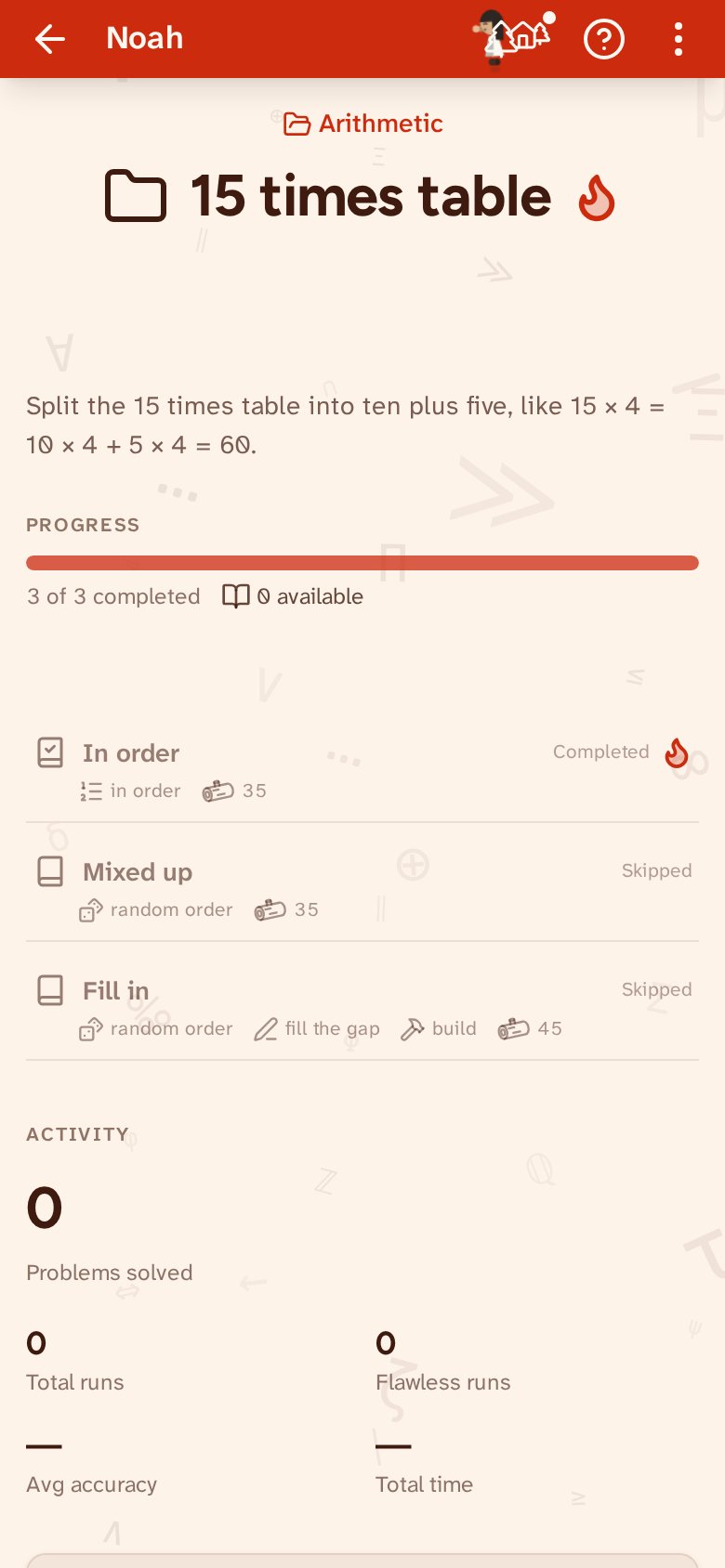
2
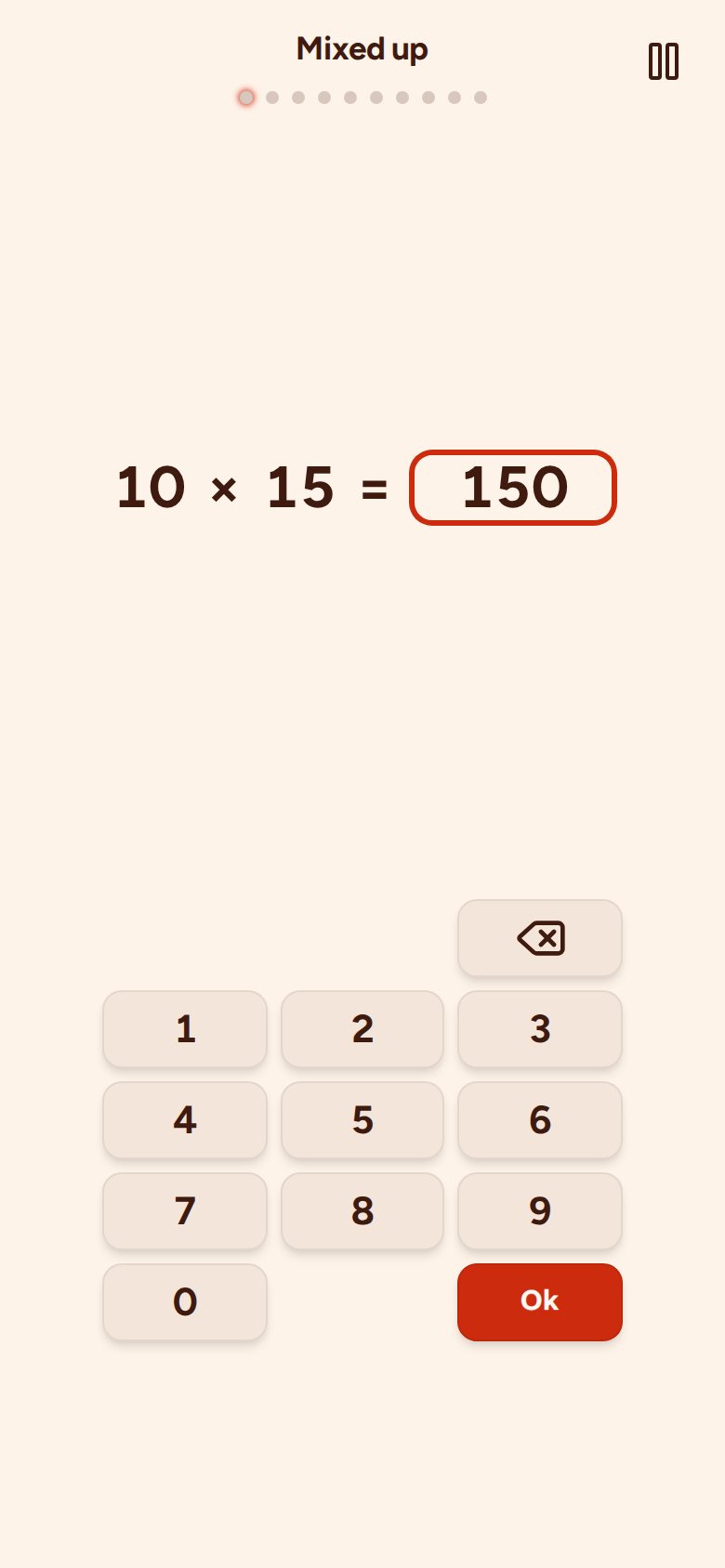
3
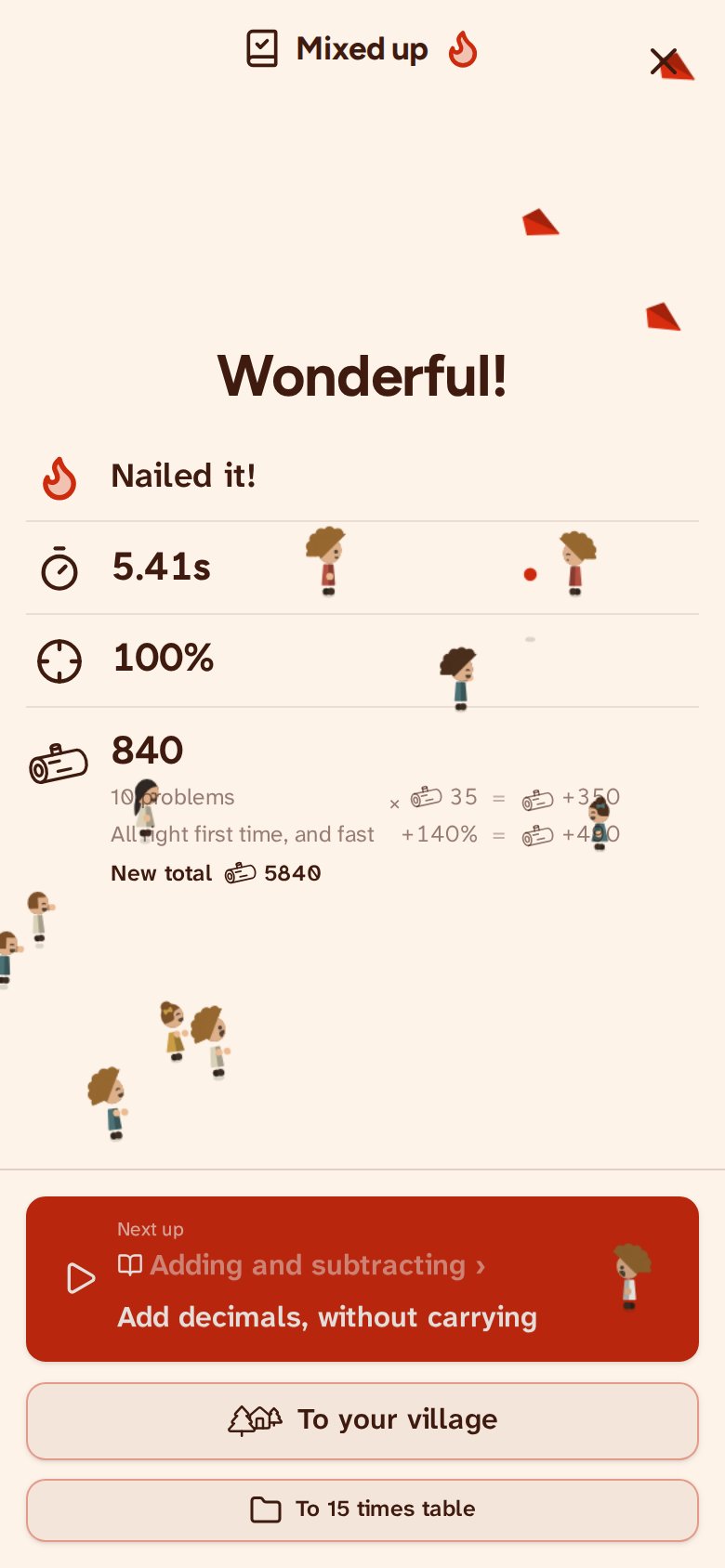
4
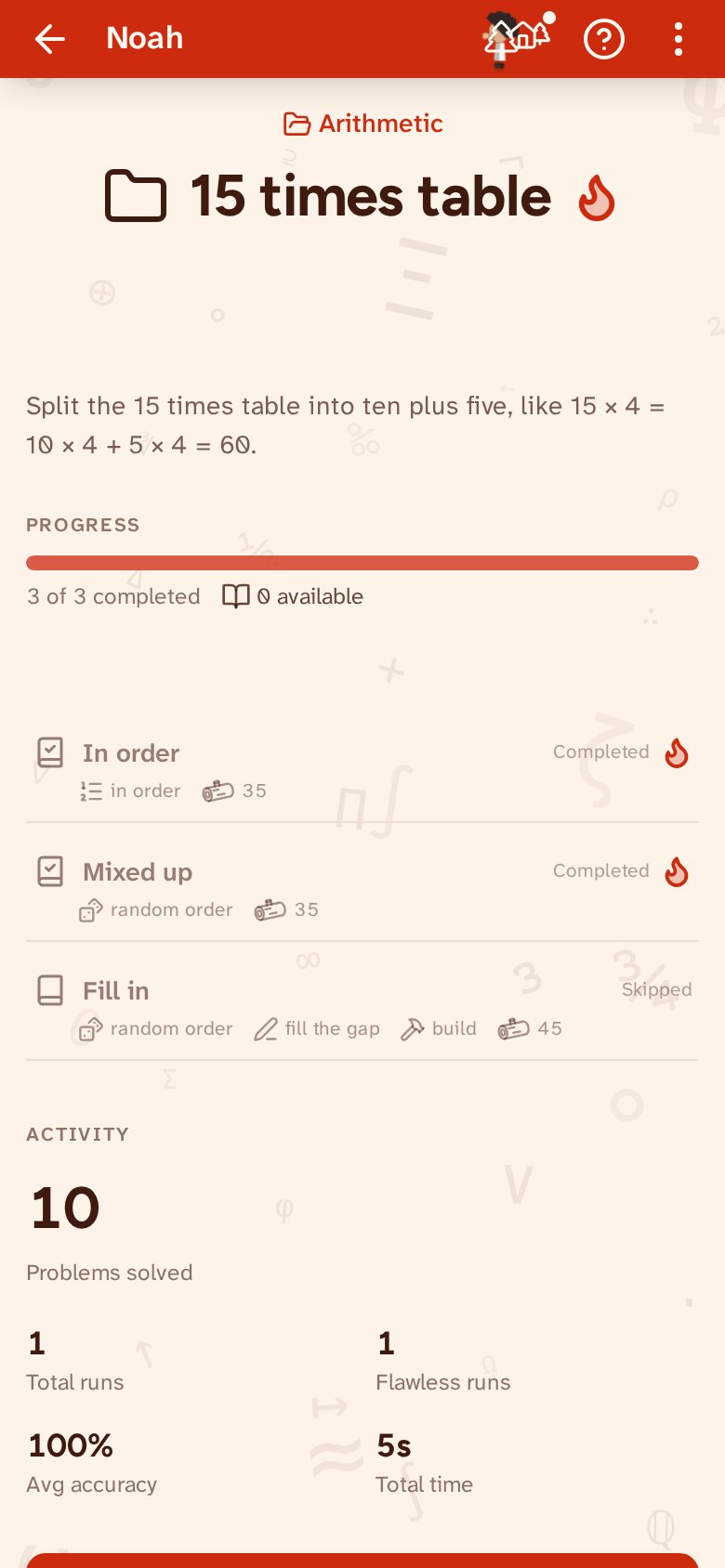
How it fits together
The arrows point to what can be done next. Whatever sits inside a box belongs to it.
Needed first
Can come next
first this, then that belongs to
Times 15 is times 10 plus times 5: 7 × 15 = 70 + 35.
What times 15 gives the answer? Say the table until you hear it.
Why it matters
Fifteen minutes is a quarter of an hour, which is why this table turns up on the clock: four quarters make 60 minutes, 4 × 15. It is also a nice example of a handy way to split a number. Because 5 is half of 10, times 15 is the ten plus half of it.
How to approach it
8 × 15: first 8 × 10 = 80, half of that is 40, together 120. With an odd number a five appears on the end: 3 × 15 = 30 + 15 = 45. So the answers always end in 0 or 5, just like the 5 times table.
A child who knows the 15s well also works with time more quickly. Pointing out a few quarter hours on a real clock shows your child what this table is for.
When is it secure?
When your child gets all 10 sums right in 35 seconds or less. Answers only come that quickly once they come from memory.