Times 3: three times 0, 1, 2, 3, 4, 5 and 6.
Multiplication to 20
Multiplication to 20 practice, from 5 × 3 = 15 to 40 × 40 = 1600: tripling joins doubling, then plus, minus, times and divide mixed in one round.
Your child can start here once they can do the first multiplication and division sums to 10; the later exercises also need dividing and subtracting within 20. The mixed round with all four signs is where it shows: a child who has to read each sign and then work out 16 − 7 or 16 ÷ 4 needs both to be quick already.
Usually taught in Year 2–3 in England and Wales, around ages 6 to 8. Every child goes at their own pace; this is a guide, not a requirement.
The first of 14 exercises in this topic. See them all
What it looks like for your child
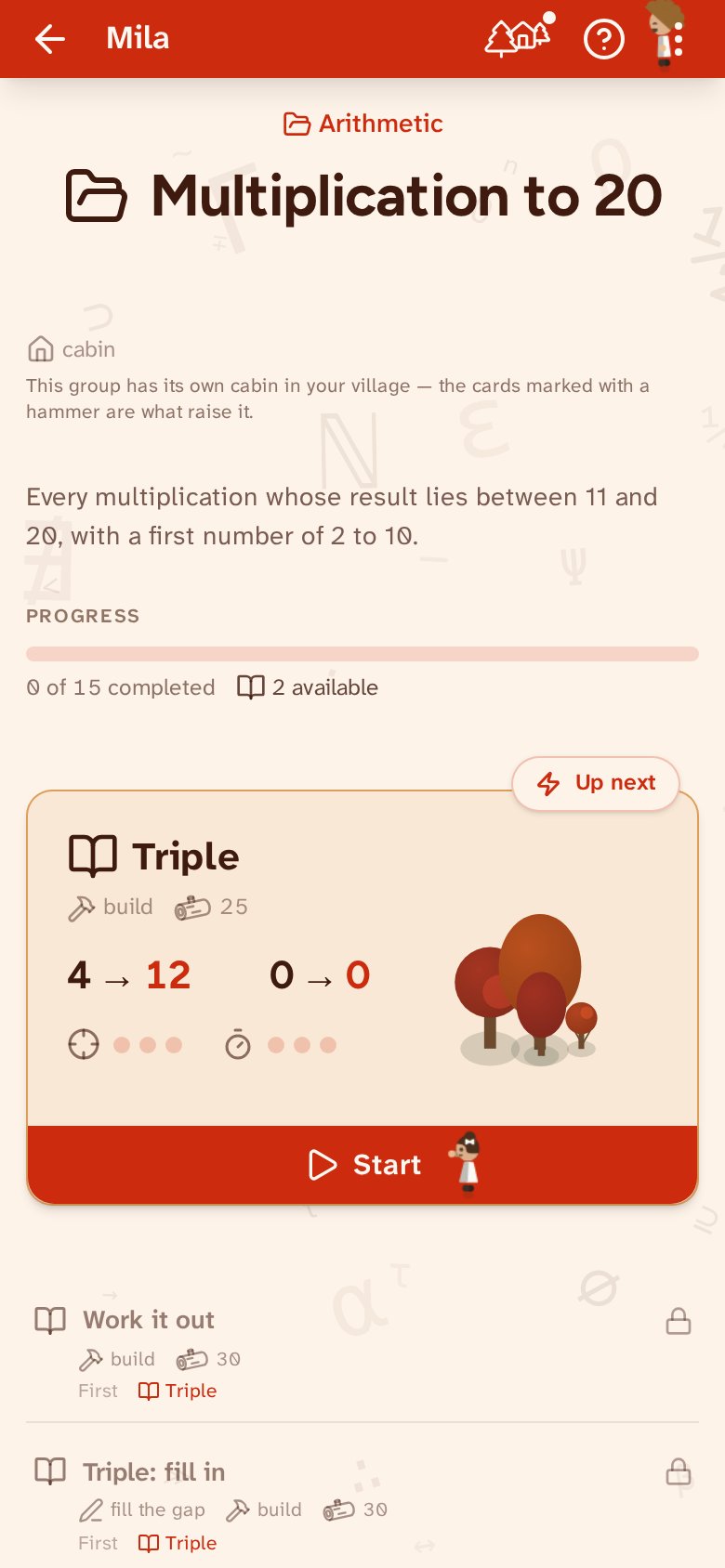
With one exercise from this topic as the example: Triple.
1
2
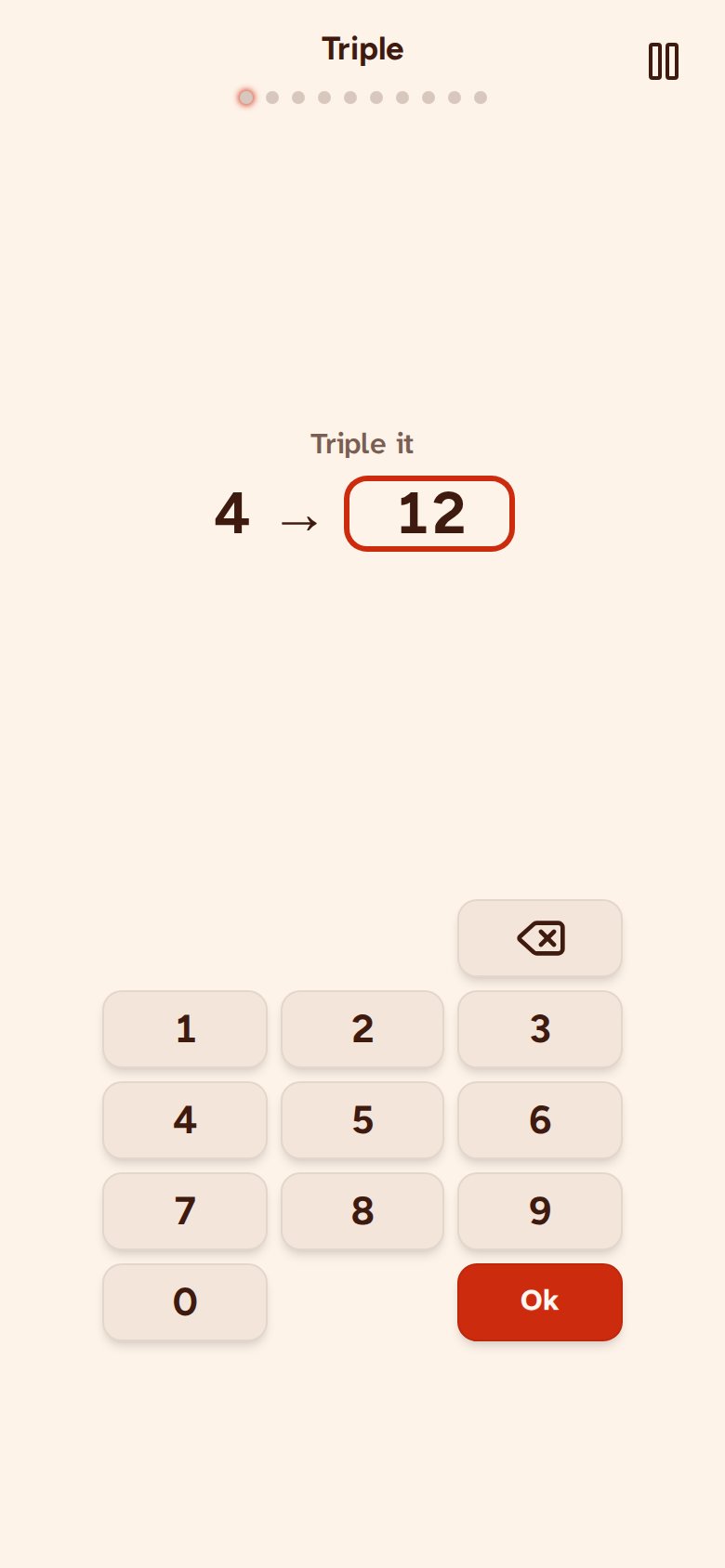
3
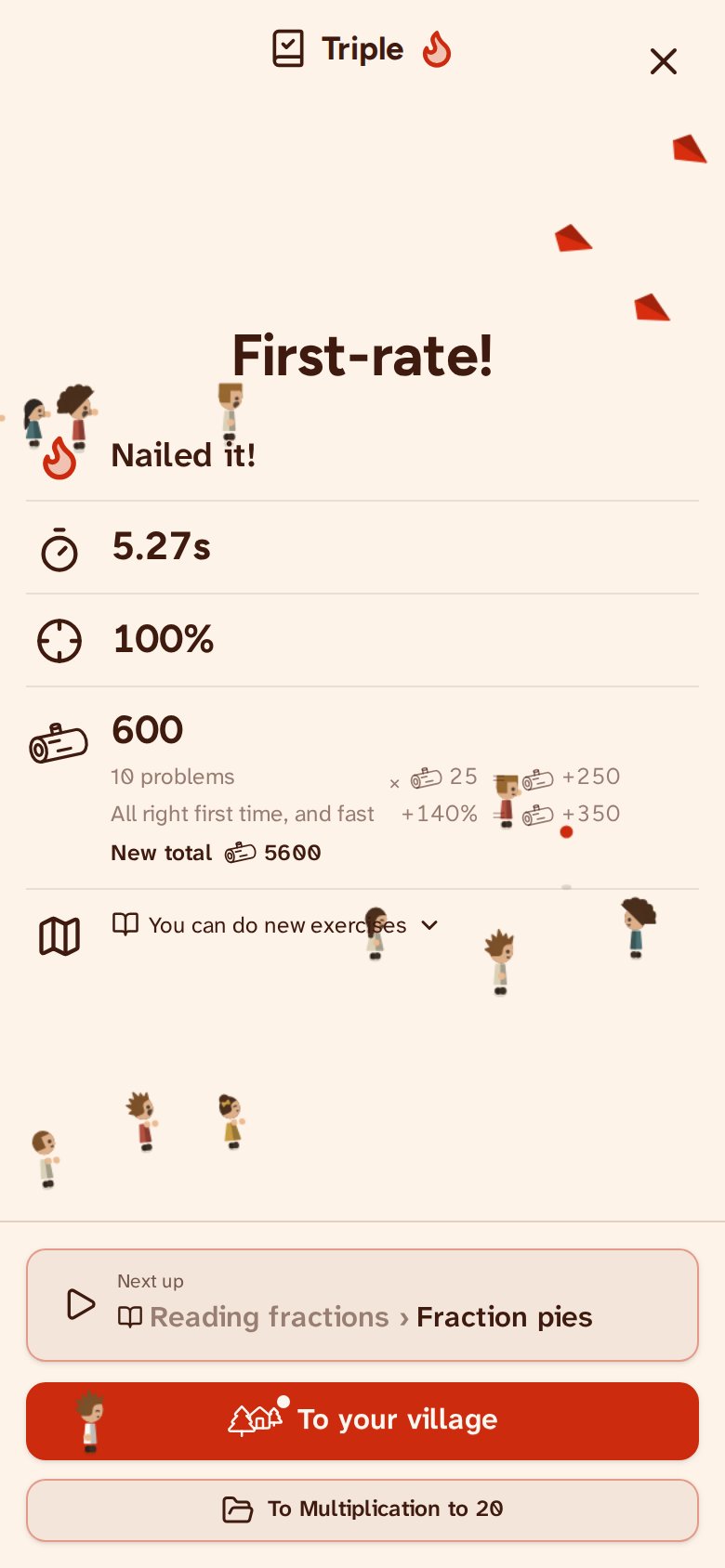
4
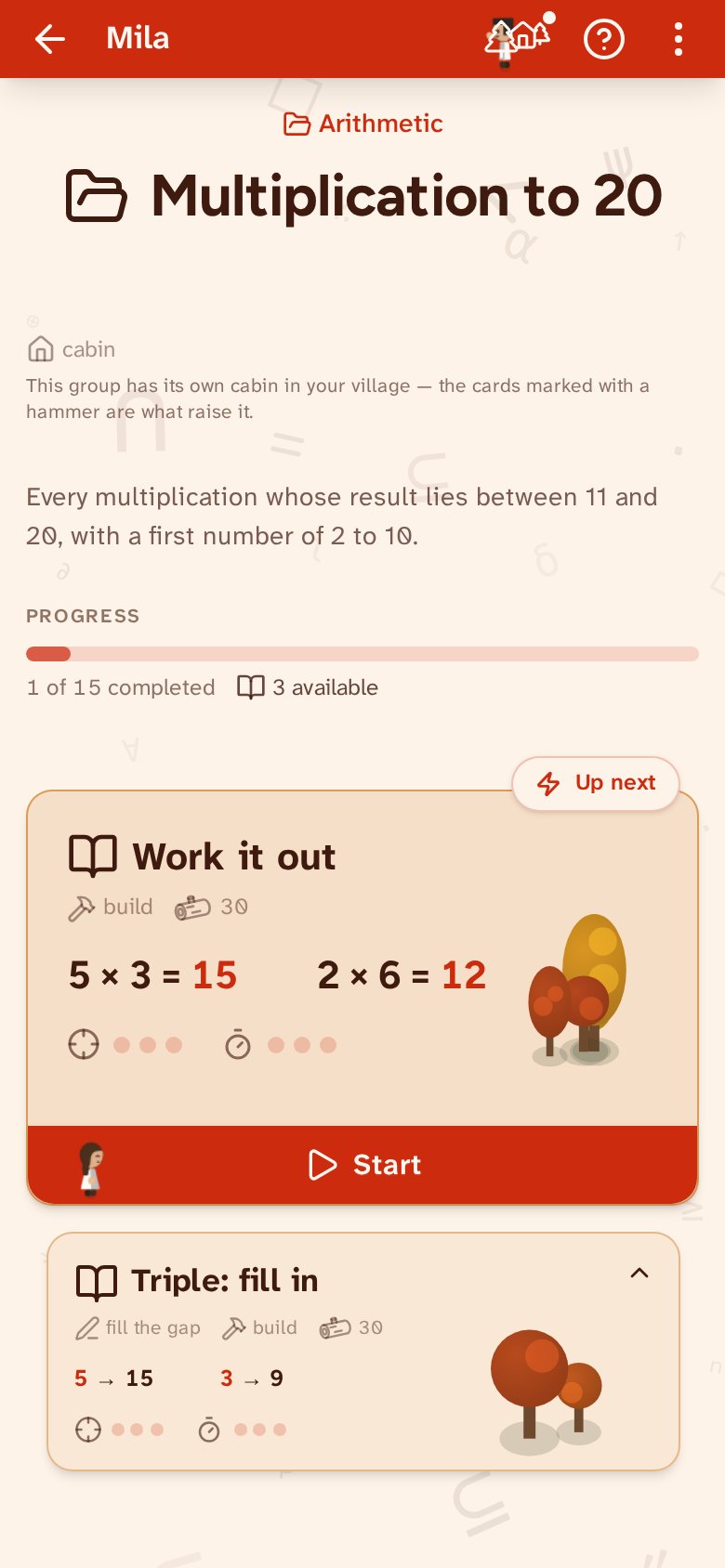
How it fits together
The arrows point to what can be done next. Whatever sits inside a box belongs to it.
Multiplication
Multiplication to 20
first this, then that belongs to
Times is the same number again and again: 3 × 4 = 4 + 4 + 4.
What times 3 gives the answer? Count in threes.
The same sums, but a different number missing each time: the result or one of the two numbers.
One minute, as many sums as possible. Not needed to move on, but good for getting quicker.
Look carefully at the sign first.
Dividing is the table backwards: 12 ÷ 3 — what times 3 makes 12?
The same sums to 20, with zeros on the end: if you know 8 × 2 = 16, you also know 80 × 2 = 160 and 80 × 20 = 1600.
Which two numbers give this result? The order does not matter.
Everything in this topic in one round of 30 sums.
A race against time, for children who can already do it and want to be faster.
30 sums in a row, everything mixed: the real test.
A race against time, for children who can already do it and want to be faster.
Everything in this topic in one round of 30 sums.
Why it matters
Up to 20, multiplying by 3 joins doubling, and the sums become just too big to count on fingers. That is the point: your child starts to lean on what they already know. A child who knows 2 × 7 = 14 finds 3 × 7 by adding one more seven.
In the round with all four operations mixed, your child has to read the sign first and only then work it out. That sounds obvious, but it is a skill in its own right, and it comes back on every worksheet where different kinds of sums are mixed together.
How to approach it
Build on doubling. 3 × 6 is double 6 plus one more six: 12 + 6 = 18. Say that middle step out loud at first; after a while your child will skip it without thinking.
For the 3 times table itself, counting in threes works well: 3, 6, 9, 12, 15, 18. You can chant it on the stairs, in the car or while laying the table. What your child hears a few times in everyday life often sticks faster than what only appears on a screen.
When is it secure?
When your child gets all 10 sums right in 25 seconds or less. Answers only come that quickly once they come from memory.