Times 2: double 11 to 15.
Multiplication to 30
Multiplication to 30 practice, from 6 × 4 to 2 × 12 = 24 and 1000 × 300: doubling 11 to 15, partitioning, then times and divide mixed.
Your child can start here once they can multiply up to 20 and divide up to 20; the later exercises also need division up to 30. Sums like 2 × 12 are in no table, so they are built from pieces your child already knows, and their division partners such as 24 ÷ 6 only come quickly if dividing is familiar ground.
Usually taught in Year 2–3 in England and Wales, around ages 6 to 8. Every child goes at their own pace; this is a guide, not a requirement.
The first of 11 exercises in this topic. See them all
What it looks like for your child
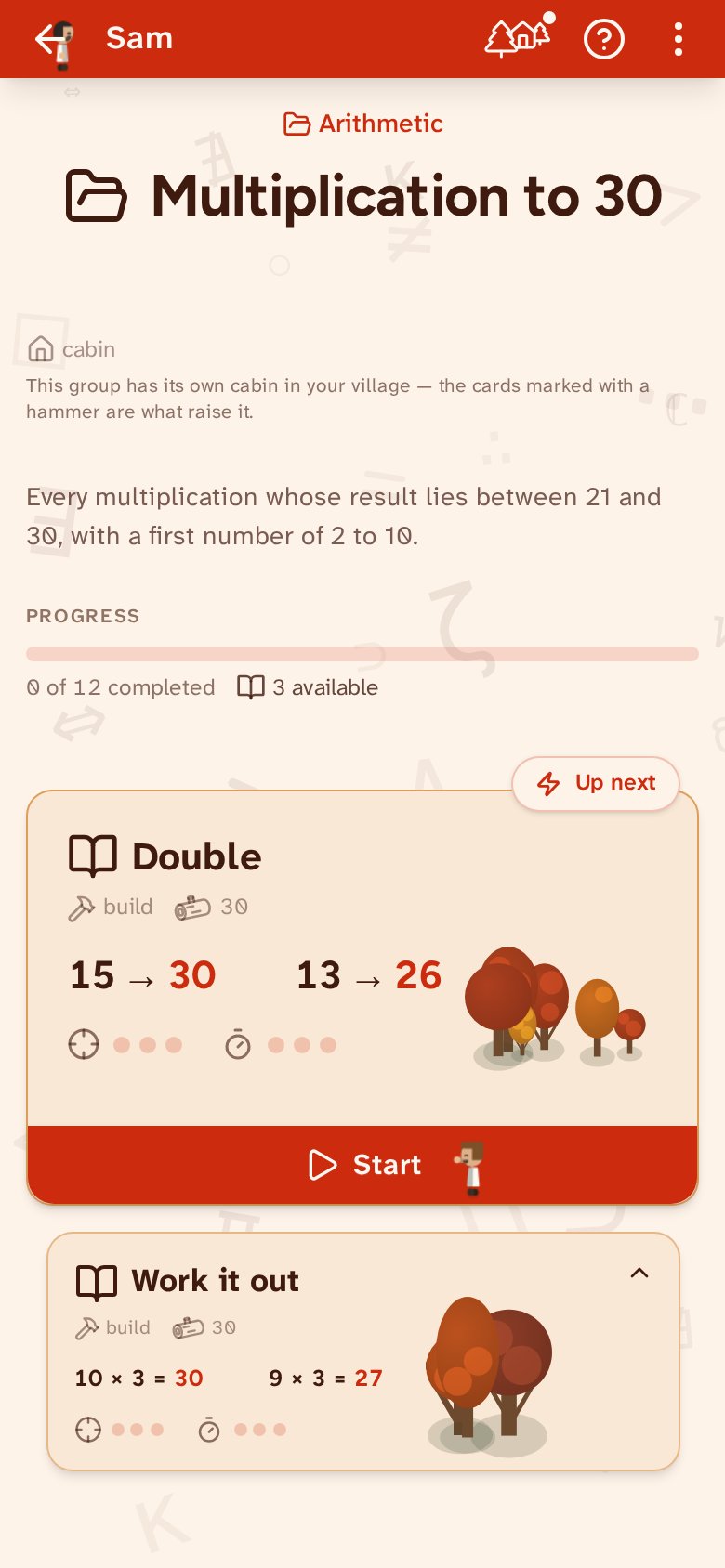
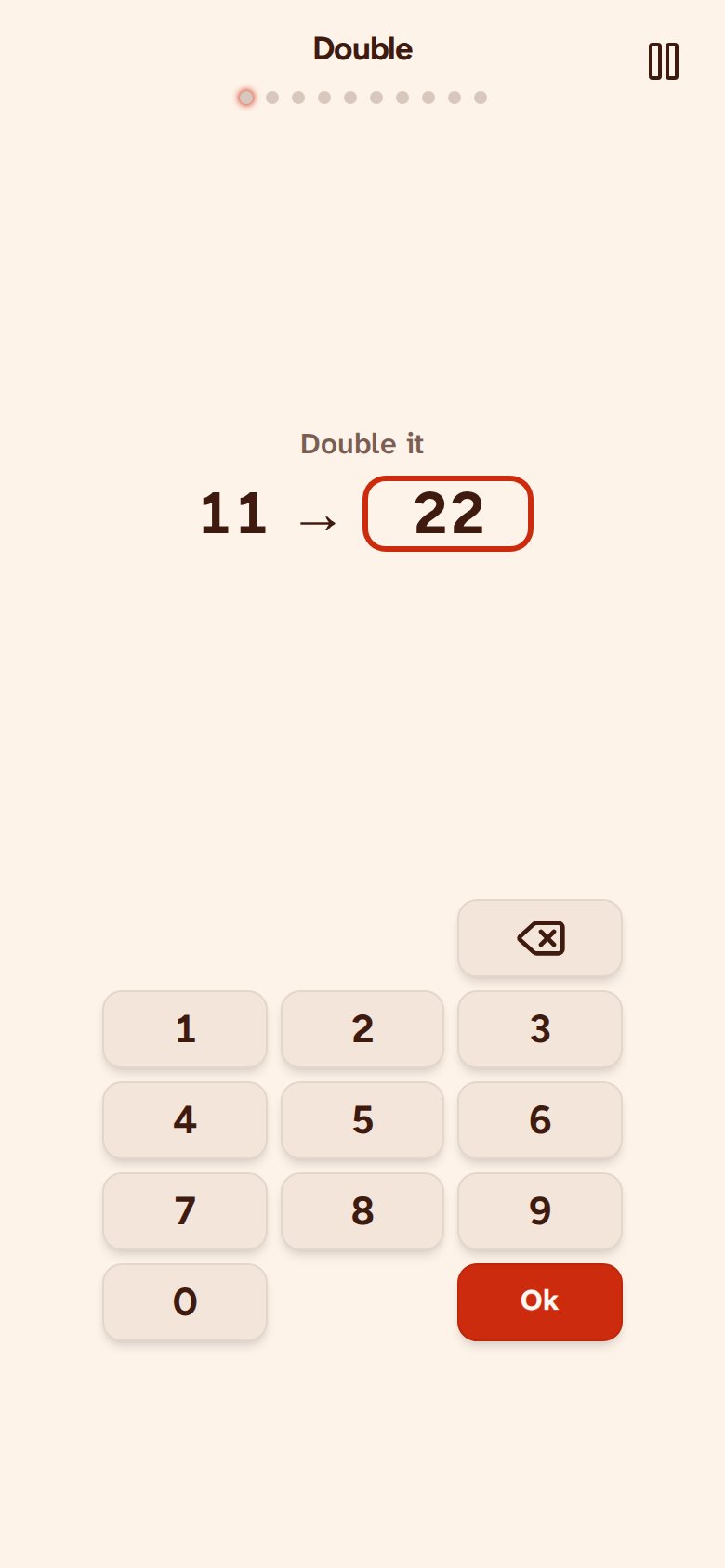
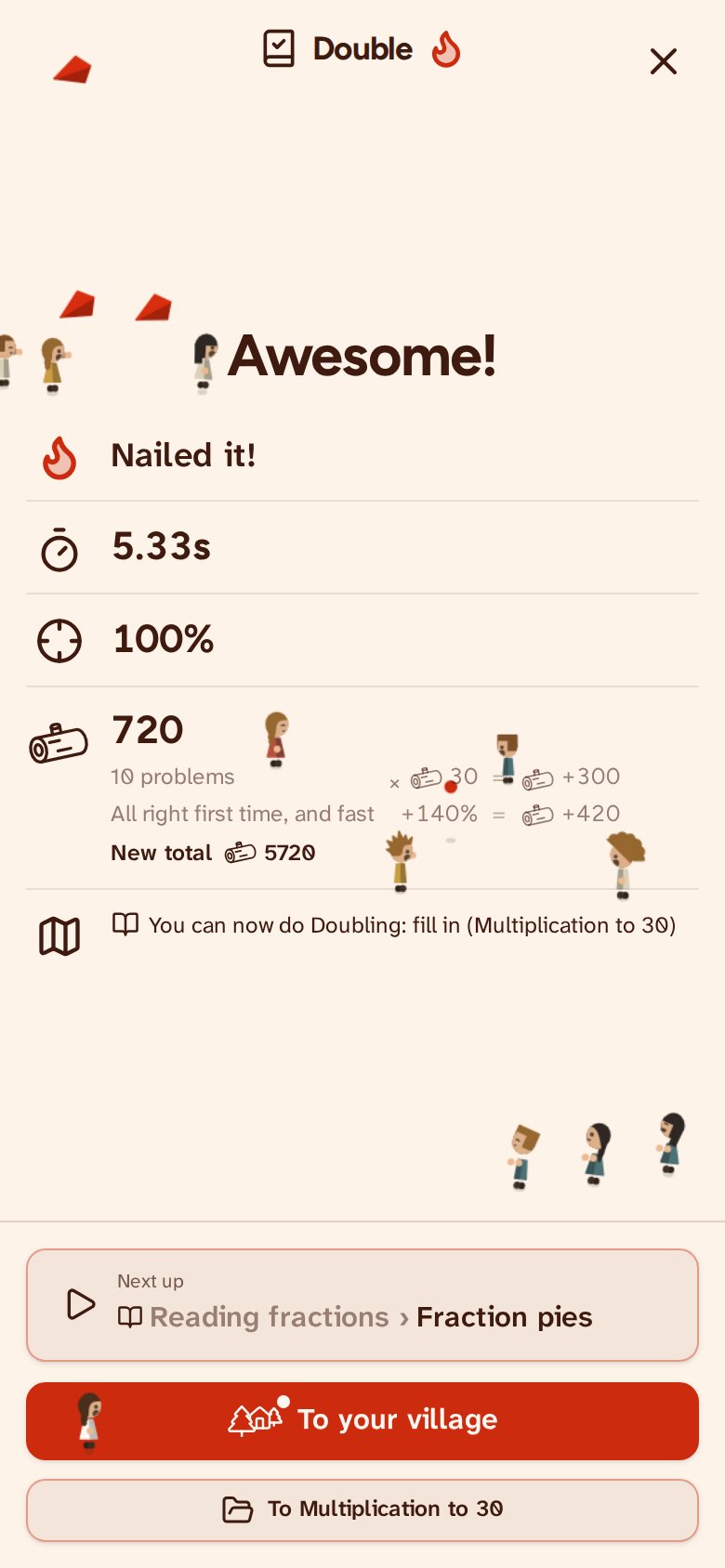
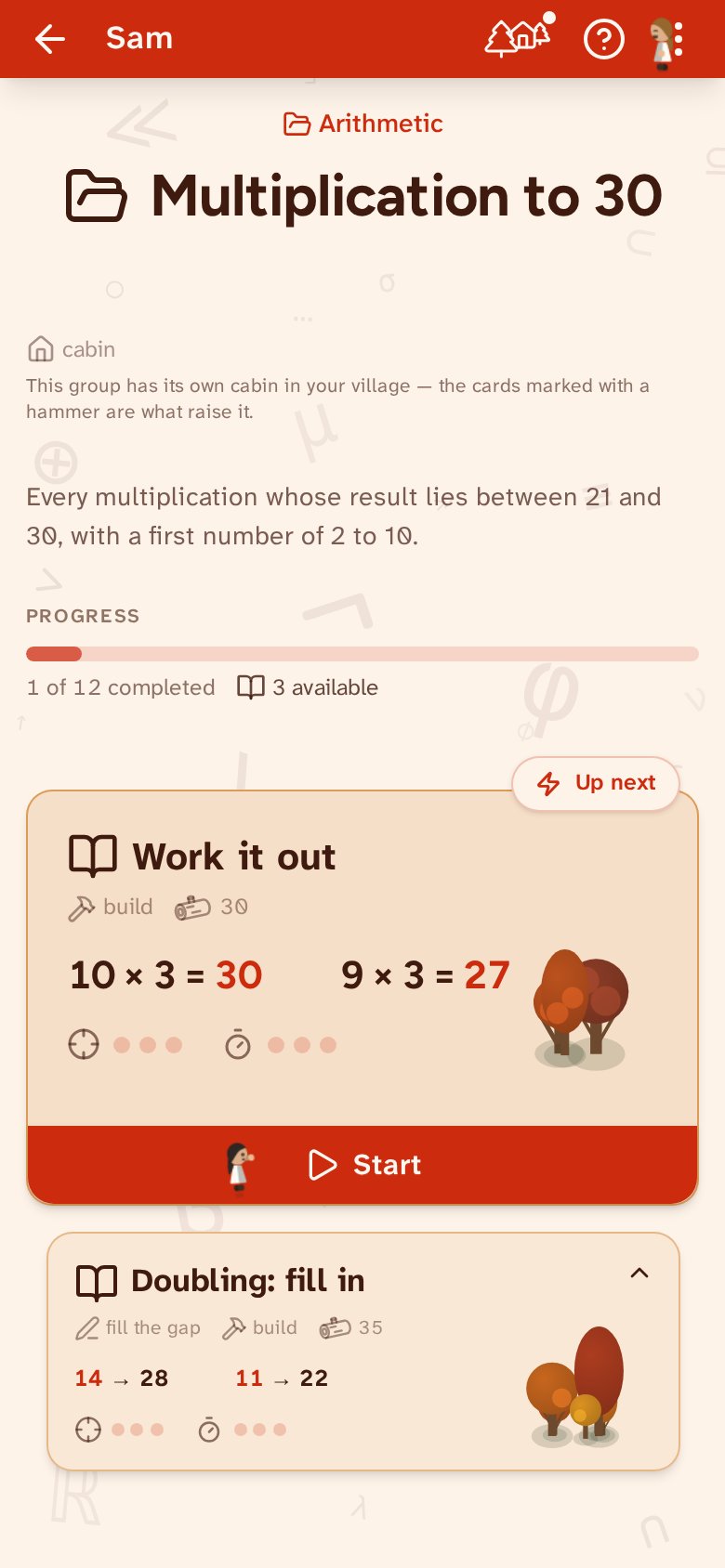
With one exercise from this topic as the example: Double.
1
2
3
4
How it fits together
The arrows point to what can be done next. Whatever sits inside a box belongs to it.
Multiplication
Multiplication to 30
Can come next
first this, then that belongs to
Split the big number: 2 × 13 = 2 × 10 + 2 × 3.
Doubling backwards is halving: ? → 28, so half of 28.
A race against time, for children who can already do it and want to be faster.
Dividing is the table backwards: 24 ÷ 3 — what times 3 makes 24?
The same sums, but a different number missing each time: the result or one of the two numbers.
30 sums in a row, everything mixed: the real test.
Against the clock: how many can your child do in sixty seconds?
The same sums to 30, with zeros on the end: if you know 8 × 2 = 16, you also know 80 × 2 = 160 and 80 × 20 = 1600.
Which two numbers give this result? The order does not matter.
Everything in this topic in one round of 30 sums.
Why it matters
Up to 30, sums appear that are not in any of the tables from 1 to 10, such as 2 × 14. Your child cannot pull these from memory; they have to be worked out cleverly. That shifts practice from remembering to reasoning.
The rounds with tens and hundreds reach well into the thousands. 3 × 4 = 12 and 300 × 40 = 12000 follow the same pattern; only the zeros are different. Once a child sees that, a sum with a long tail of zeros is no longer frightening.
How to approach it
The key is partitioning: split the big number into tens and ones. 2 × 14 becomes 2 × 10 and 2 × 4, which together make 20 + 8 = 28. At first, have your child write the two parts underneath each other so nothing gets lost.
For the division sums, a question helps: how many times does 4 go into 28? If your child can answer that, they will see straight away why 28 ÷ 4 = 7 and 7 × 4 = 28 are about the same thing.
When is it secure?
All 10 right in one round, and no more than 30 seconds altogether. Around 3 seconds a sum shows your child is no longer counting.