Times 2: double 16 to 25.
Multiplication to 50
Multiplication to 50 practice, from 5 × 9 to 2 × 23 = 46 and 80 × 50 = 4000: doubling 16 to 25, trickier tables facts, and big numbers with zeros.
Your child can start here once they can multiply and divide up to 30. Halving 28 in division to 30 meant half of 20 and half of 8; doubling 23 here is the same move the other way, double 20 and double 3, and a child who never made it in division has to start from nothing.
Usually taught in Year 3 in England and Wales, around ages 7 to 8. Every child goes at their own pace; this is a guide, not a requirement.
The first of 8 exercises in this topic. See them all
What it looks like for your child
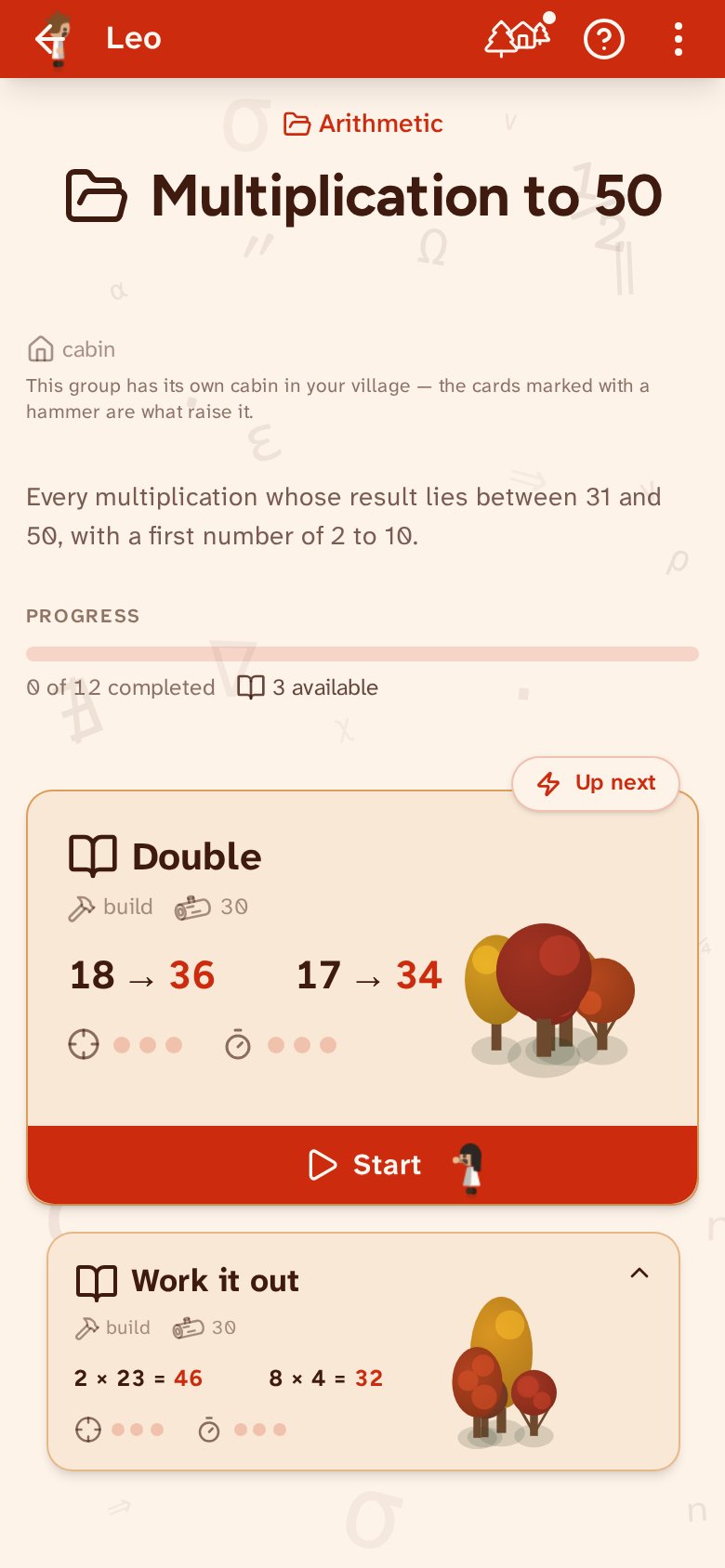
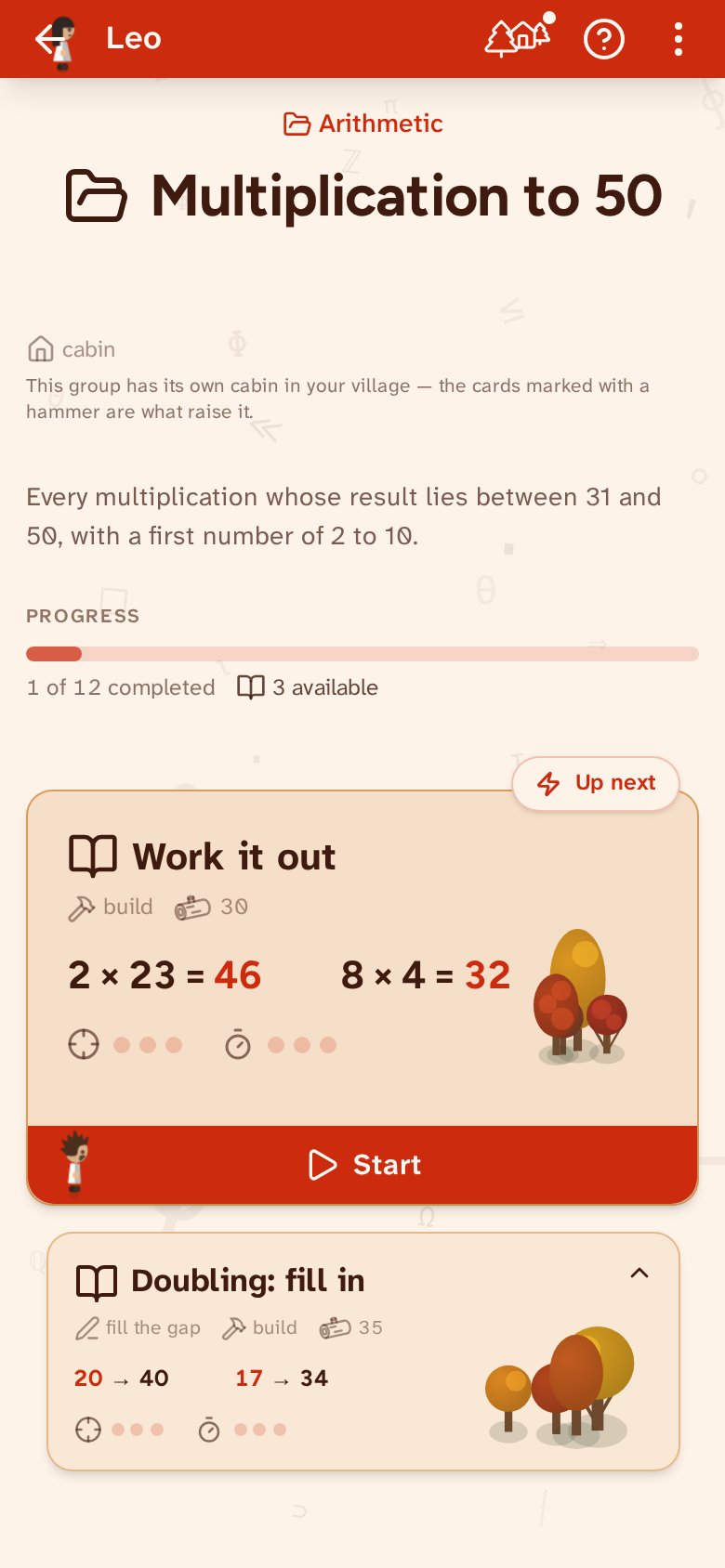
With one exercise from this topic as the example: Double.
1
2
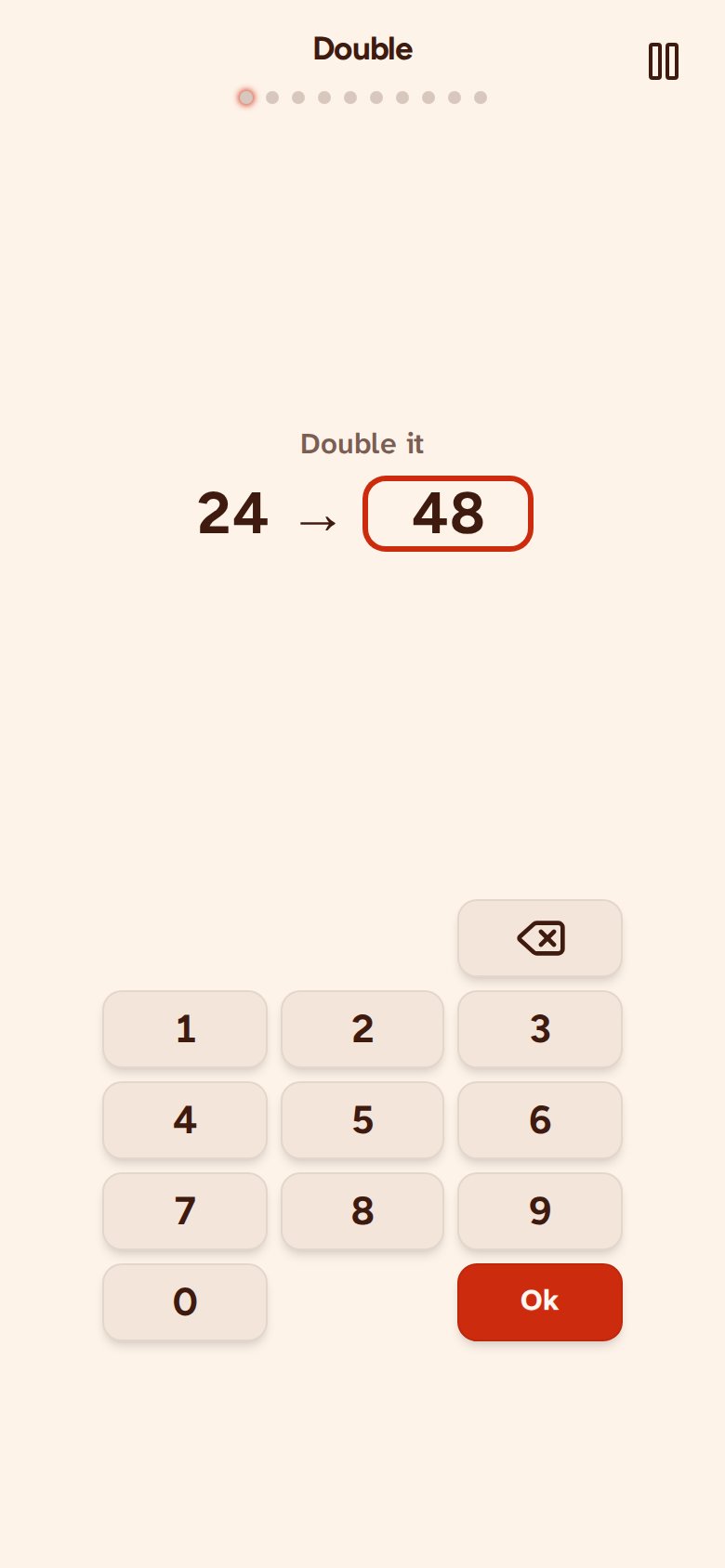
3
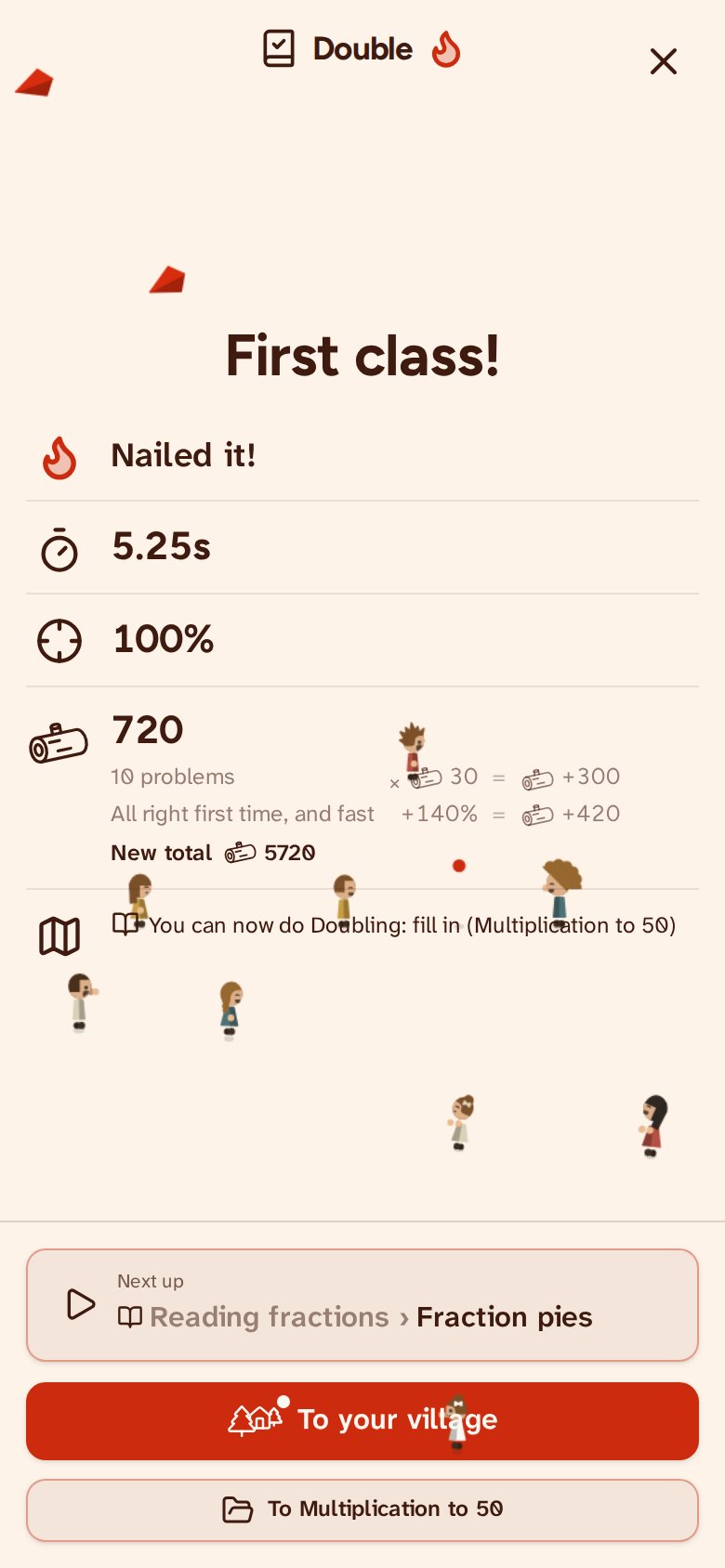
4
How it fits together
The arrows point to what can be done next. Whatever sits inside a box belongs to it.
Needed first
Multiplication
Can come next
first this, then that belongs to
Split the big number: 3 × 12 = 3 × 10 + 3 × 2.
Doubling backwards is halving: ? → 46, so half of 46.
Against the clock: how many can your child do in sixty seconds?
The same sums, but a different number missing each time: the result or one of the two numbers.
The same sums to 50, with zeros on the end: if you know 8 × 2 = 16, you also know 80 × 2 = 160 and 80 × 20 = 1600.
Which two numbers give this result? The order does not matter.
Everything in this topic in one round of 30 sums.
- Times and divide — on the Division to 50 page
- Times and divide: big round — on the Division to 50 page
- Quick: times and divide — on the Division to 50 page
Why it matters
Doubling 16 to 25 looks like a list to learn, but it is partitioning in disguise. Double 23 is double 20 plus double 3. A child who can do that quickly has a tool for almost every multiplication still to come.
Up to 50, the trickier times tables facts also come along, such as 6 × 8 and 7 × 7. These are exactly the ones that many children stumble over longest, so every extra time they come up counts.
How to approach it
For doubling, a fixed order works: first the tens, then the ones, then add them together. For 19 that is 20 and 18, making 38. After a week or so it happens without counting out loud.
For the sums that keep going wrong, let your child come up with their own way of remembering them. A rhyme, a picture, a joke: it doesn't matter what, as long as it comes from your child. A memory aid a child made up sticks better than one they were given.
When is it secure?
When your child gets all 10 sums right in 30 seconds or less. Answers only come that quickly once they come from memory.