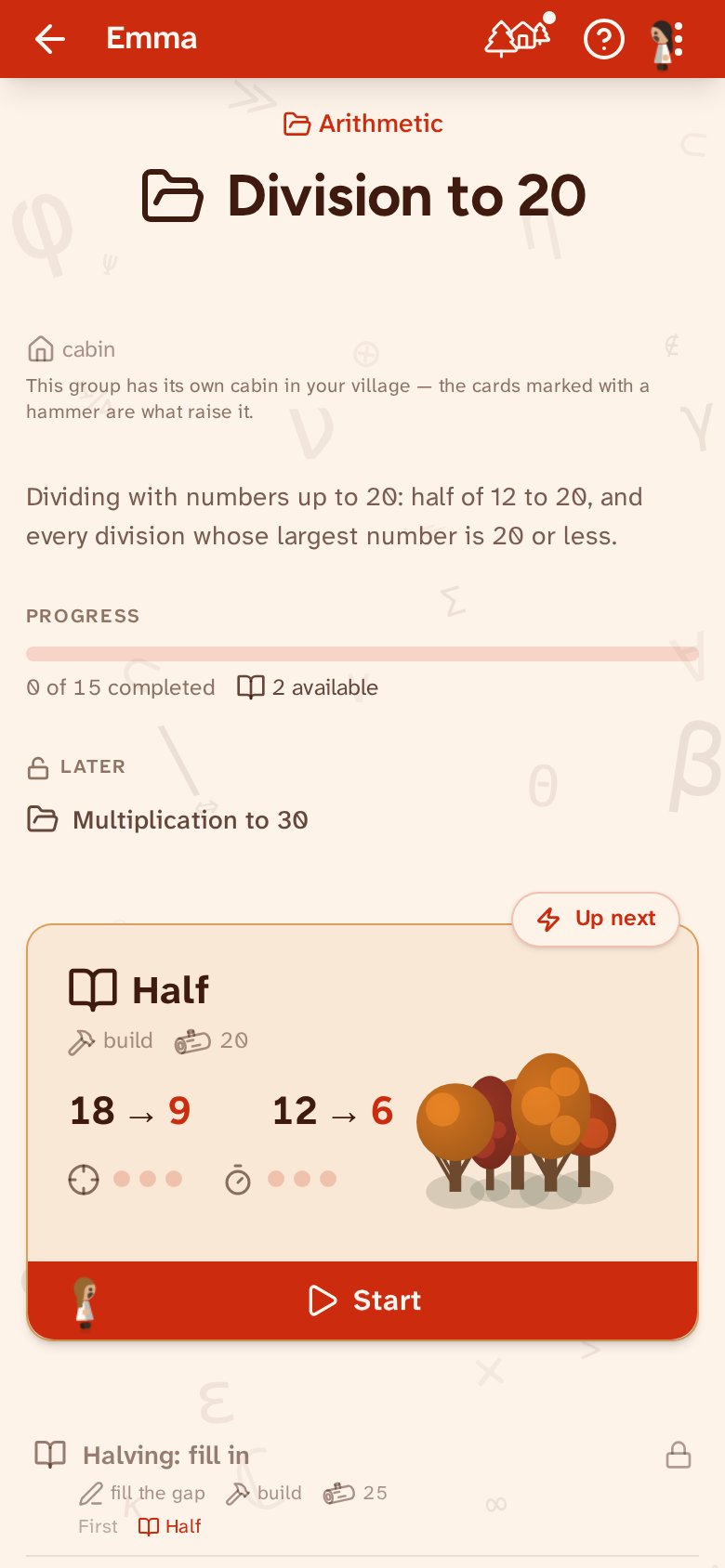
Dividing by 2: half of 12, 14, 16, 18 and 20.
Division to 20
Division to 20 practice, from 20 ÷ 2 to 18 ÷ 6 = 3 and 200 ÷ 5 = 40: halving 12 to 20 first, then division facts that lean on the times tables up to 20.
Your child can start here once they can do the first division sums to 10; the later exercises also need multiplication up to 20. Marbles no longer help with numbers this size: 18 ÷ 6 is quick for a child who knows 3 × 6 = 18 and slow for one who has to count.
Usually taught in Year 2–3 in England and Wales, around ages 6 to 8. Every child goes at their own pace; this is a guide, not a requirement.
The first of 8 exercises in this topic. See them all
What it looks like for your child
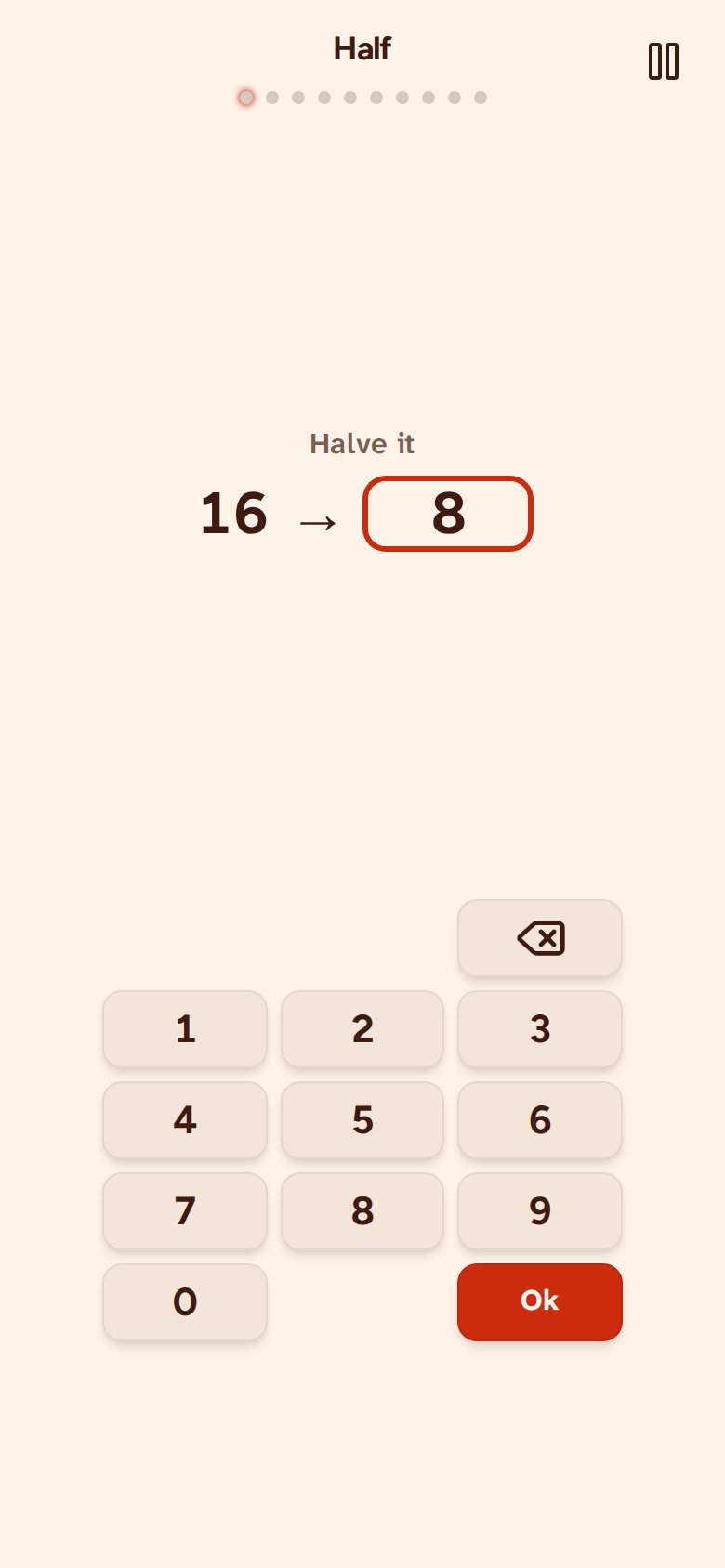
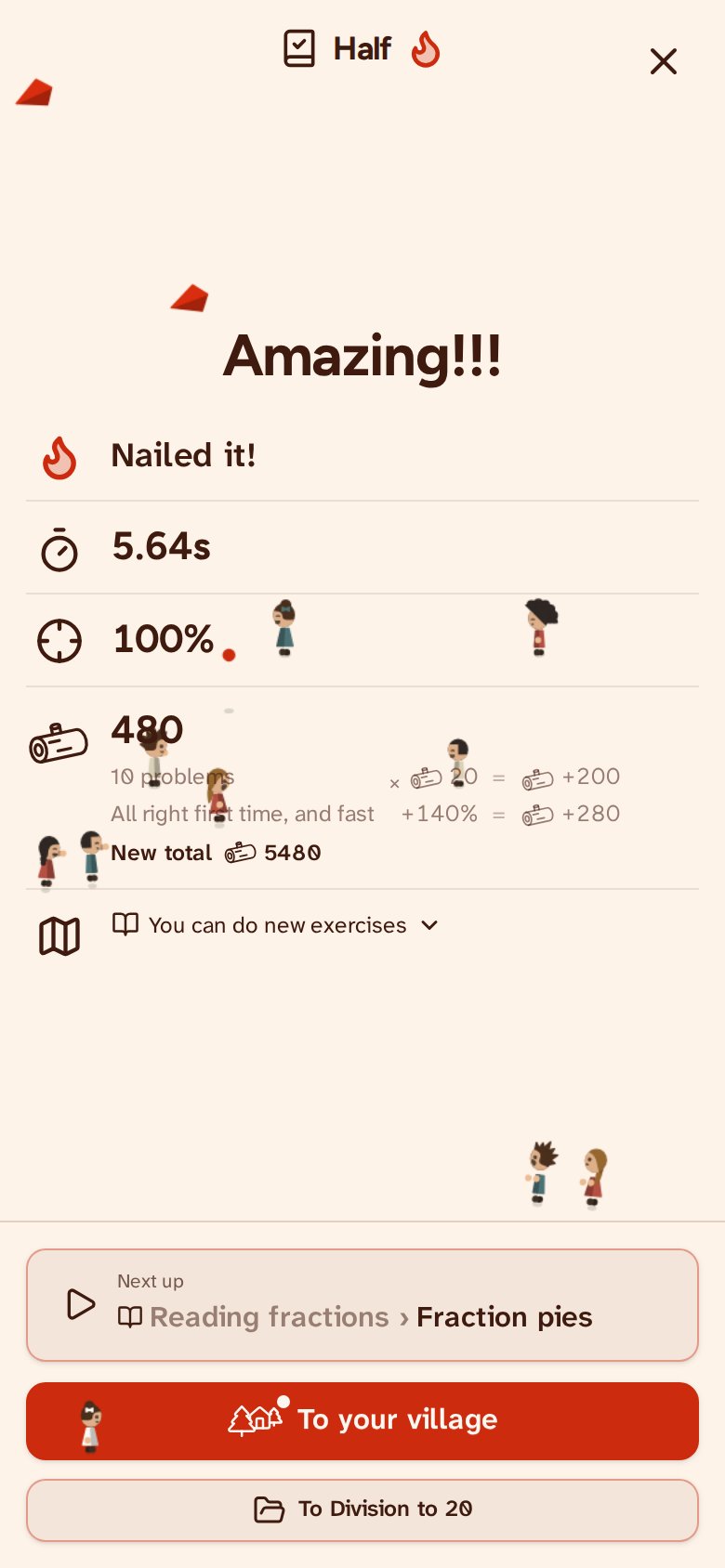
With one exercise from this topic as the example: Half.
1
2
3
4
How it fits together
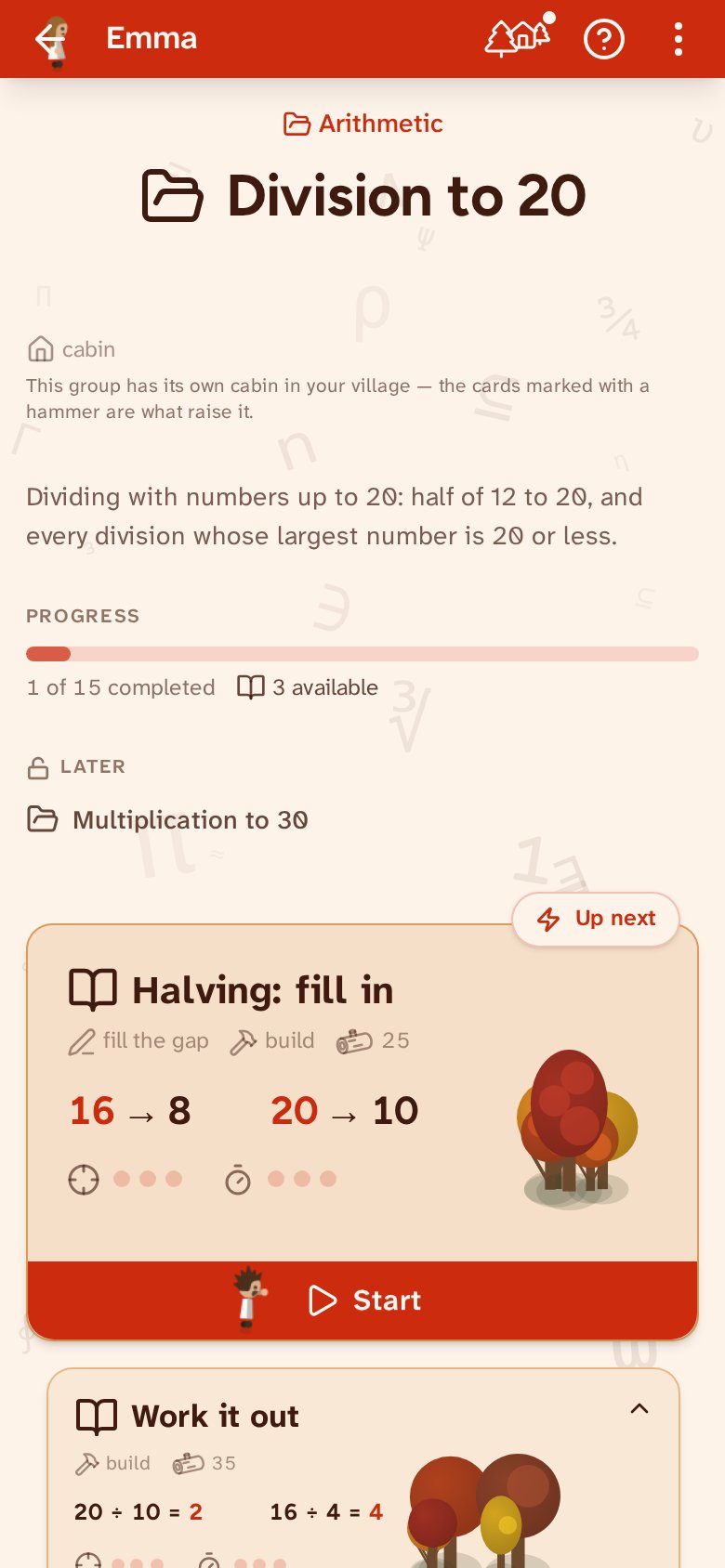
The arrows point to what can be done next. Whatever sits inside a box belongs to it.
Needed first
Division
first this, then that belongs to
Halving backwards is doubling: ? → 7, so 7 + 7.
Dividing is the table backwards: 12 ÷ 4 — what times 4 makes 12?
The same sums, but a different number missing each time: the answer, the divisor, or the number being divided.
Against the clock: how many can your child do in sixty seconds?
The same sums to 20, with zeros on the end: if you know 8 ÷ 2 = 4, you also know 80 ÷ 20 = 4 and 80 ÷ 2 = 40.
Which two numbers give this result? Tap them in the right order.
A long round of 30 mixed sums to finish.
- Plus, minus, times and divide — on the Multiplication to 20 page
- Times and divide — on the Multiplication to 20 page
- All four: big round — on the Multiplication to 20 page
- Quick: all four — on the Multiplication to 20 page
- Times and divide: big round — on the Multiplication to 20 page
- Quick: times and divide — on the Multiplication to 20 page
Why it matters
Up to 20, the numbers get too big to explain with marbles, and that pushes your child to use the times tables. 18 ÷ 3 is quick if your child knows that 6 × 3 = 18, and slow if they have to count. That difference is exactly what makes this step worthwhile.
Halving 12 to 20 is also a first taste of partitioning in division. Half of 16 is half of 10 plus half of 6: 5 + 3 = 8.
How to approach it
For every division sum, first ask for the multiplication that goes with it. 14 ÷ 7 = 2, because 2 × 7 = 14. At first that takes a few extra seconds, but it stops division becoming a separate list of facts.
With a sum like 160 ÷ 8 you can puzzle it out together: take the zero off, work out 16 ÷ 8 = 2, and put the zero back. After a few goes your child will see the pattern without help.
When is it secure?
When your child gets all 10 sums right in 20 seconds or less. Answers only come that quickly once they come from memory.