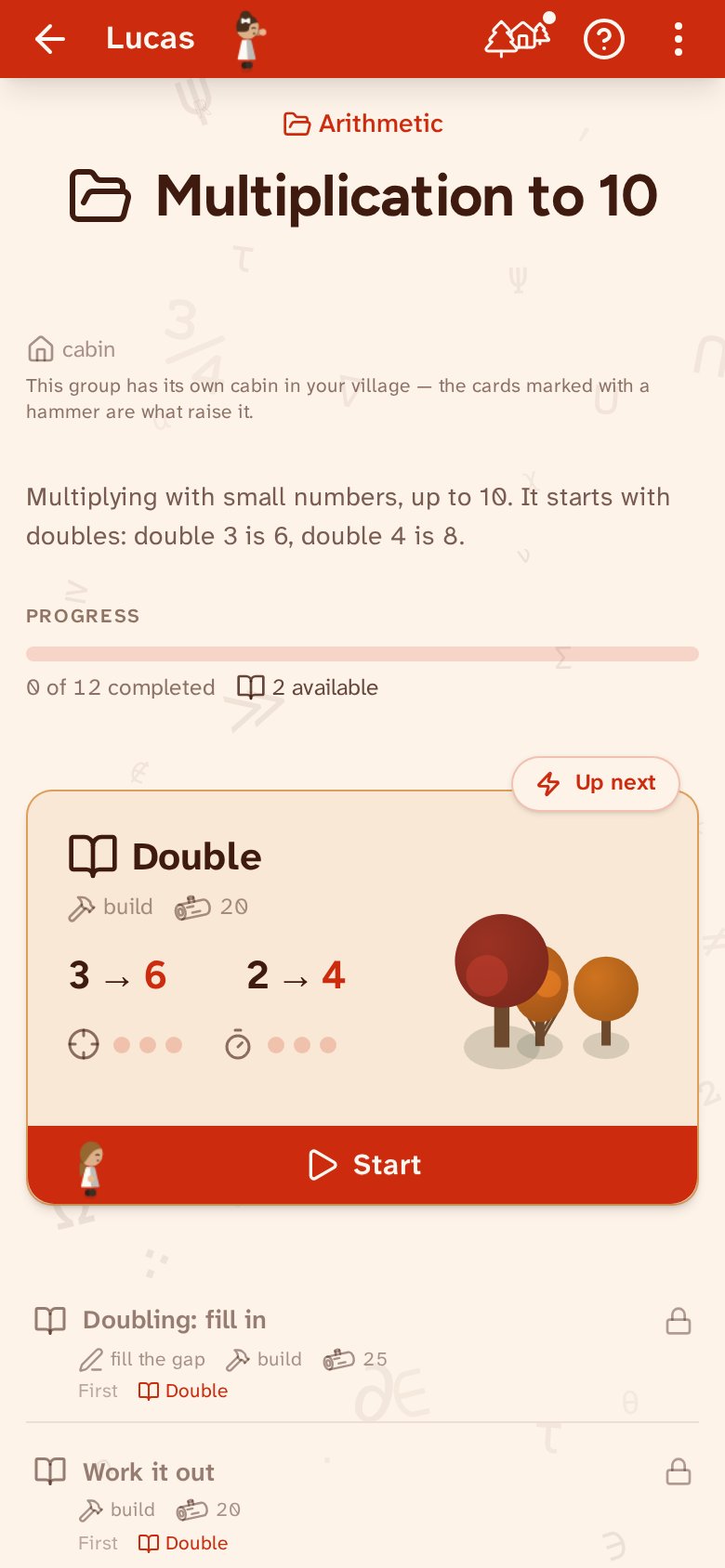
Times 2: double 0, 1, 2, 3, 4 and 5.
Multiplication to 10
Multiplication to 10 practice, from 2 × 4 = 8 to 40 × 2 = 80: doubling first, then small times sums and the division that goes with them, then tens.
Your child can start here once they can add within 10; the later exercises, where times and divide are mixed, also need the first division sums. Multiplying is repeated adding, so a child who knows 4 + 4 = 8 already has 2 × 4 = 8, and once dividing comes in, 8 ÷ 4 = 2 is the same fact seen from the other side.
Usually taught in Year 2 in England and Wales, around ages 6 to 7. Every child goes at their own pace; this is a guide, not a requirement.
The first of 11 exercises in this topic. See them all
What it looks like for your child
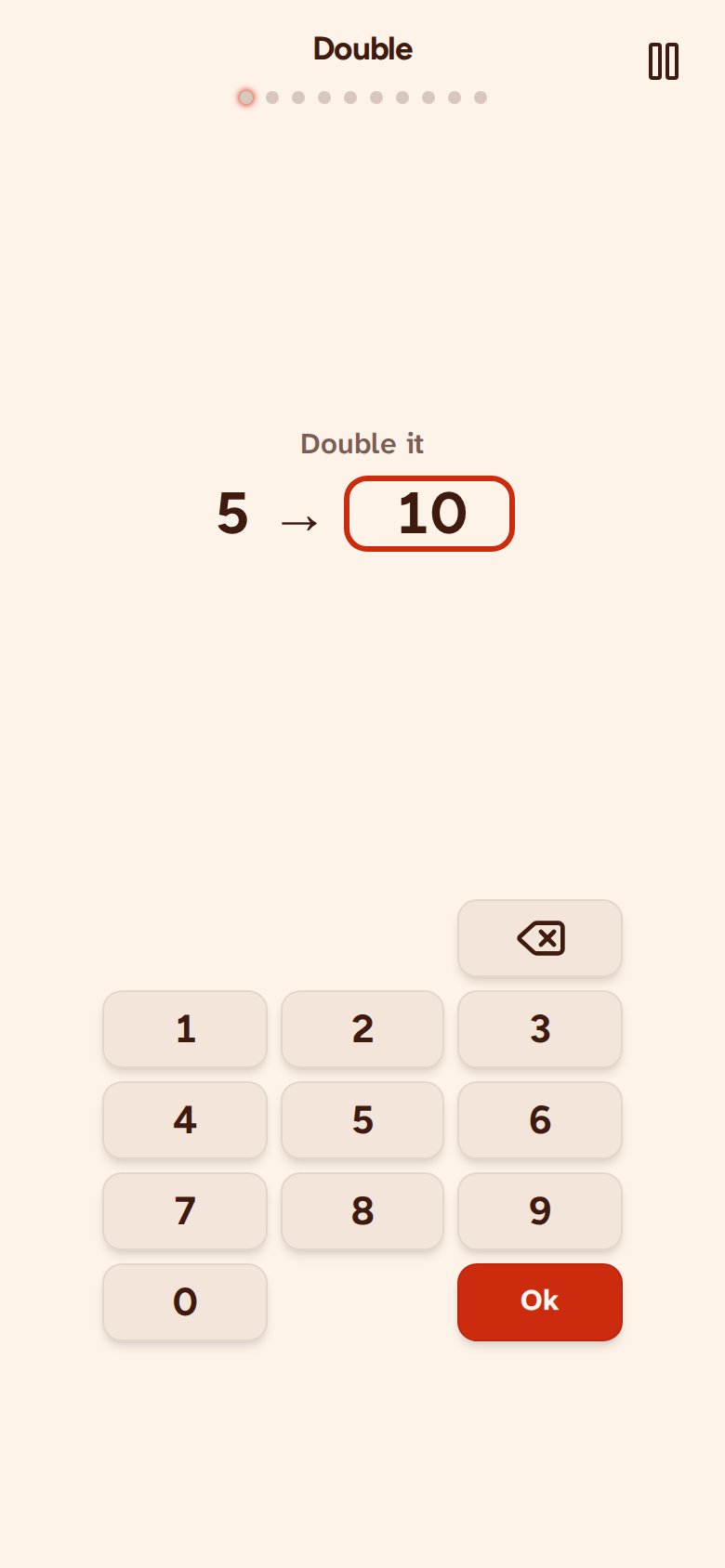
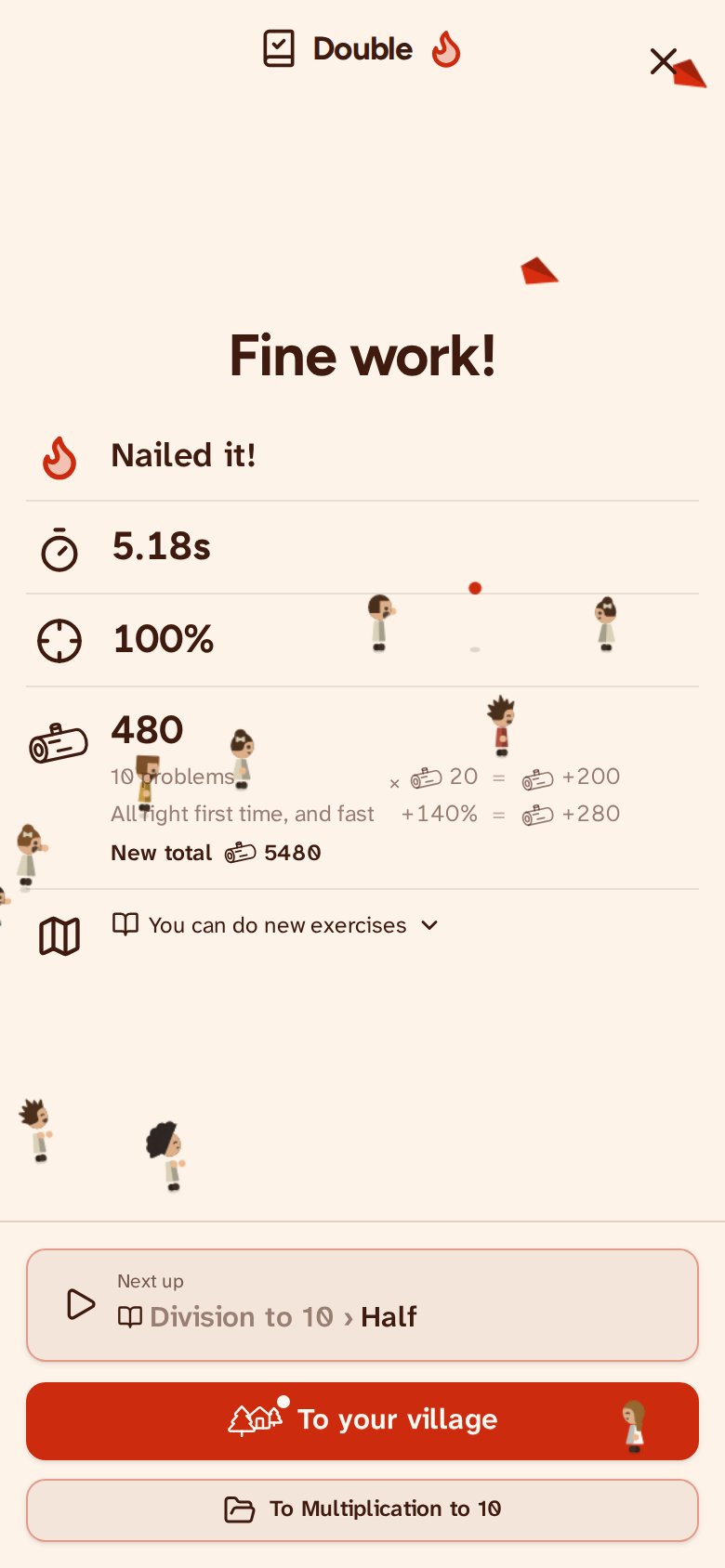
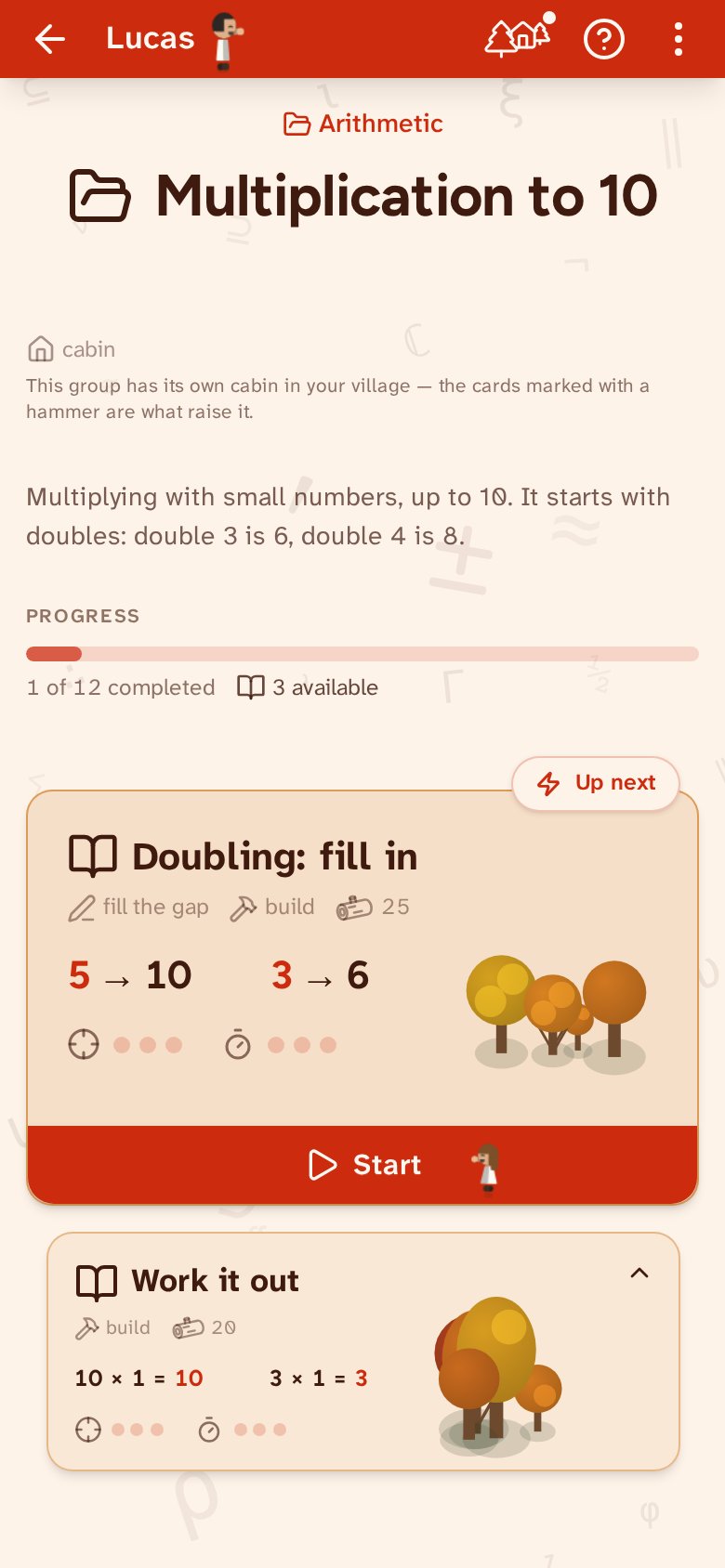
With one exercise from this topic as the example: Double.
1
2
3
4
How it fits together
The arrows point to what can be done next. Whatever sits inside a box belongs to it.
Needed first
Multiplication
Multiplication to 10
first this, then that belongs to
Doubling backwards is halving: ? → 8, so half of 8.
Times is the same number again and again: 3 × 3 = 3 + 3 + 3.
The same sums, but a different number missing each time: the result or one of the two numbers.
One minute, as many sums as possible. Not needed to move on, but good for getting quicker.
Dividing is the table backwards: 8 ÷ 2 — what times 2 makes 8?
The same sums to 10, with zeros on the end: if you know 4 × 2 = 8, you also know 40 × 2 = 80 and 40 × 20 = 800.
Which two numbers give this result? The order does not matter.
30 sums in a row, everything mixed: the real test.
A race against time, for children who can already do it and want to be faster.
30 sums in a row, everything mixed: the real test.
Why it matters
This is where your child discovers what 'times' means. 4 × 2 is four groups of two, and 2 × 4 is two groups of four. That both make 8 is a small discovery with a big consequence: later on it halves the number of times tables facts there are to remember.
Division comes in straight away, as the same sum seen from the other side. And in the sums with zeros on the end, 3 × 2 and 30 × 2 turn out to be related. So a feel for bigger numbers grows from the very first multiplication.
How to approach it
Start with real objects on the table: three plates with two biscuits on each. Your child counts them, and only then do you write down 3 × 2 = 6. That way the sign has a meaning before it becomes something to recite.
When your child has to make a multiplication, there is some searching to do. Which two numbers multiply to make 6? 1 and 6, but also 2 and 3. That there is often more than one right answer makes children curious, and it is a good excuse to find all the possibilities together.
When is it secure?
A round of 10 sums in one go without a mistake, within 20 seconds. That is about 2 seconds a sum: no more counting, just knowing.