Each answer is the one before plus 11.
11 times table
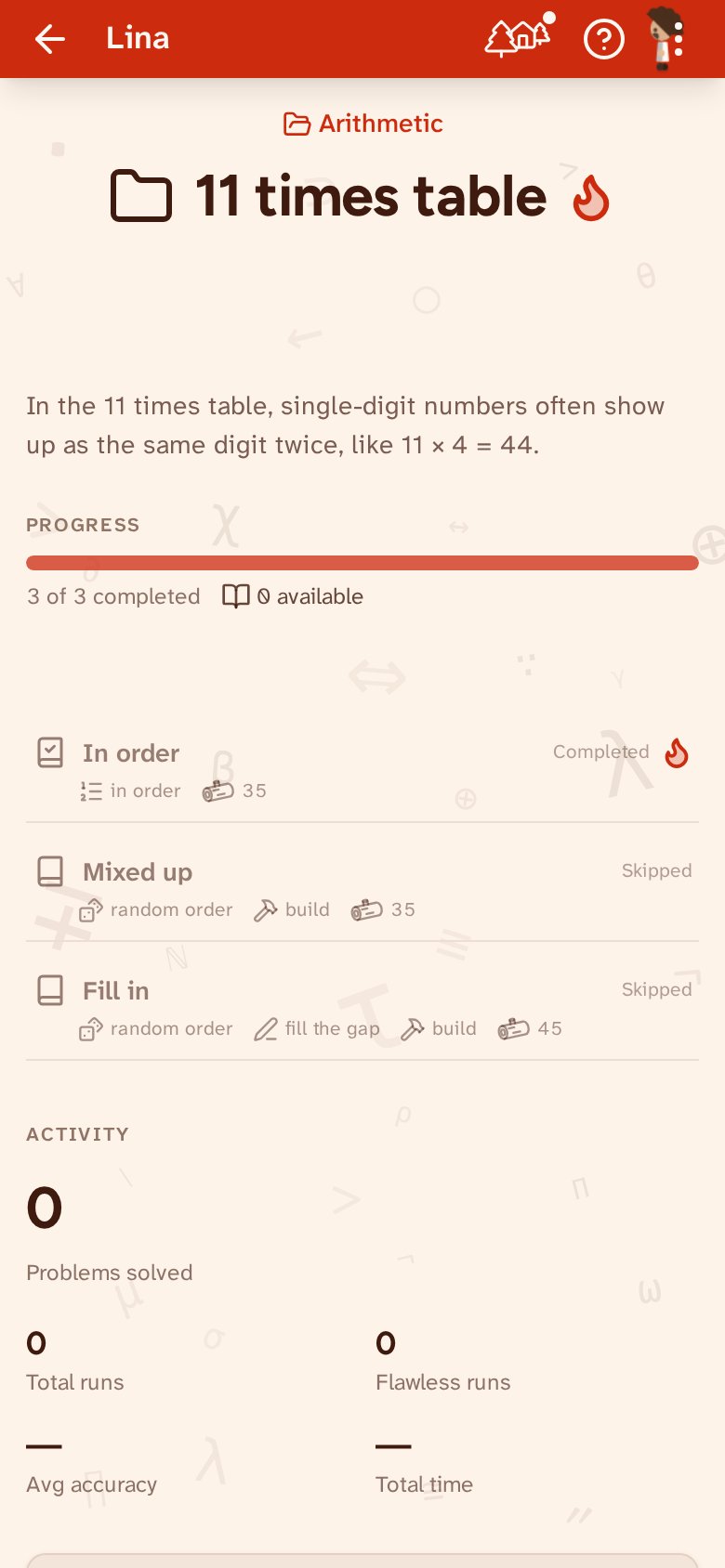
11 times table practice, from 1 × 11 to 6 × 11 = 66 and 9 × 11 = 99: the doubled digit and why it works, in order, then mixed up, then filling in.
Your child can only do the exercises here once they know the 1 and 10 times tables. 6 × 11 is 6 × 10 plus 6 × 1, so the doubled digit in 66 is only something your child can explain, and use past 9 × 11, when those two tables are secure.
Usually taught in Year 4 in England and Wales, around ages 8 to 9. Every child goes at their own pace; this is a guide, not a requirement.
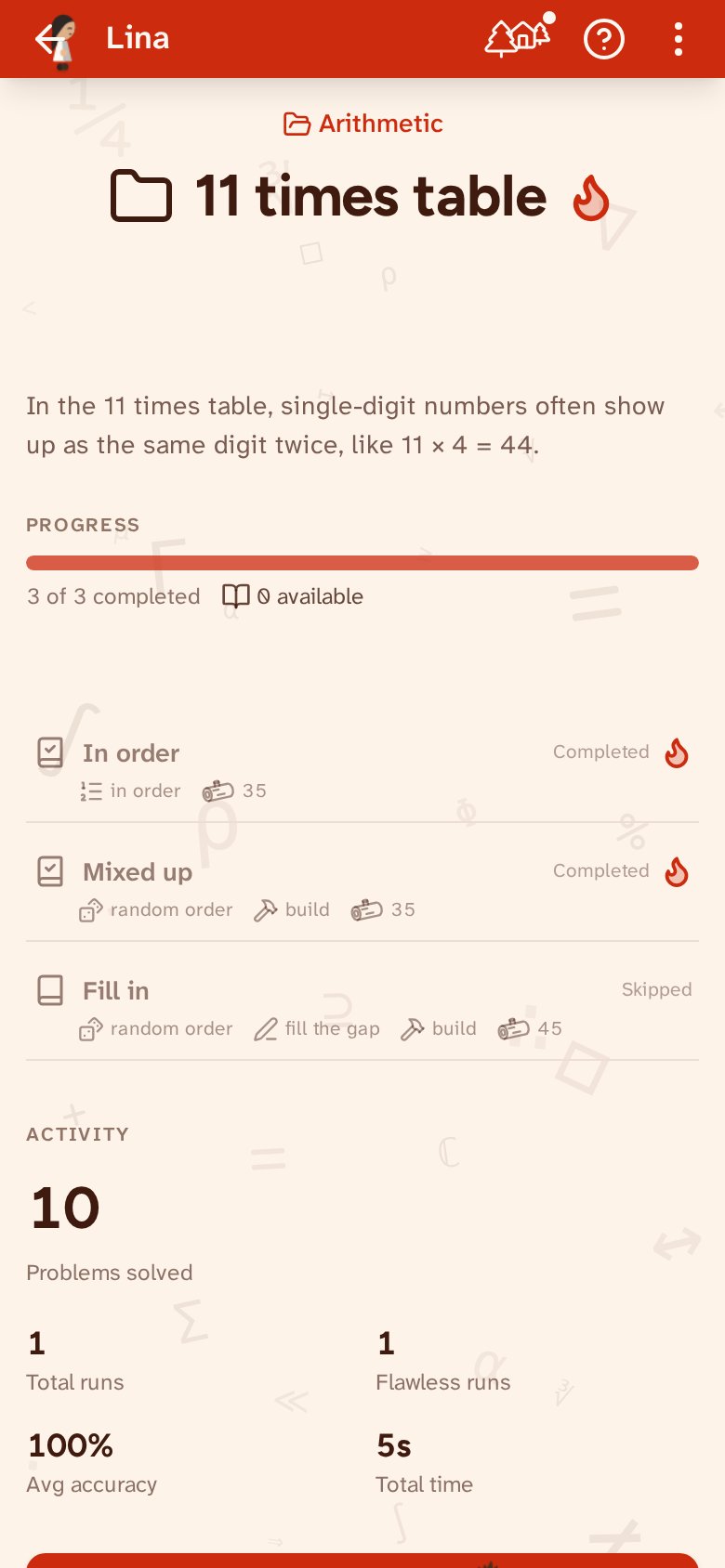
The first of 3 exercises in this topic. See them all
What it looks like for your child
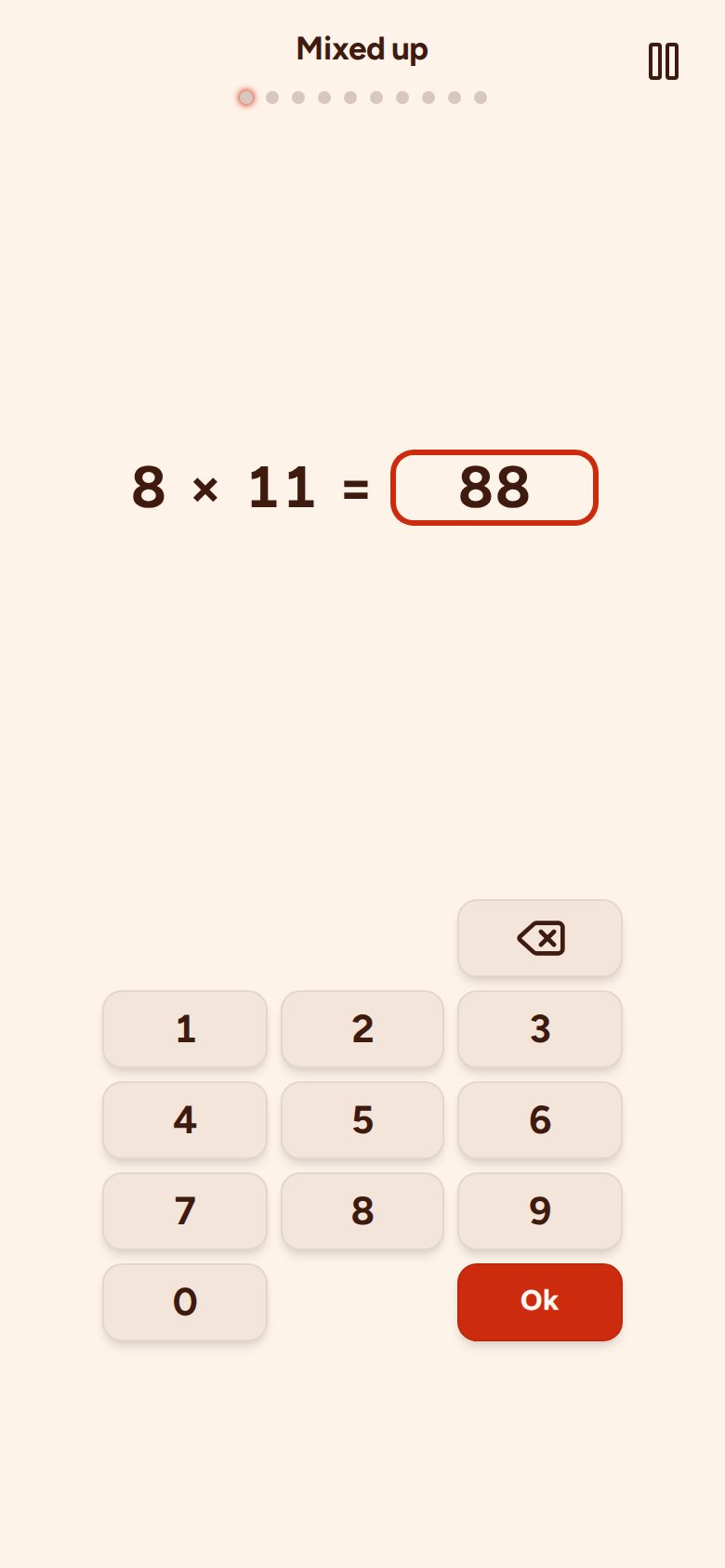
With one exercise from this topic as the example: Mixed up.
1
2
3
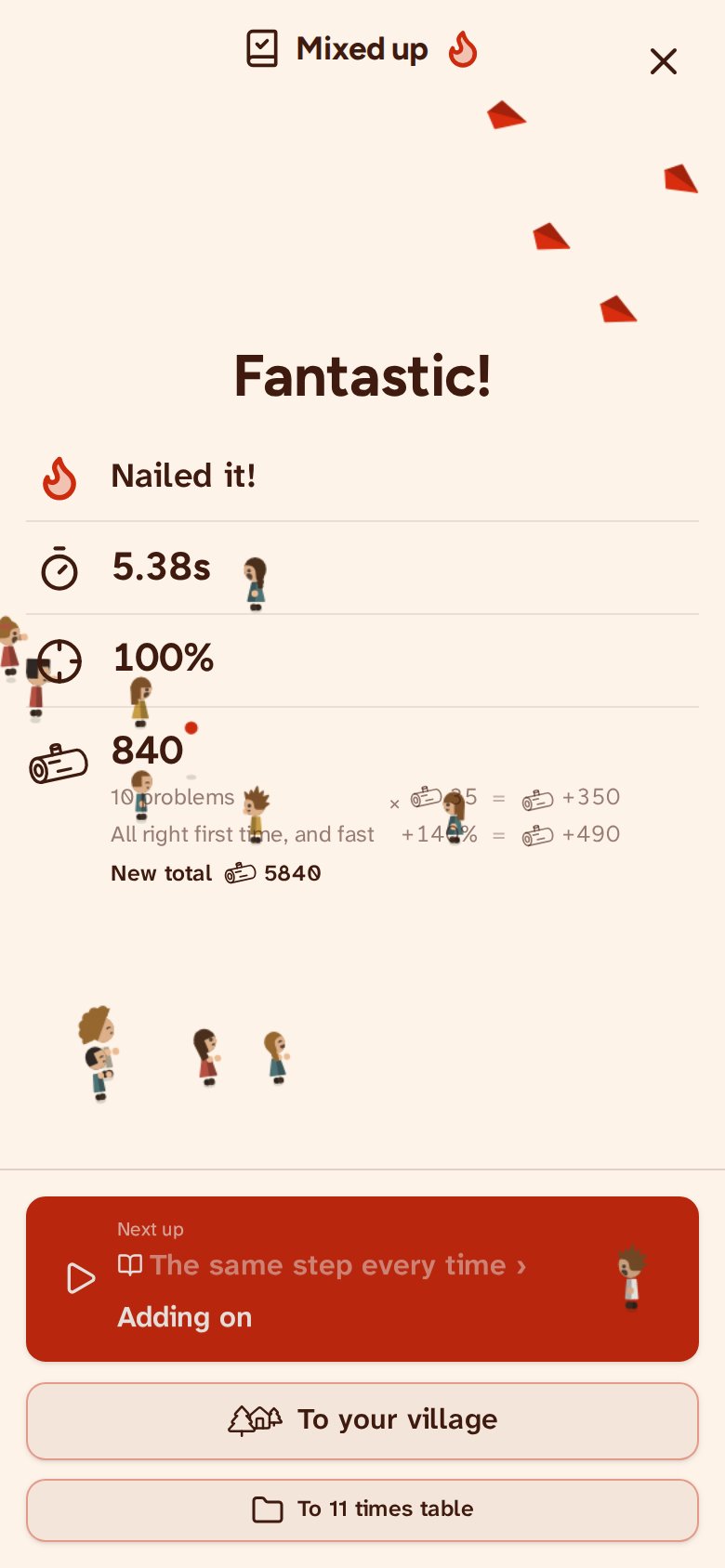
4
How it fits together
The arrows point to what can be done next. Whatever sits inside a box belongs to it.
Needed first
Can come next
first this, then that belongs to
Times 11 is times 10 plus times 1: 7 × 11 = 70 + 7.
What times 11 gives the answer? Say the table until you hear it.
Why it matters
The 11 times table is a gentle start to the bigger tables. Up to 9 × 11 the pattern is easy to see, because the digit appears twice: 4 × 11 = 44. That builds confidence, and then comes the important idea behind every table above ten: split the number into a ten and the rest.
How to approach it
Explain why the pattern works: 11 is 10 + 1, so 6 × 11 is 60 + 6, which you write as 66. A child who understands that also knows what happens at 10 × 11: 100 + 10 = 110, and no digit repeats any more.
In the missing-number questions, your child looks for the number that times 11 gives the answer. For 88 you can read it off the doubled digit: 8.
When is it secure?
A round of 10 sums in one go without a mistake, within 35 seconds. That is about 3.5 seconds a sum: no more counting, just knowing.