Each answer is the one before plus 20.
20 times table
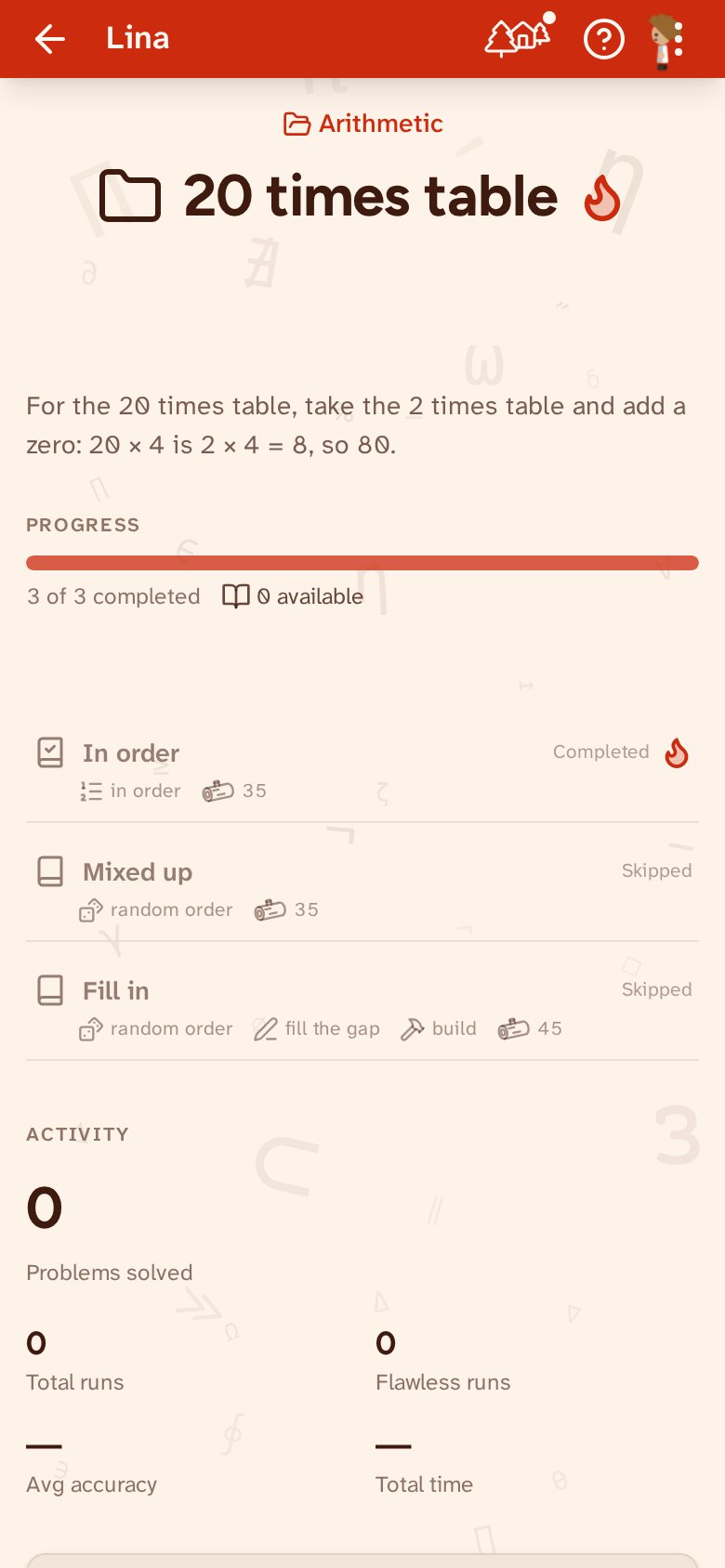
20 times table practice, from 1 × 20 to 9 × 20 = 180: double with a zero on the end, resting on the 2s and 10s, in order, mixed up and filling in.
Your child can only do the exercises here once they know the 2, 10 and 11 times tables. 9 × 20 is 9 × 2 = 18 with a zero on the end, and the 11s, where 10 × 11 = 110 broke the pattern, have already shown what happens once an answer passes 100.
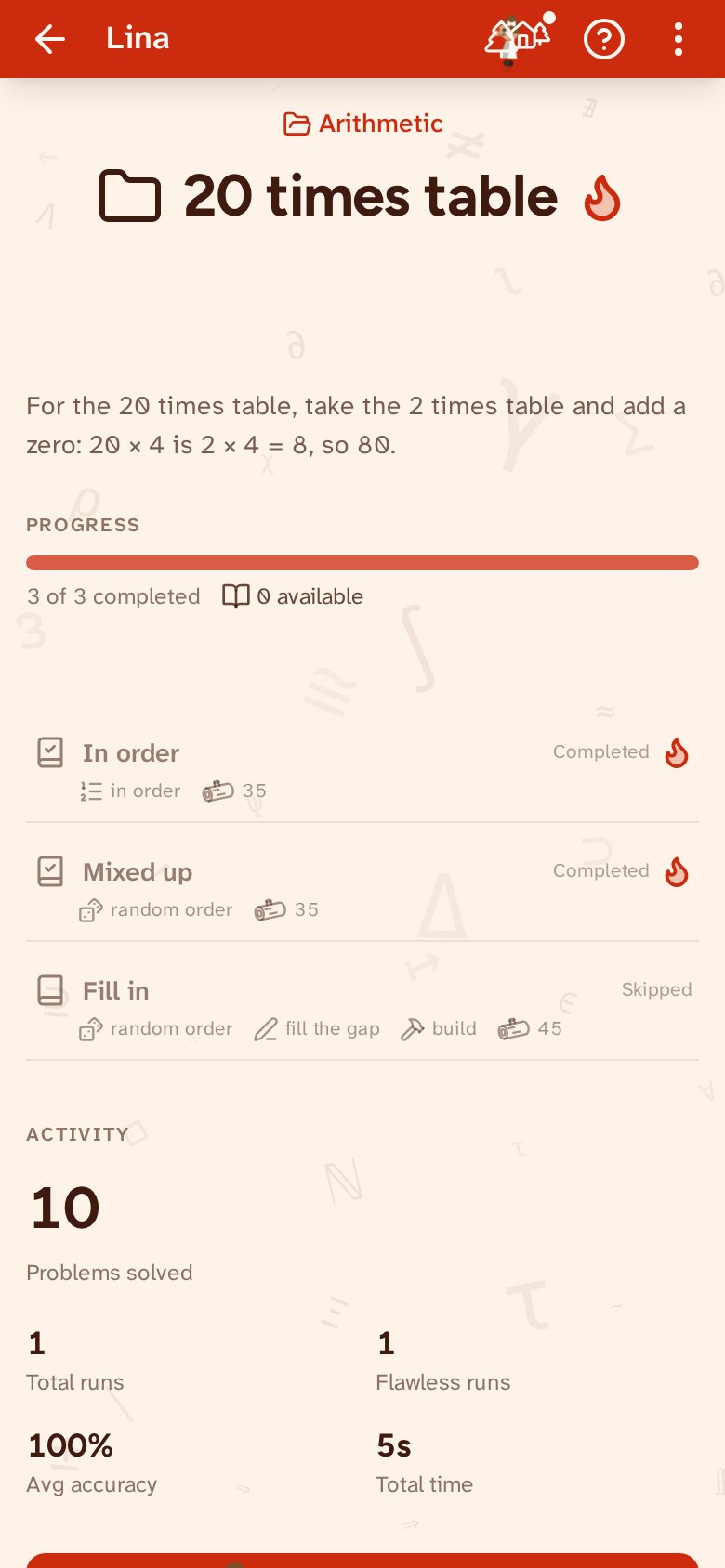
The first of 3 exercises in this topic. See them all
What it looks like for your child
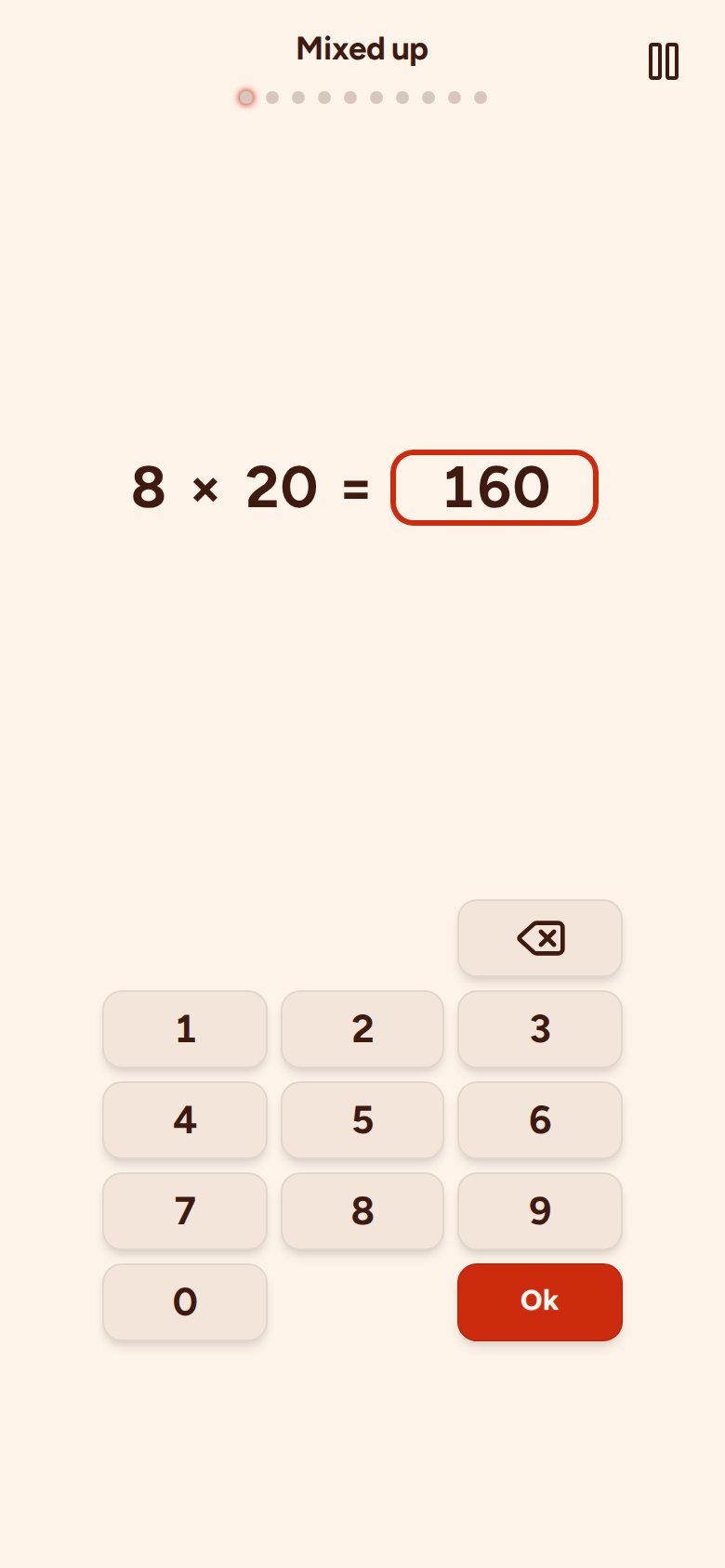
With one exercise from this topic as the example: Mixed up.
1
2
3
4
How it fits together
The arrows point to what can be done next. Whatever sits inside a box belongs to it.
Needed first
Can come next
first this, then that belongs to
Times 20 is double with a zero on the end: 7 × 20 = 140.
What times 20 gives the answer? Say the table until you hear it.
Why it matters
The 20s are the simplest of the big tables, which makes them a good anchor for the rest. These tables go beyond what school asks for, but a child who knows straight away that 6 × 20 = 120 can work out the 19s and the 18s from there, and can tell whether an answer in the 17s is roughly right.
How to approach it
Name the two steps together: 9 × 2 = 18, then a zero on the end, 180. The other way round works too: first times 10 (90), then double it (180).
The numbers go up to 200 at 10 × 20. That also makes this table good practice in reading and writing hundreds.
When is it secure?
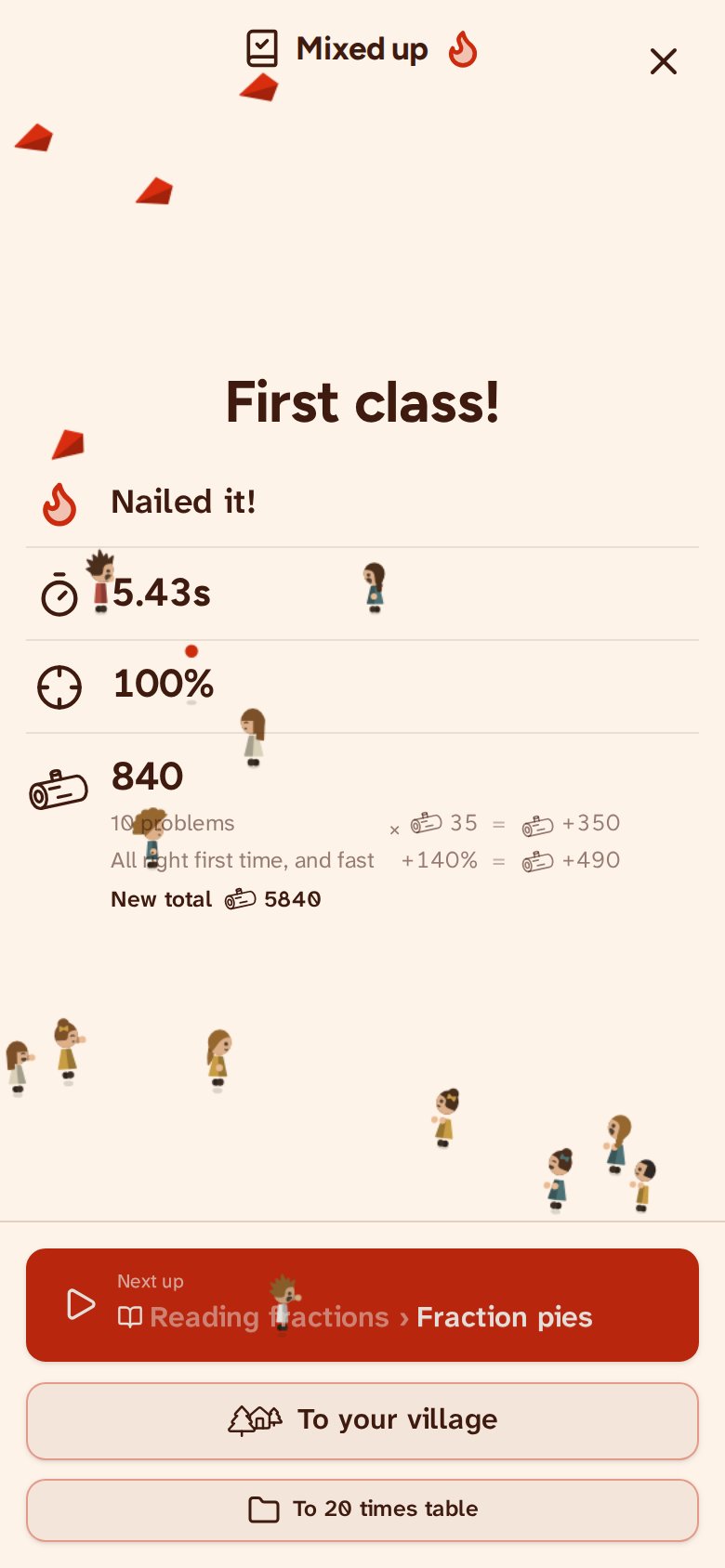
A round of 10 sums in one go without a mistake, within 35 seconds. That is about 3.5 seconds a sum: no more counting, just knowing.