Each answer is the one before plus 12.
12 times table
12 times table practice, from 1 × 12 to 3 × 12 = 36: times 10 plus times 2, and the last table in the Multiplication Tables Check at school.
Your child can only do the exercises here once they know the 2, 10 and 20 times tables. Every fact in the 12s is built from those, 8 × 12 = 80 + 16, and a slip in either part makes the whole answer wrong.
Usually taught in Year 4 in England and Wales, around ages 8 to 9. Every child goes at their own pace; this is a guide, not a requirement.
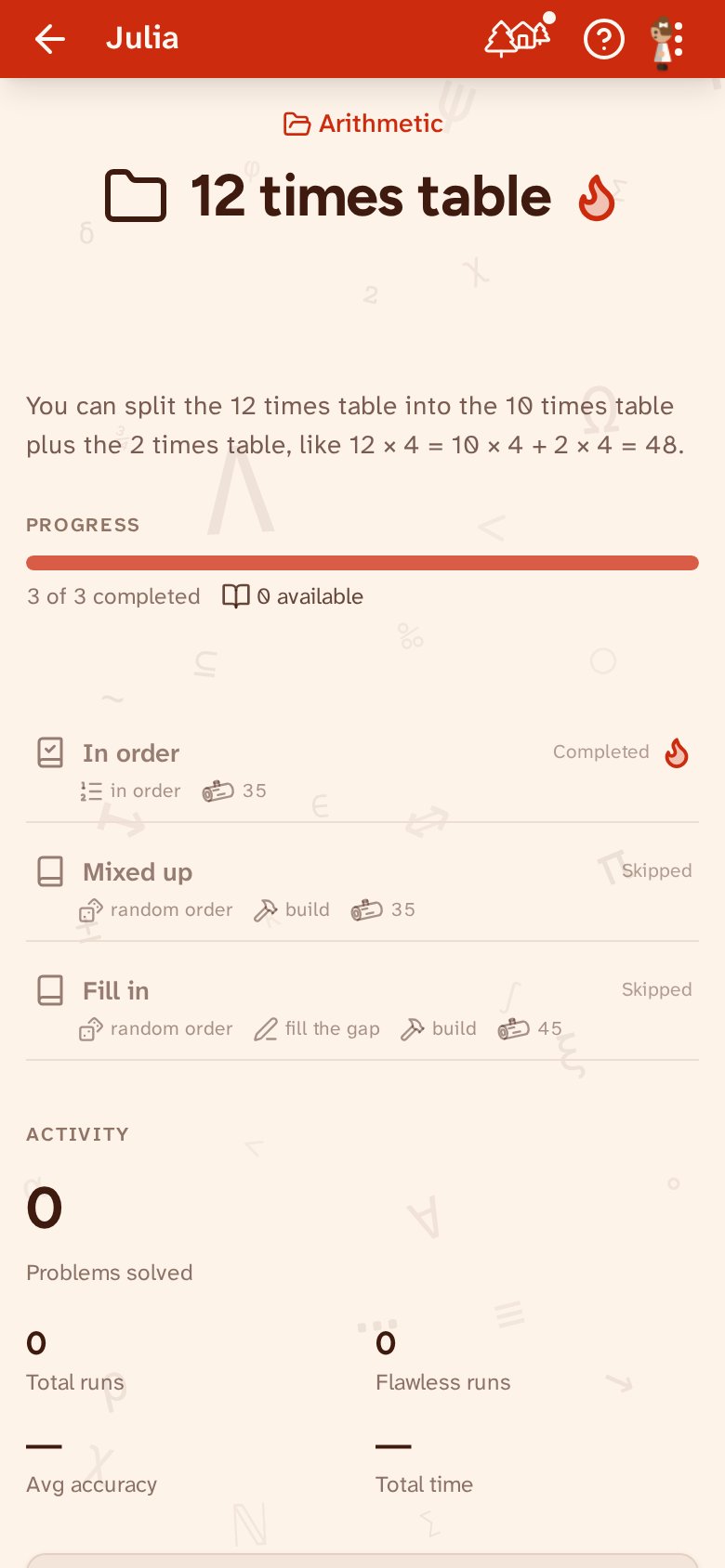
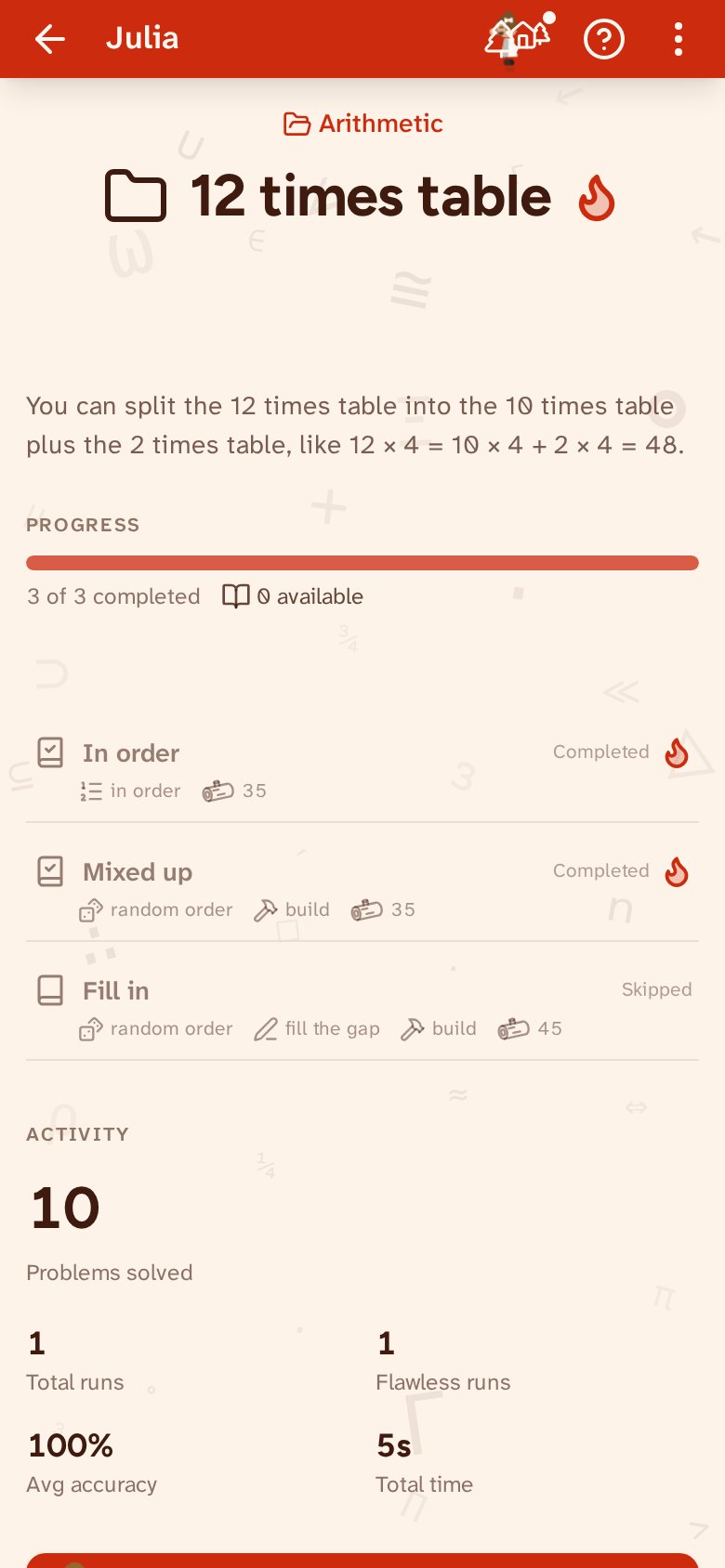
The first of 3 exercises in this topic. See them all
What it looks like for your child
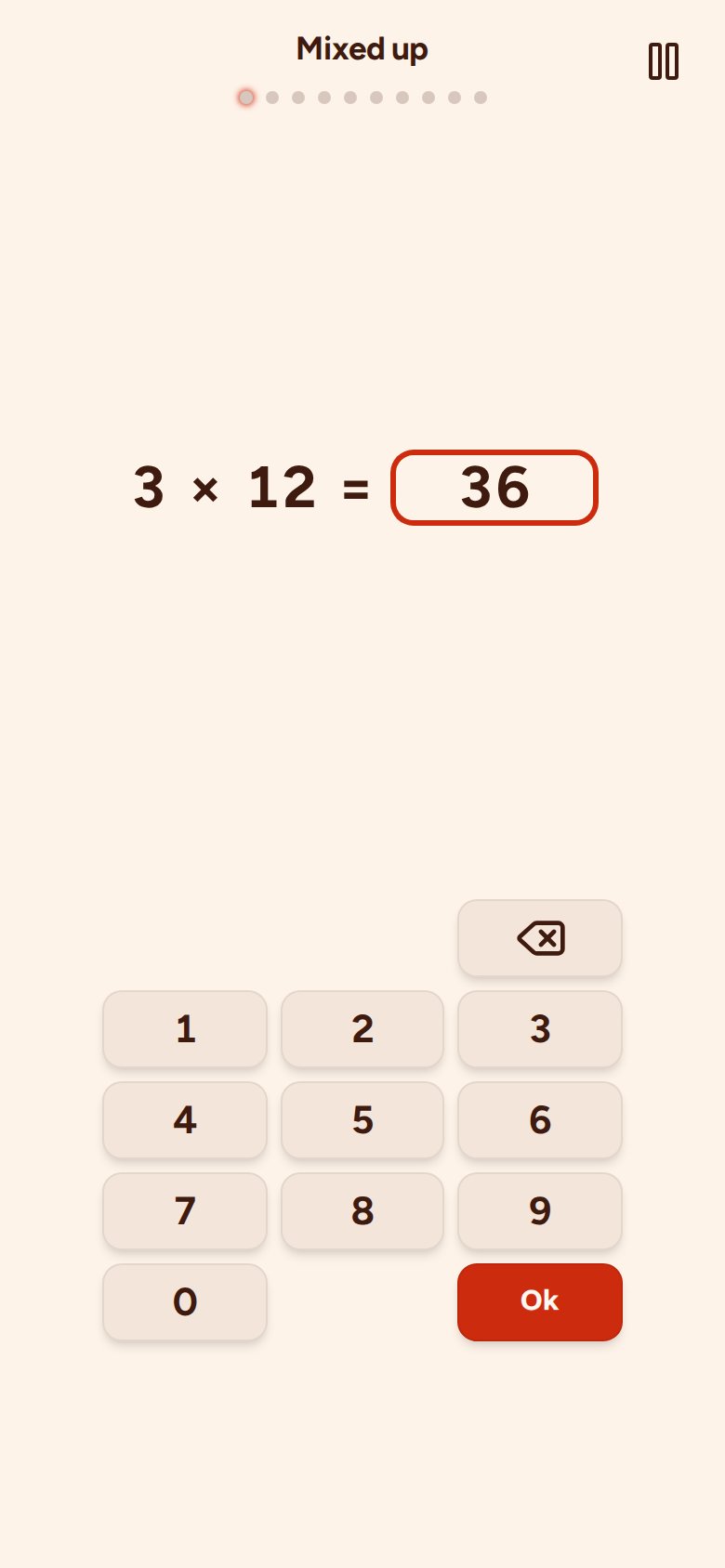
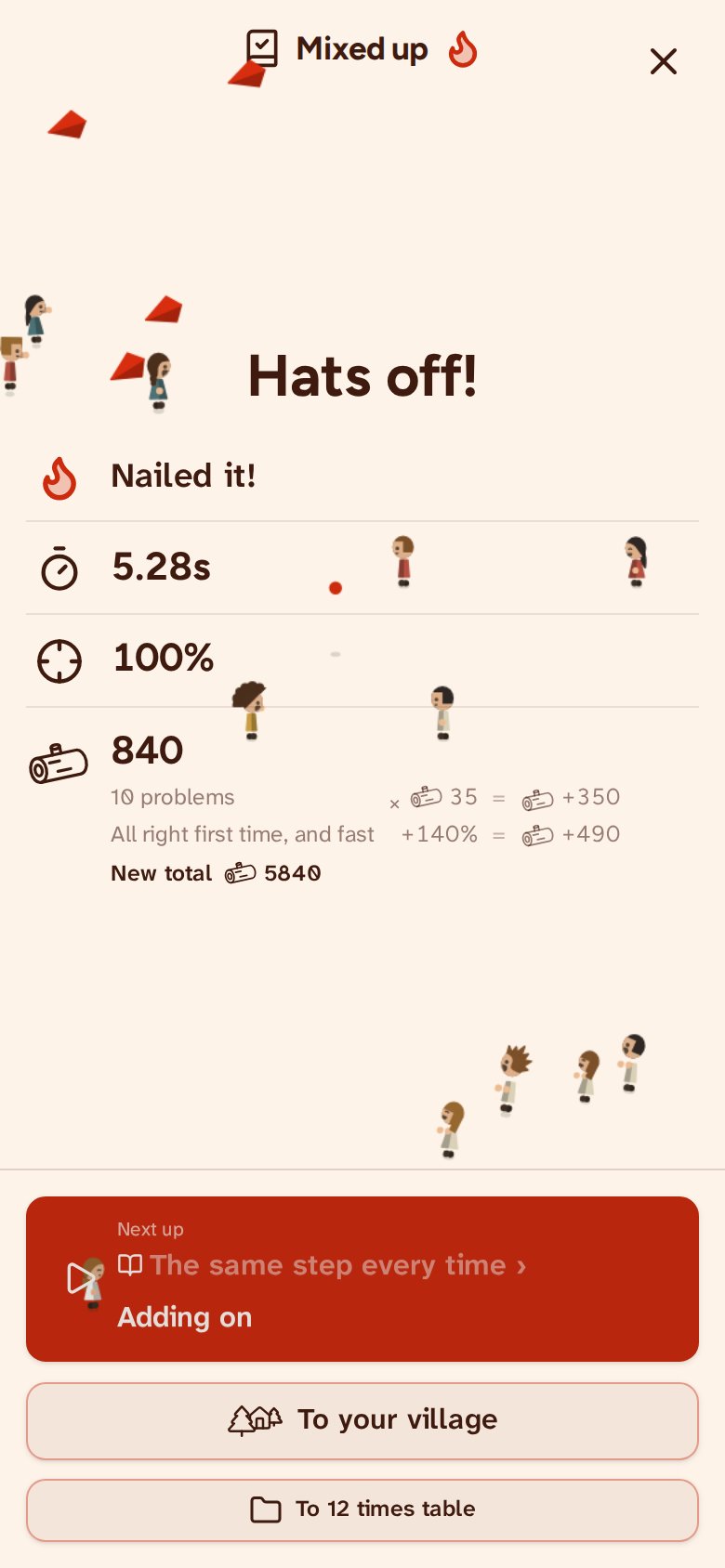
With one exercise from this topic as the example: Mixed up.
1
2
3
4
How it fits together
The arrows point to what can be done next. Whatever sits inside a box belongs to it.
Needed first
Can come next
first this, then that belongs to
Times 12 is times 10 plus times 2: 7 × 12 = 70 + 14.
What times 12 gives the answer? Say the table until you hear it.
Why it matters
Twelve turns up in daily life more often than you might think: a dozen, the months of the year, the hours on a clock. That makes the 12 times table a practical one, and it shows well how the bigger tables work. Nothing needs to be completely new, because 12 is a ten and a two. It is also the last table in the Multiplication Tables Check at school, which covers everything up to 12 × 12.
How to approach it
Split the same way every time: first the ten, then the rest. 8 × 12 is 8 × 10 = 80 and 8 × 2 = 16, together 96. At first say it out loud with the steps in between; once the answers come on their own more often, the steps can go.
For bigger sums, a detour through the 6s can help: 12 is double 6, so 9 × 12 is double 54, which is 108.
When is it secure?
When your child gets all 10 sums right in 35 seconds or less. Answers only come that quickly once they come from memory.