Each answer is the one before plus 6.
6 times table
6 times table practice, from 3 × 6 to 9 × 6 = 54 and 18 ÷ 6 = 3: double the 3s with only a few new facts, first the table, then dividing by 6.
Your child can only do the exercises here once they know the 9 times table. That may look back to front, but the 9s have the most patterns to hold on to, and once they are secure 9 × 6 = 54 is already known, which leaves the 6s with only a handful of new facts.
Usually taught in Year 4 in England and Wales, around ages 8 to 9. Every child goes at their own pace; this is a guide, not a requirement.
The first of 6 exercises in this topic. See them all
What it looks like for your child
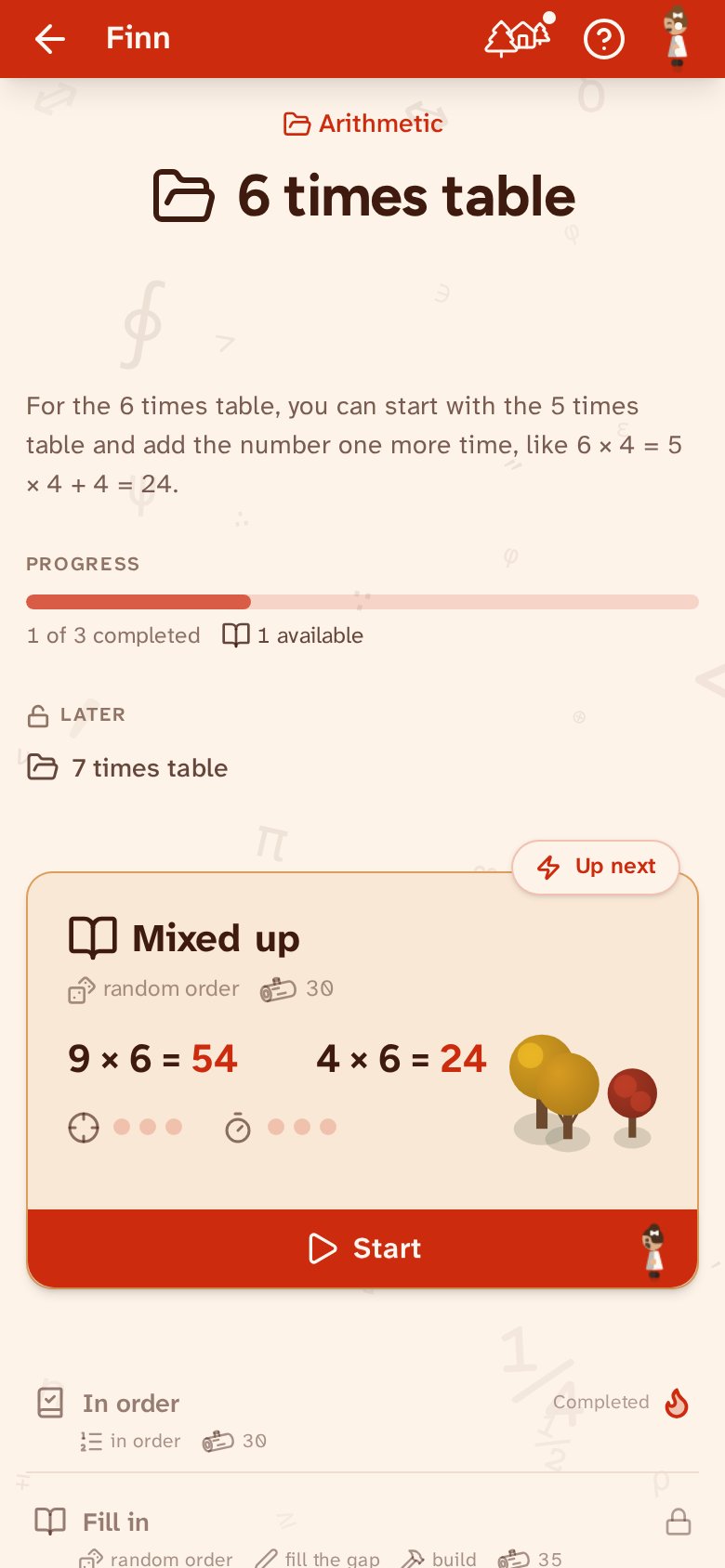
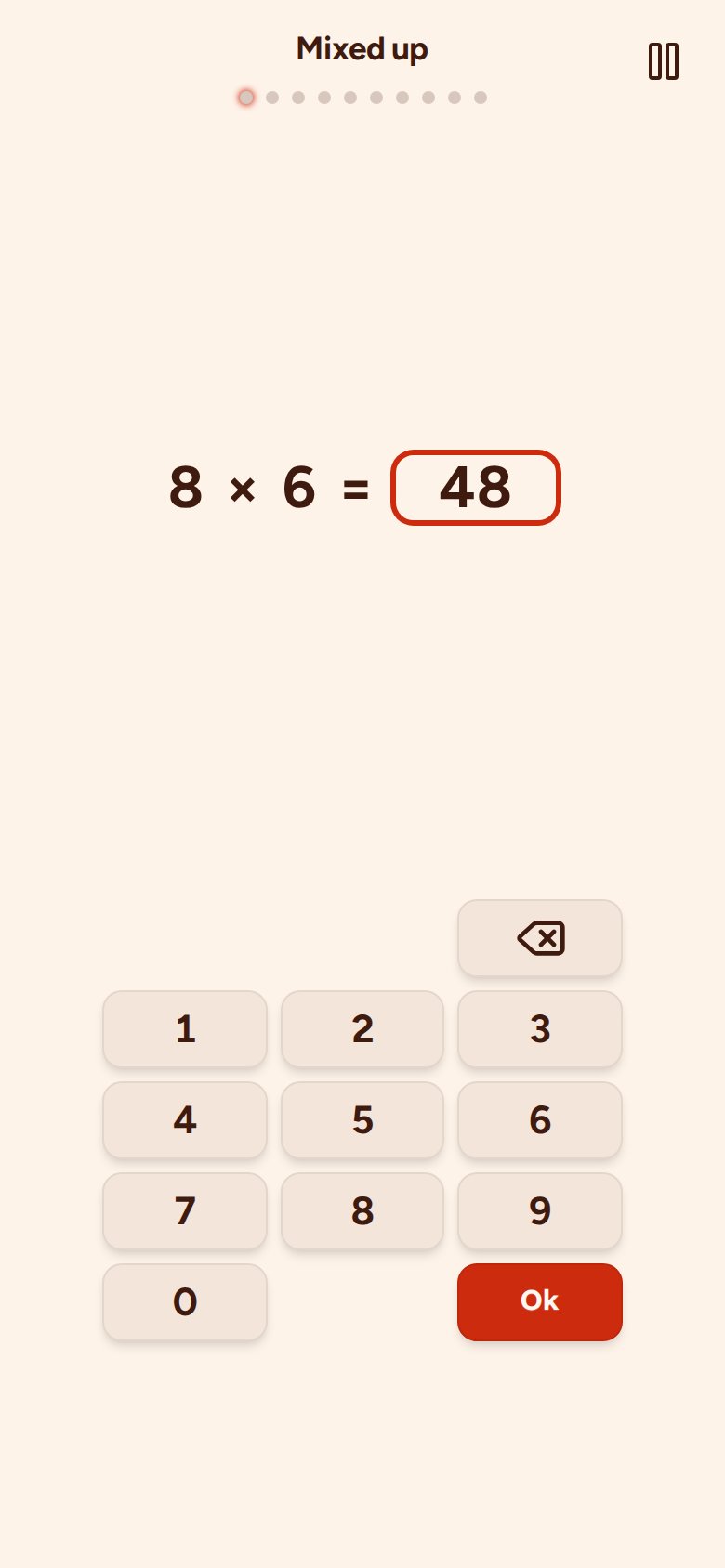
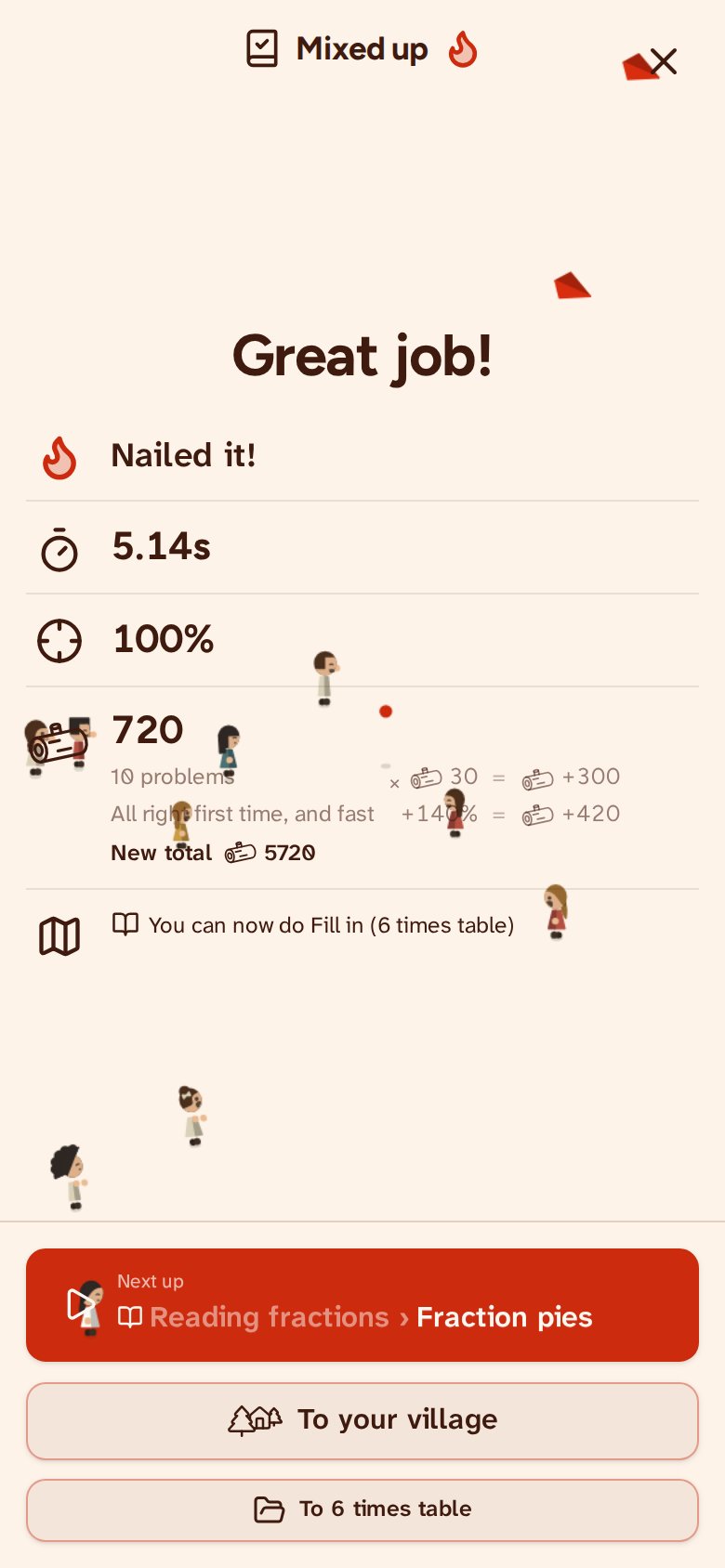
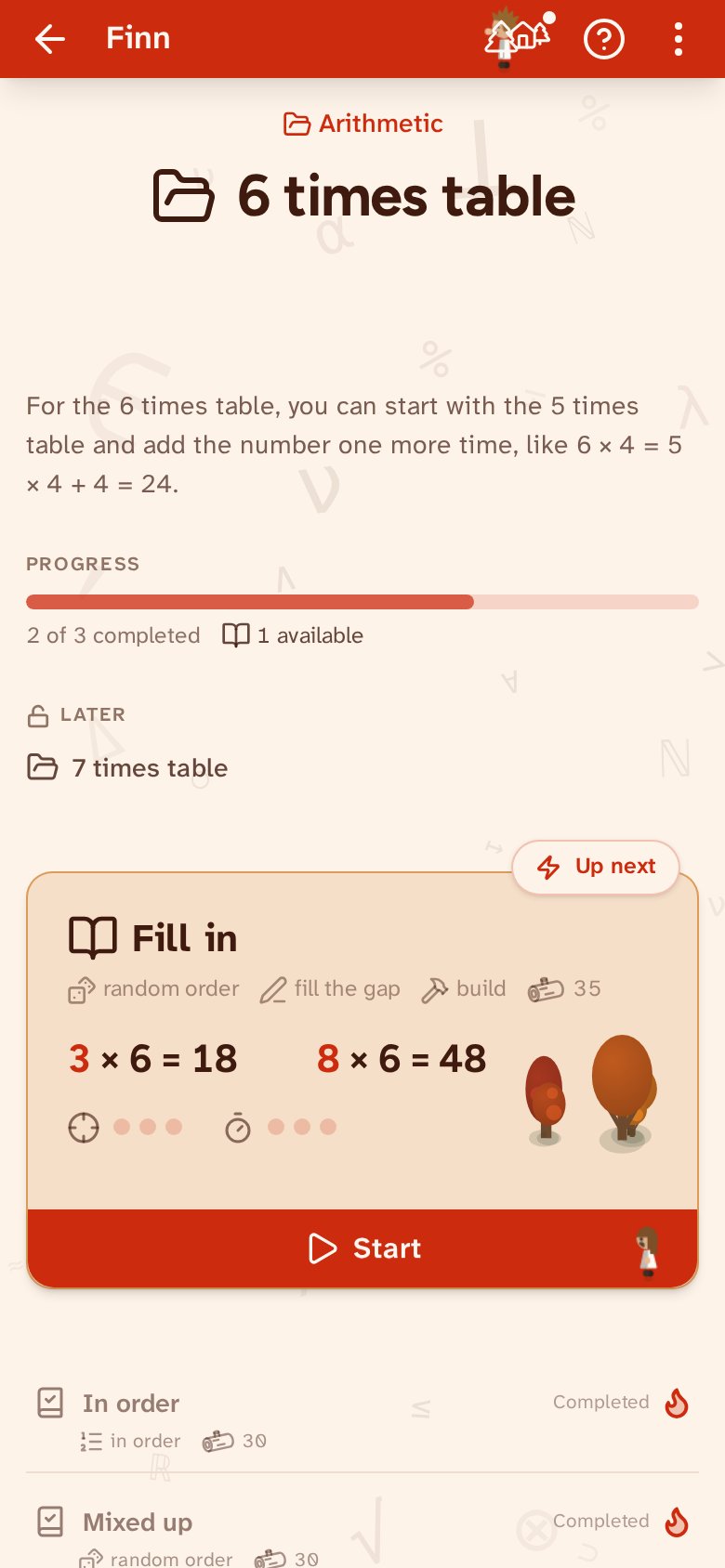
With one exercise from this topic as the example: Mixed up.
1
2
3
4
How it fits together
The arrows point to what can be done next. Whatever sits inside a box belongs to it.
Needed first
Tables 6, 7, 8 & 9
Can come next
first this, then that belongs to
6 times table
Times 6 is times 5 and one more: 7 × 6 = 35 + 7.
What times 6 gives the answer? Say the table until you hear it.
Dividing by 6
What times 6 makes it? Find it in the 6 times table.
The number that was divided is the answer times 6.
Working out and missing numbers mixed: first look where the gap is.
Why it matters
The 6s begin the stretch many children find hardest: 6, 7, 8 and 9. Fortunately, very little of the 6 times table is really new. Every answer is double the 3 times table (4 × 3 = 12, so 4 × 6 = 24), and a child who knows the smaller tables is left with only a handful of new facts: 6 × 6, 6 × 7, 6 × 8 and 6 × 9.
How to approach it
Choose whichever anchor feels best for your child. Through the 3s: 8 × 3 = 24, doubled is 48. Or through the 5s: 8 × 5 = 40, plus one more 8, 48. Both routes are fine, and after enough rounds 48 is simply there.
The division facts for 6 lean on the same facts. For 54 ÷ 6, ask which fact in the 6 times table makes 54. Once your child recognises 9 × 6, they have the answer.
When is it secure?
When your child gets all 10 sums right in 30 seconds or less. Answers only come that quickly once they come from memory.