Each answer is the one before plus 9.
9 times table
9 times table practice, from 7 × 9 = 63 to 9 × 9 = 81 and 54 ÷ 9 = 6: times 10 minus one lot, digits that add up to 9, then dividing by 9.
This table is a starting point too: nothing else needs to come first, because the 9s have two patterns of their own, one lot less than the 10s and digits that add up to 9. The 6 times table and the 19s build on it: 9 × 6 = 54 is already a fact in the 6s, and 6 × 19 is the 9s a ten higher.
Usually taught in Year 4 in England and Wales, around ages 8 to 9. Every child goes at their own pace; this is a guide, not a requirement.
The first of 6 exercises in this topic. See them all
What it looks like for your child
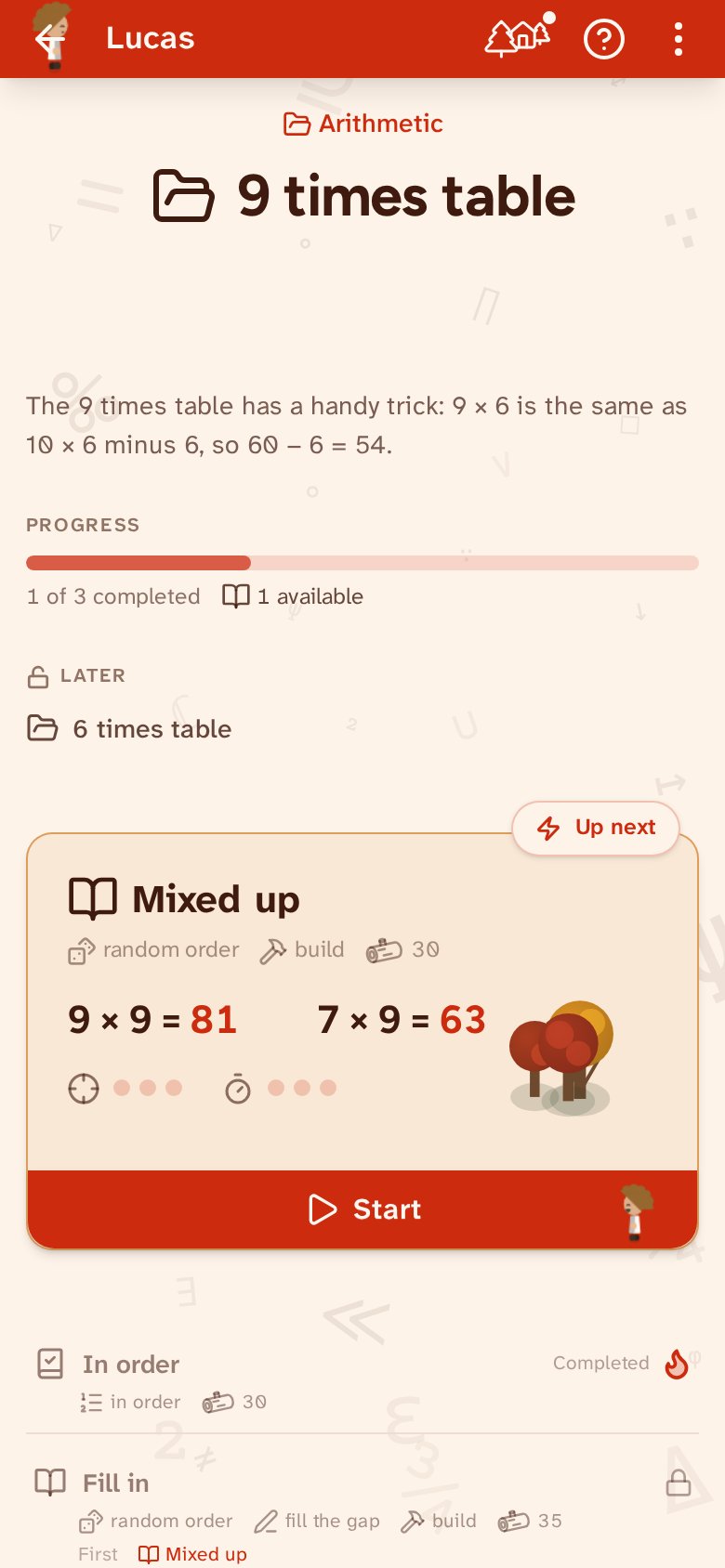
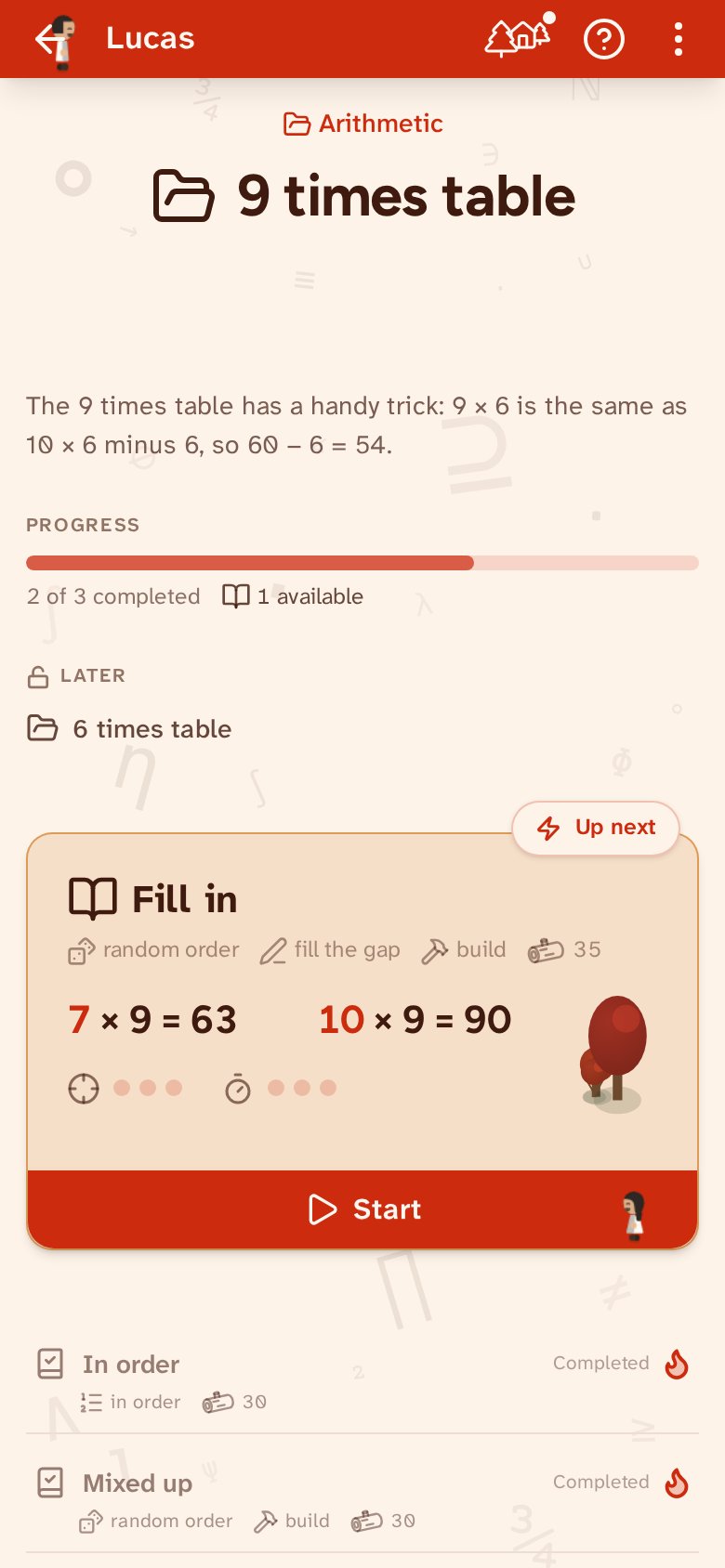
With one exercise from this topic as the example: Mixed up.
1
2
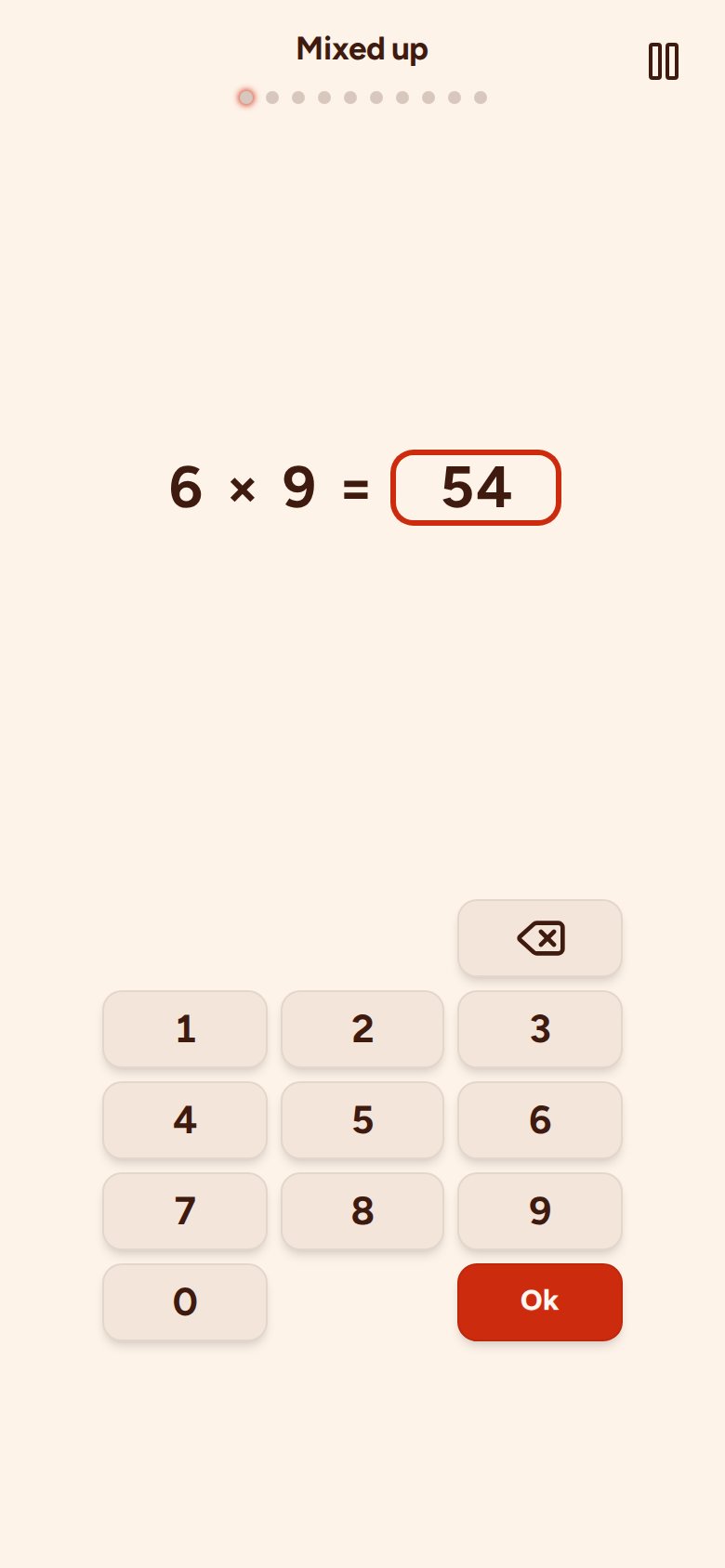
3
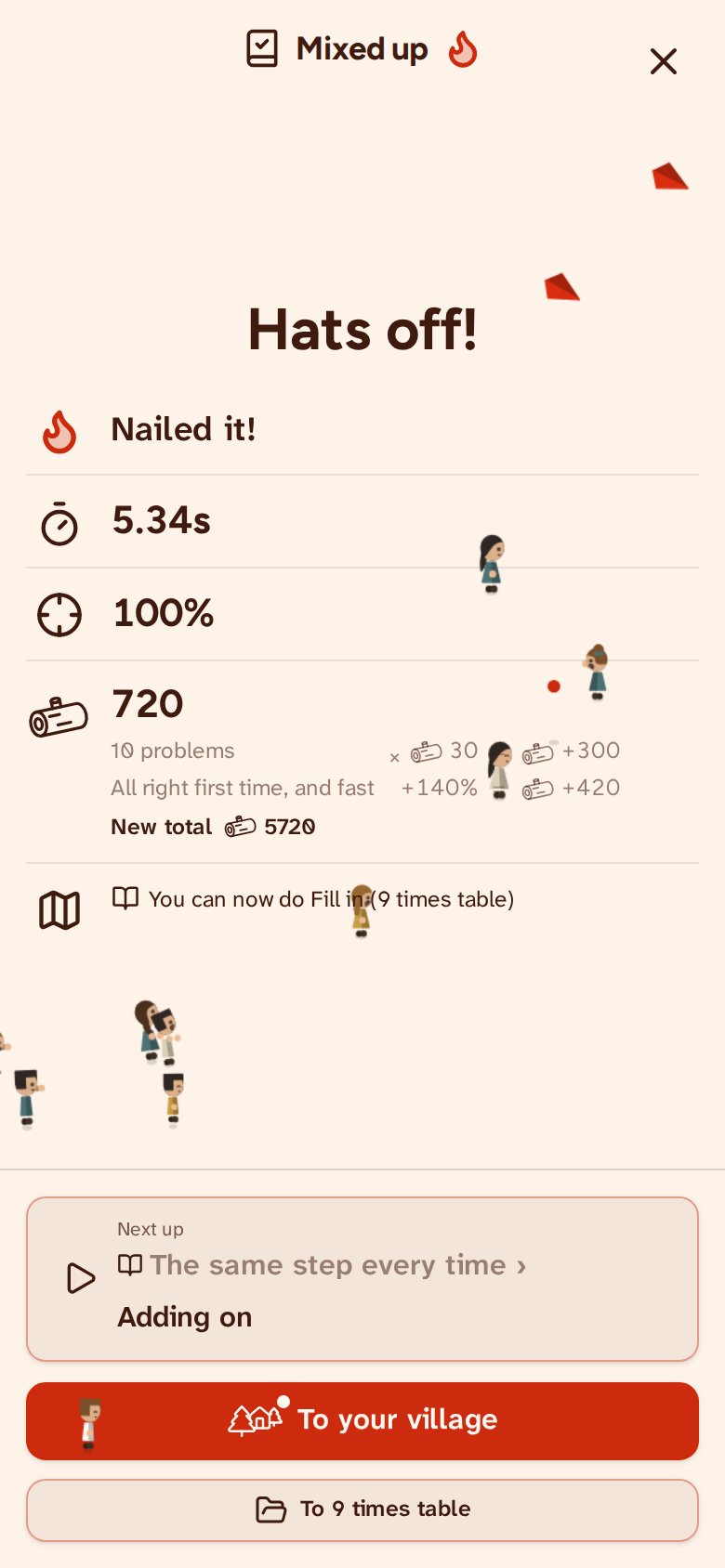
4
How it fits together
The arrows point to what can be done next. Whatever sits inside a box belongs to it.
Tables 6, 7, 8 & 9
Can come next
first this, then that belongs to
9 times table
Times 9 is times 10 minus one: 7 × 9 = 70 − 7.
What times 9 gives the answer? Say the table until you hear it.
Dividing by 9
What times 9 makes it? Find it in the 9 times table.
The number that was divided is the answer times 9.
Mixed sums, with the empty box in a different place each time.
Why it matters
The 9s look big, but this is one of the tables with the most to hold on to. Every answer is one lot less than in the 10 times table, and the digits of the answers add up to 9: 18, 27, 36, 45. That is two patterns at once, and they often make the 9s stick faster than the 7s or the 8s.
How to approach it
For 6 × 9, your child says: 6 × 10 = 60, one nine less, 54. The tens digit of the answer is one less than the number you are multiplying by (for 6 × 9 it starts with a 5), and the ones digit makes it up to 9. So every answer can be checked straight away.
The division facts use the same pattern backwards: the answer is the tens digit plus one. For 72 ÷ 9 that is 7 + 1 = 8, and it's right, because 8 × 9 = 72.
When is it secure?
When your child gets all 10 sums right in 30 seconds or less. Answers only come that quickly once they come from memory.