Check each sum first: is it plus or minus?
Subtraction to 30
Subtraction to 30 practice, from 29 − 6 to 23 − 9 = 14: back across 20 as well as 10, then three or four numbers, balance sums and plus and minus mixed.
Your child can start here once they can add within 30 and subtract within 20, going back across ten included. The method stays the same and only the ten changes: 23 − 9 goes back to 20 the way 13 − 9 went back to 10, so without the first one secure there is nothing to build on.
Usually taught in Year 2 in England and Wales, around ages 6 to 7. Every child goes at their own pace; this is a guide, not a requirement.
The first of 28 exercises in this topic. See them all
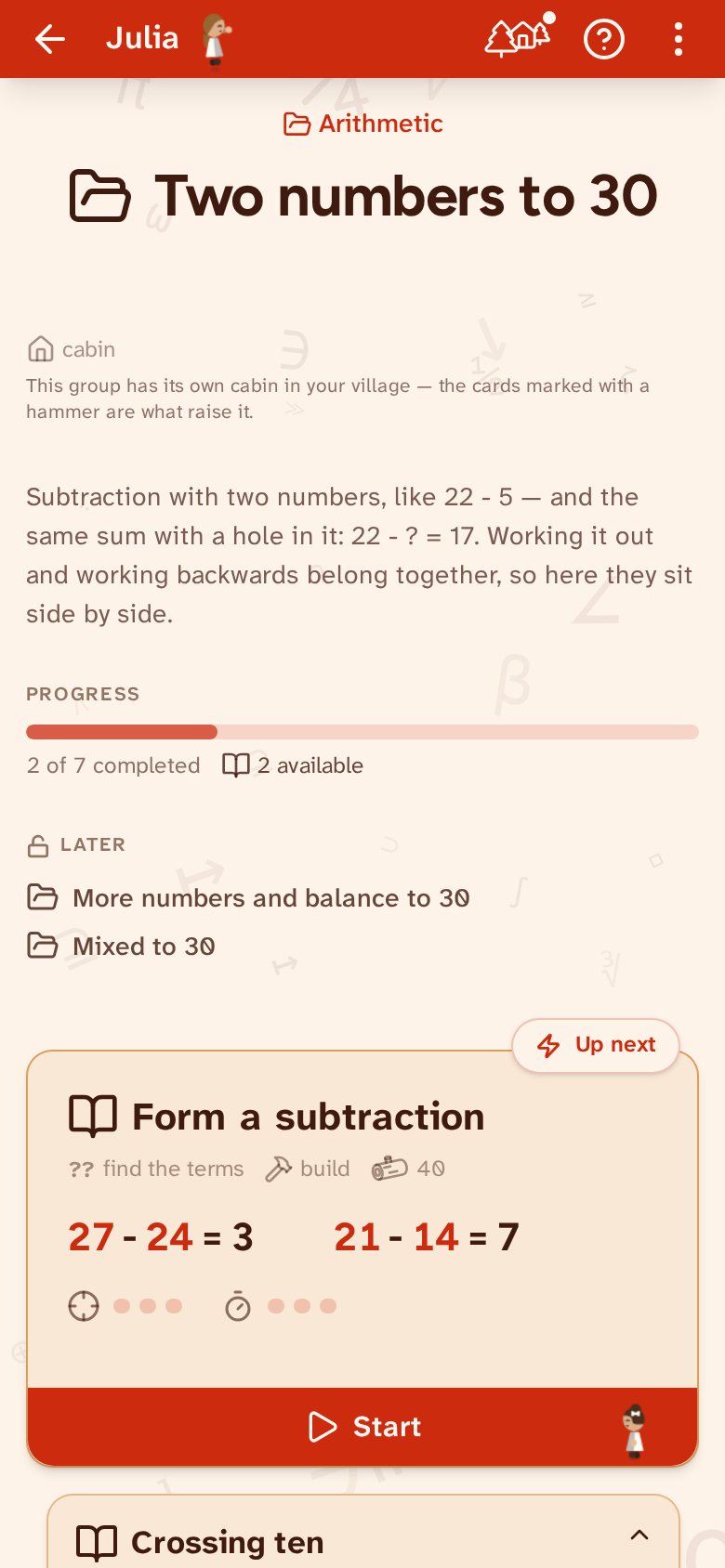
What it looks like for your child
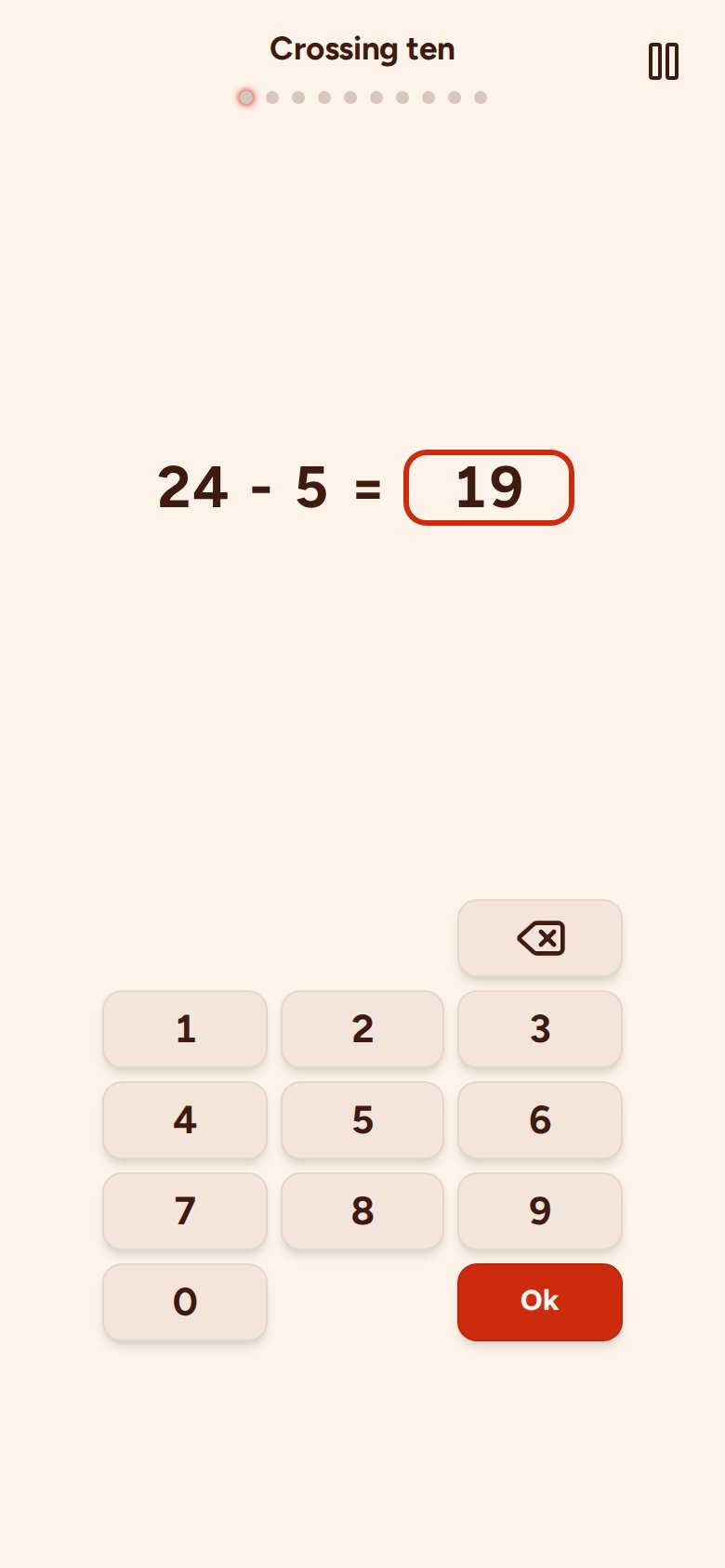
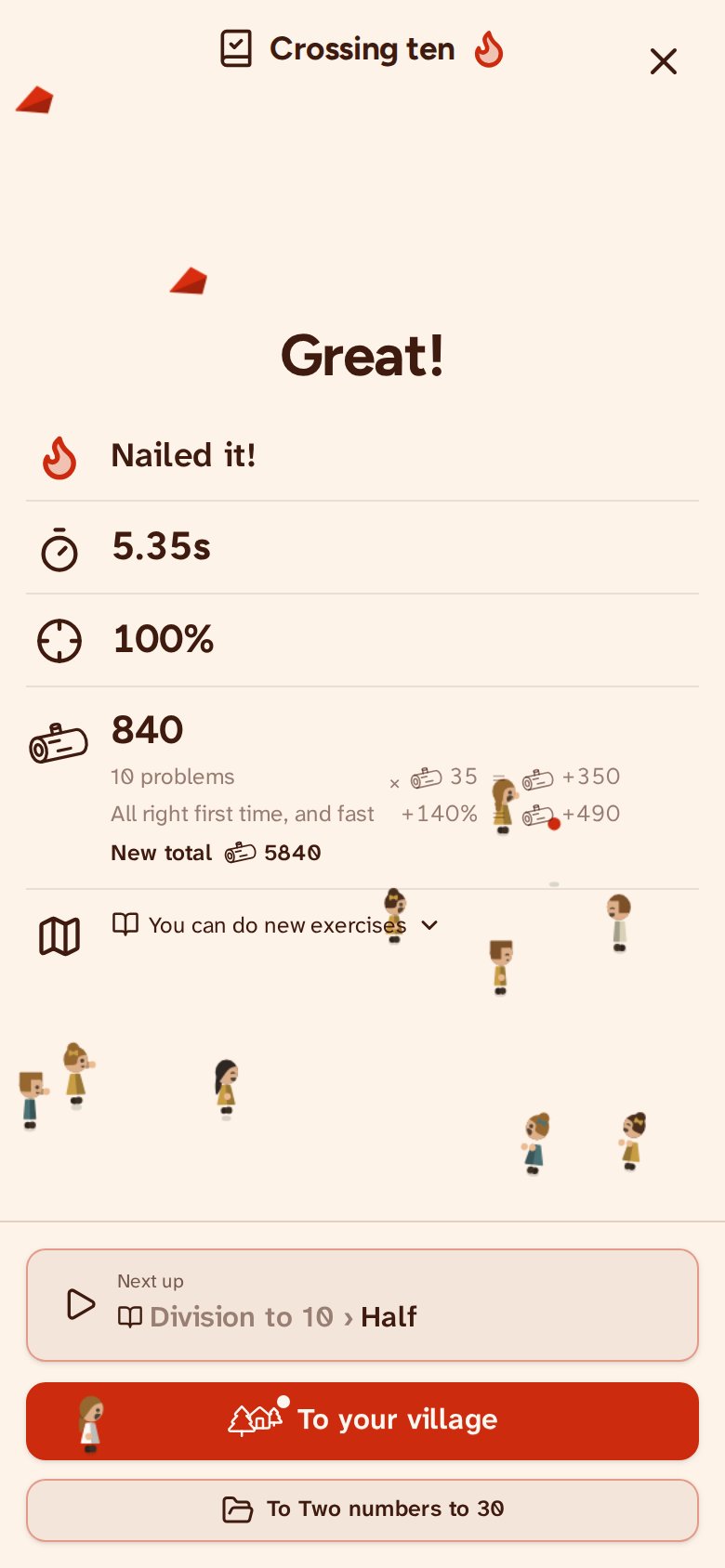
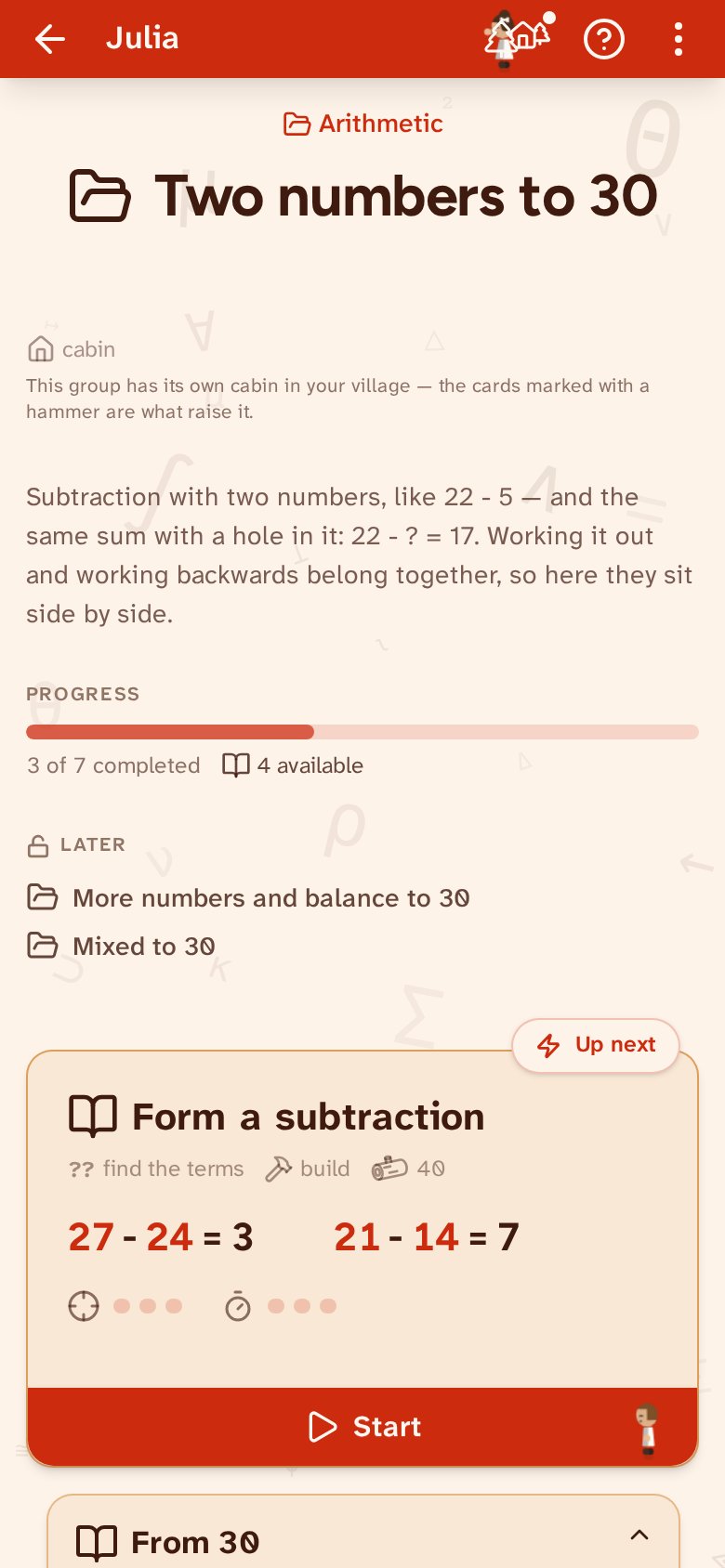
With one exercise from this topic as the example: Crossing ten.
1
2
3
4
How it fits together
The arrows point to what can be done next. Whatever sits inside a box belongs to it.
Subtraction
Subtraction to 30
Two numbers to 30
More numbers and balance to 30
Can come next
first this, then that belongs to
Read the whole sum before you fill in: is something added, or taken away?
Left to right, one step at a time.
Work out one side, then make the other side the same.
30 sums in a row, everything mixed: the real test.
A race against time, for children who can already do it and want to be faster.
50 sums in a row, everything mixed: the real test.
Two numbers to 30
Which two numbers give this difference? Tap them in the right order.
28 − 6: just the ones, 8 − 6 = 2, so 22.
Back to the ten first: 22 − 5 = 22 − 2 − 3 = 17.
Turn it round: 28 − ? = 22 is the same as 22 + ? = 28.
Count up from the small number: 30 − 13 — from 13 to 20 is 7, then 10 more, so 17.
Turn it round: 22 − ? = 17 is the same as 17 + ? = 22.
Look first: can you take the ones away without going back past ten?
More numbers and balance to 30
Take them away one at a time, left to right.
Work out one side, then make the other side the same.
Work out what is already there first, then see how much is missing.
Against the clock: how many can your child do in sixty seconds?
Take them away one at a time, left to right.
A race against time, for children who can already do it and want to be faster.
Work out what is already there first, then see how much is missing.
Mixed to 30
The same sum as 22 − 5 = 17, but ten times bigger: 220 − 50 = 170.
A race against time, for children who can already do it and want to be faster.
The same sum as 22 − 5 = 17, but a hundred times bigger: 2200 − 500 = 1700.
Just like 30 − 12 = 18, but ten times bigger: 300 − 120 = 180.
The same sum as 22 − 5 = 17, but a thousand times bigger: 22000 − 5000 = 17000.
Just like 30 − 12 = 18, but a hundred times bigger: 3000 − 1200 = 1800.
Just like 30 − 12 = 18, but a thousand times bigger: 30000 − 12000 = 18000.
Why it matters
To 20, there was only one ten to cross back over. To 30 there are two, and that pushes your child to see the method separately from the number 10. In 26 − 8 the target is 20; in 16 − 8 it is 10. The principle stays the same; only the ten changes.
Plus and minus mixed comes up more often here too, with three numbers or as a balance. So your child learns not only to subtract, but also to read the sign first in every sum. That attention to the shape of a sum makes all the difference once the numbers get bigger.
How to approach it
With a number like 24, ask your child to say what is in it: two tens and four ones. A child who sees that can work out 24 − 7 like this: first take away the 4 to get to 20, then 3 more, so 17. Partitioning the small number is the same as to 20; it just starts from a different ten.
With three numbers, working from left to right always works, but a child who looks carefully sometimes spots a shortcut. In 27 − 5 − 7, 27 − 7 = 20 is easy, and then 20 − 5 = 15. Do tell your child that this is allowed: as long as everything is taken away, the order doesn't matter.
When is it secure?
When your child gets all 10 sums right in 30 seconds or less. Answers only come that quickly once they come from memory.